

Getting around the Azores requires a bit of planning. The best approach is to fly between island groups, take ferries for short hops within the same group, and rent a car once you land on each island. Public buses exist but are too infrequent to rely on as a tourist. Taxis work but add up fast. A rental car is almost always the right call.
- ✈️ Flights to Azores: Search with Kiwi for the best fares, including inter-island connections.
- 🚗 Car rental: Compare rental car prices here. Book at least 2-3 months ahead in summer.
- 🚌 If renting is not an option, Get Your Guide has plenty of tour options, including half-day and full-day ones on main islands.
- ⛴️ Ferry schedules: Check Atlântico Line’s schedule for inter-island crossings.
- 🗺️ Plan your trip independently: explore all Azores travel guides.
What is the best way to get around the Azores?
The best way to get around the Azores is to fly between island groups and rent a car on each island you visit. Inter-island flights with SATA/Azores Airlines cover the distances quickly, while a rental car gives you the freedom to reach the viewpoints, hiking trailheads, and thermal pools that buses simply don’t serve. For short crossings within the same island group, the ferry is a scenic and cheaper alternative to flying.
Public transportation alone won’t cut it for most visitors. The bus network exists, but routes are designed for local commuters, not tourists, and frequencies can make planning a real headache. I’m a local, I know every road on these islands, and I always need a car every time I need to explore properly.
Getting to the Azores
Haven’t booked your flight yet? Check the current flight options to the islands. There are several routes from Europe, the United States, and Canada, catering to both tourists and the large Azorean diaspora communities living abroad. During summer, many airlines also operate charter flights that don’t appear in regular searches, so it’s worth casting a wider net.
For the best fares, use Kiwi, which handles multi-stop and open-jaw routing well, especially useful if you’re visiting more than one island.
Azores airports ✈️
Every island in the Azores has a commercial airport. Only four have connections to mainland Portugal, and just two currently run direct international flights:
- São Miguel — João Paulo II Airport (PDL): several daily connections to Porto and Lisbon, plus international flights to the US, Spain, Canada, Germany, and France, amongst others.
- Terceira — Lajes Airport (TER): daily connections to Porto and Lisbon, plus international flights to the US and Canada.
- Pico — Pico Airport (PIX): seasonal direct flights to Lisbon.
- Faial — Horta Airport (HOR): seasonal direct flights to Lisbon.
- All other islands: inter-island flights only, operated by SATA Air Azores.
Planning your Azores trip independently
The Azores is very well suited to independent travel. Flights, ferries, car rentals, and hotels can all be booked separately without needing a package. If you’re still building your itinerary, browse all the Azores guides at geekyexplorer.com/azores for island-by-island breakdowns, hotel picks, and hiking routes, all written from a local’s perspective.
How do you travel between Azores islands?
You travel between Azores islands by plane or by ferry, depending on which islands you’re connecting. Flying is faster but more expensive. The ferry is cheaper and scenic, but takes longer and is subject to Atlantic weather conditions. The right choice depends on the distance between your islands and the time of year.
Inter-island flights
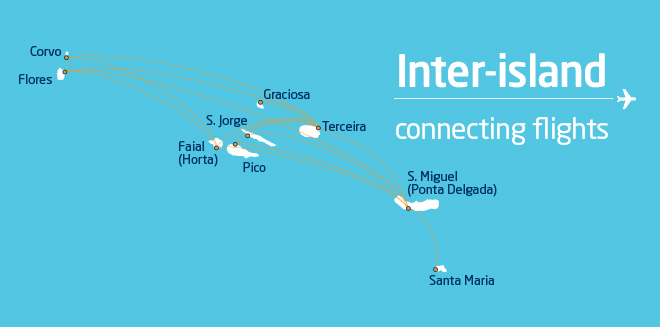
SATA/Azores Airlines is the only carrier operating inter-island routes, and without competition, prices are not cheap. A 45-minute flight between São Miguel and Pico can run around €100 or more, depending on timing and availability. Check my full Azores flights guide for current route maps and booking tips.
Azores ferries
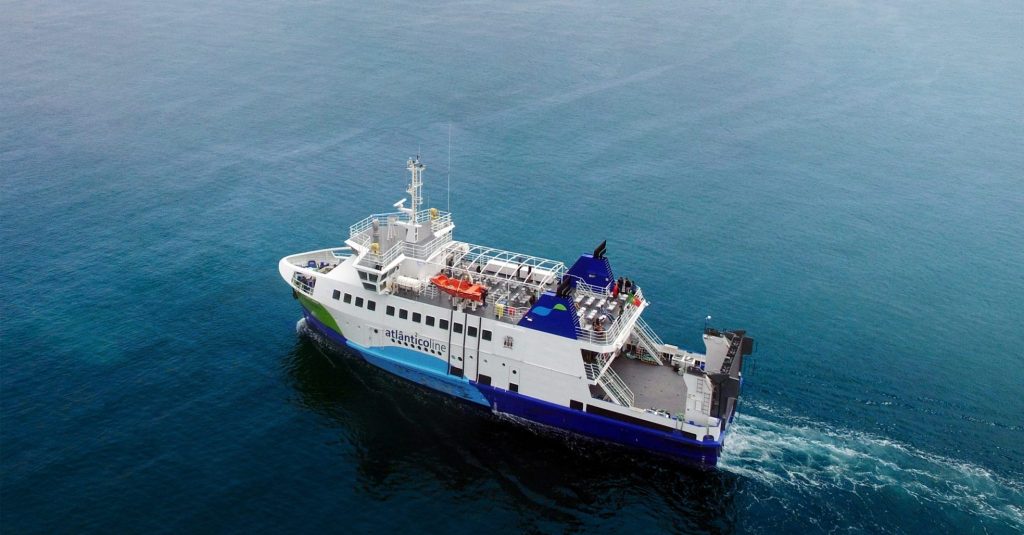
Taking a ferry is the other way to move between islands. It’s slower and more atmospheric, and for close crossings, it’s significantly cheaper than flying.
Keep in mind that these ferries operate in the open Atlantic Ocean, where conditions can be rough, especially in winter. Ferry services are generally limited to the central group (São Jorge, Faial, Pico, Terceira, Graciosa) and western group (Flores, Corvo). The eastern group connection between São Miguel and Santa Maria was a summer-only frequency, but it hasn’t still be reinstated since the pandemic.
Ferry company in the Azores
All inter-island ferry services in the Azores are operated by Atlântico Line or its sub-companies. The network covers 7 of the 9 islands and includes vehicle transport.

Check Atlântico Line’s schedule page for full timetables. Here’s what to expect by group:
- Central Group (São Jorge, Pico, Faial, Terceira, Graciosa): year-round service through the Triangle islands (Pico, São Jorge, Faial), with summer-only extensions to Terceira and Graciosa.
- Western Group (Flores and Corvo): Atlântico Line runs the only ferry to Flores. The Flores-Corvo crossing uses a small vessel that holds around 10-15 passengers.
Plane vs ferry in the Azores: which should you choose?
My rule: fly between islands from different groups and take the ferry for short crossings within the same group. The Faial-Pico crossing, for example, takes about 30 minutes by ferry and is a far better experience than flying. Crossing from São Miguel to Terceira by ferry, on the other hand, would eat half your day.
One practical tip that most guides skip: plan your island order so that the island you’re departing the Azores from is explored last. Ferry and flight cancellations due to weather are common in the North Atlantic. If you’ve already done everything on your departure island, a delay costs you nothing. If you haven’t, it’s a stressful end to the trip.
Getting around each island
Car rental in the Azores
Renting a car is the single best transport decision you can make in the Azores. The main points of interest, including crater lakes, volcanic calderas, thermal pools, and coastal viewpoints, are scattered across each island and almost none of them are reachable by bus. A car gives you flexibility, cuts your total costs if you’re sharing with others, and genuinely adds to the sense of adventure on these roads.Local car rental companies tend to offer better prices than international heavyweights like Sixt or Avis, though it varies by season and vehicle type. Most cars here are manual; automatic options are available but fewer and more expensive.
Book early. In summer, demand is so high that rental agencies can run out of cars entirely. Book at least 2-3 months in advance for July and August visits.
Don’t skip the insurance. The roads in the Azores are narrow, winding, and often bordered by stone walls or dense vegetation. CDW and Super CDW coverage is worth every euro on these islands.
Use RentalCars or DiscoverCars to compare prices across all available operators at once.
Tours
If renting a car isn’t an option, joining a small-group tour from a local operator is the most practical alternative. There are half-day and full-day options on all the main islands, ranging from affordable shared tours to private guides.
My only advice here: always ask how many people are in the group. Watching a sunrise over a volcanic lake with 35 strangers on a coach is a different experience from watching it with five. The price difference is usually worth checking.
Taxis and private guides
Taxis work, but they add up quickly. To give you an idea, on São Miguel, the fare from Ponta Delgada airport to Furnas starts at around €44. For longer day trips or multiple stops, the meter climbs fast. Always agree on a price before you get in, especially for longer journeys, or use Bolt for more predictable costs.
In more remote areas, for instance when hitting a hiking trail, finding a taxi for the return trip can be genuinely difficult unless you call one in advance. The driver’s deadhead journey to collect you typically gets added to your bill.
Private guided tours are a better option if you want the coverage of a taxi without the unpredictability. There are fixed-price day itineraries across most islands that combine the main sights and hikes. Worth comparing with car rental costs before you commit.
Buses
Bus networks exist on the larger islands, but the routes connect towns rather than tourist attractions. Frequencies are low and schedules change seasonally. If you want to use buses, confirm timetables directly with local operators before building your itinerary around them. In São Miguel you can check this website.
Final thoughts on getting around the Azores
The Azores rewards travelers who plan their transport in advance. Leaving inter-island flights and car rentals to the last minute, especially in summer, is how good trips turn into stressful ones. Nail those two things early and the rest falls into place. If you’re still building your itinerary, my guide on which islands to visit in the Azores is a good starting point, and the Azores travel tips page covers everything else you need before you land.
Frequently asked questions about getting around the Azores
Do you need a car in the Azores?
For most visitors, yes. The main attractions on every island are spread across the interior and the coast, connected by winding roads that buses rarely serve. A rental car is the most flexible and often the most cost-effective way to explore. If you’re visiting a single town for a short stay, you might manage without one, but for a proper island experience, a car makes a significant difference.
Can you get around the Azores by public transport?
Technically yes, but practically it’s very limiting. Buses connect the main towns on larger islands but don’t cover most tourist sites at useful times. Taxis fill some gaps but are expensive for longer journeys. Most independent travelers find that relying solely on public transport means missing a lot of what makes the Azores special.
How do you get between the Azores islands?
By plane or by ferry. SATA/Azores Airlines operates all inter-island flights. Atlântico Line runs the ferry network. For crossings between island groups, fly. For short hops within the same group (like Faial to Pico), the ferry is cheaper, quicker, and a far better experience.
How much does a taxi cost in the Azores?
Standard taxis in São Miguel start at around €44 for the trip from Ponta Delgada airport to Furnas. Bolt is available. Shorter in-town journeys are cheaper, but any cross-island trip or excursion to a remote area will push costs significantly higher. Always negotiate and agree on a price before departure.
When do the Azores ferries run?
The Triangle islands (Pico, São Jorge, Faial) are connected year-round. Terceira and Graciosa have summer-only ferry service. In winter, rough Atlantic conditions can disrupt schedules across all routes. Always check current schedules with Atlântico Line before booking.
How far in advance should you book a rental car in the Azores?
At least 2-3 months ahead for summer visits (June to September). Demand is extremely high in peak season and agencies genuinely run out of stock. Outside of summer, a few weeks’ notice is usually sufficient, but earlier is always safer.




















Dear Lord above but I loved reading that article about the Azores because I love those islands even tho I have never been there but I dreamed (in my sleep) that I met a family from Missouri on one of the islands of the Azores and they were very nice and invited me for cocktails but I had to refuse because I do not drink strong liquor so instead I invited them to have a soda with me and my husband Sam but the youngest child started screaming that he saw a ghost and we all got spooked. I woke up but I still want to visit those islands but promise me NO GHOSTS! Thanks.
🙂
Thanks for the heads up. My wife booked return flights with RyanAir who only fly in and out once per week. Given the high cost of Car Hire and the lack of good cost effective Hotels I’ve decided not to go anywhere near this place, it looks dull as hell. It’s cheaper to actually go to Hawaii where I will have a better time.
Okay, enjoy your trip!
What a stupid and neocolonialist comment to make! Plus, Hawai locals don’t want tourists anymore. They have enough with people like yourself.
good stay away, dont need you there lol
Thank you for the guide. I book tickets from Ponta delgada to Lisbon, and TAP issue me the free tickets from Flores to Ponta delgada same day.
I am going in July, do you know if Flores weather in July is still not stable? I am not sure should I ask them to change the free ticket to the day before (still within 24 hours)
Thanks!
just want to correct it is sata offer the free ticket…
July should be a more stable month. But you never know!
Hi Bruno, great guide!
I have a question: do you know anything about Corvo? I doubt there is a bus and I couldn’t find any car rental. Is there a taxi to get you up to the lagoas? I would very much like to include Corvo on our trip, but without getting up there (PR1COR + PR2COR are about 15km, going up would be another 6-7km, defenitly too much), I would give another island an additional day. Thanks for your help!
Good
This is a very useful guide im going 12/27-1/9 thank you
Planning on visiting next year and this website and this information is so useful! What is the phone reception like on the islands? I would like to do a hike and have a driver pick me up from the end but worried about the reception.
Obrigada!
Well, that it will depend on many factors, including your mobile operator.
I’d say most hiking trails start and finish at places where you are likely to have reception, but that depends on the place.
Hello when clicking on a particular date in October the rate for a return is for example $279.00
yet it prices out at approx. 700.00 and beyond.
Any ideas to get the advertised price on the calendar..
Many thanks
Maria Trupiano
Return on what? Which trip and website?
How do we go about getting to mainland
Portgual from the Terceria islands & the rough cost and time of such trip? Thanks in advance much appreciated.
The information is all above.
Fly from Terceira, roughly a 2-hour trip.
hi bruno myfamily is planning a trip to ponta delgada but we are looking at ways to see the island of sao miguel,WE are planing to go next july 2020for the festas do espirito santo,i know its still to early but we would like some information on tours and renting a car,my husband is not to familiar with the roads in 2007 when we were there he drove for a bit but we had a family member with us.SO any information you have to give us it will be very appreciate it .
Hi Fatima, you can find plenty of information about renting car in this very own article or in my São Miguel itinerary. Which tips are you looking for in particular? I doubt you’ll be able to book something that far in advance.
I don’t use tours – apart from whale-watching or outdoor activities like canyoning, etc – so can’t really comment on that.
Hi Bruno!
Thanks for your great posts! I have found them very helpful indeed. My fiancé and I are looking forward to spending our honeymoon in the Azores (and we will have a full 3 weeks in September :).
This is the basic itinerary I have in mind for visiting the western and central islands.
Arrive in Terceira + pick up car (4 nights)
travel to Sao Jorge (1 night)
travel to Pico (3/4 nights)
… Faial (3/4 nights)
return to Terceira (1 night)
return car + fly to Flores (2/3 nights) + pick up car
Fly from Flores to Sao Miguel
Which is better: to rent a car for Terceira, Sao Jorge, Pico and Faial (and get between islands with a car ferry) or rent cars separately for Terceira and Pico/Faial separately? By the way, if you have any suggestions about the itinerary, I am all ears 🙂
Cheers!
Charlie
I’d personally take some days off Terceira and put them elsewhere like São Jorge.
Not all ferries allow vehicles, so I’d look into this separately. My choice would be to hire cars separately in each island.