
TL;DR: Porto and Lisbon are fundamentally different cities, not just different-sized versions of the same thing. Lisbon is bigger, sunnier, more international, and better for beaches and day trips. Porto is moodier, more compact, cheaper, and more likely to make you fall in love with it unexpectedly. If you only have a few days, pick based on your travel style. If you have a week or more, do both.
I’ve lived in both. Not visited for a long weekend and called it even, but actually lived there, walked the same streets repeatedly, eaten at the places locals eat, and developed strong opinions about both. That’s either a qualification or a bias. Probably both.
📋 Quick tips for Portugal 🇵🇹
- 🏨 Lisbon hotels: browse my pre-filtered list | Porto hotels: browse my pre-filtered list
- 🌤️ In both cities, the best time to visit is between April and June or September–October. Peak summer months bring unbearable heat and crowds.
- 🚗 If day trips are on the agenda consider renting a car. Always compare car rental prices before committing.
- ☑️ Travel insurance is non-negotiable: I use Heymondo, and it has saved me more than once
- 📱 Use Airalo for affordable eSIMs and avoid roaming fees. Get up to $5 off with the code BRUNO4311.
Porto vs Lisbon: quick comparison
| Category | Porto | Lisbon | Winner |
|---|---|---|---|
| Vibe | Moody, raw, atmospheric | Sunny, cosmopolitan, polished | Tie (depends on you) |
| Size | Compact, walkable | Larger, hilly, needs transport | Porto |
| Food & drink | Francesinha, port wine, punchy flavors | Seafood, pastéis de nata, Time Out Market | Porto (just) |
| Budget | 10–15% cheaper overall | More expensive, especially accommodation | Porto |
| Day trips | Douro Valley, Braga, Guimarães, Aveiro | Sintra, Cascais, Óbidos, beaches | Lisbon |
| Beaches | Atlantic coast (cooler, rougher) | Multiple quality beaches within 30 min | Lisbon |
| Nightlife | Gritty, local, unpretentious | More options, more varied, louder | Lisbon |
| Atmosphere | Locals-first, slower pace | International, fast-moving | Porto |
| Weather (summer) | Warm, occasionally breezy | Hotter, sunnier, drier | Lisbon |
| Weather (winter) | Cooler, more rain | Milder, more sunshine | Lisbon |
| Flights | Good, fewer direct long-haul | More direct routes, bigger hub | Lisbon |
Sights & things to do
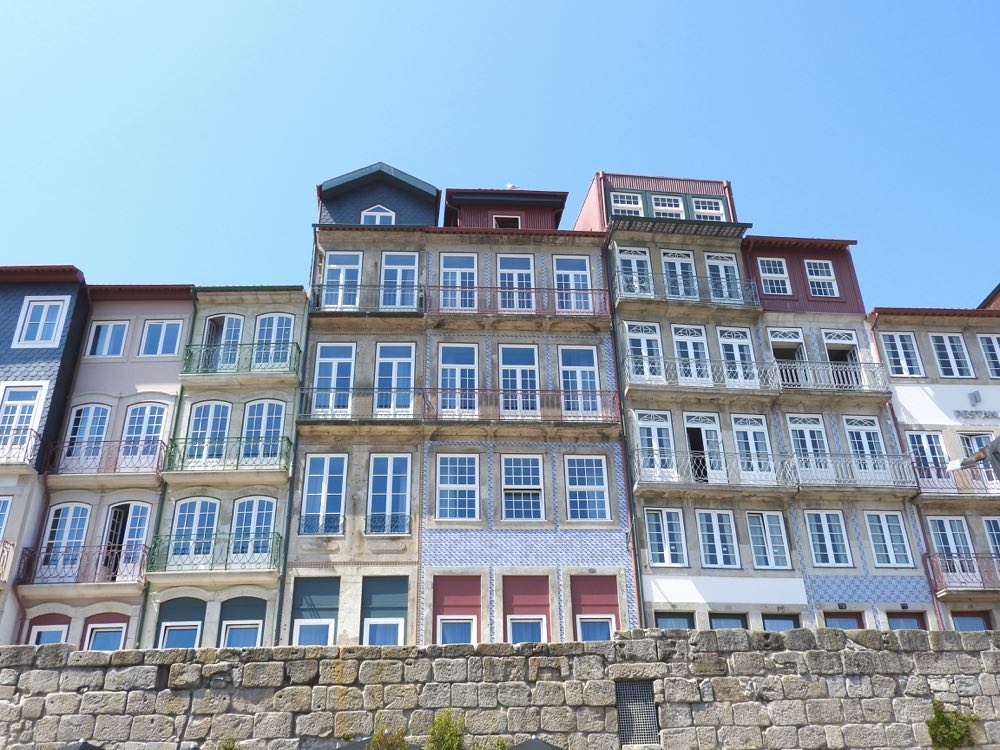
Downtown Lisbon is walkable despite the hills, and the sightseeing density is hard to match. The things to do in Lisbon span multiple full days without repetition: Alfama’s backstreets, Belém’s UNESCO monuments, Príncipe Real’s squares, the viewpoints scattered across seven hills. The city is big enough to feel inexhaustible and compact enough to feel manageable.
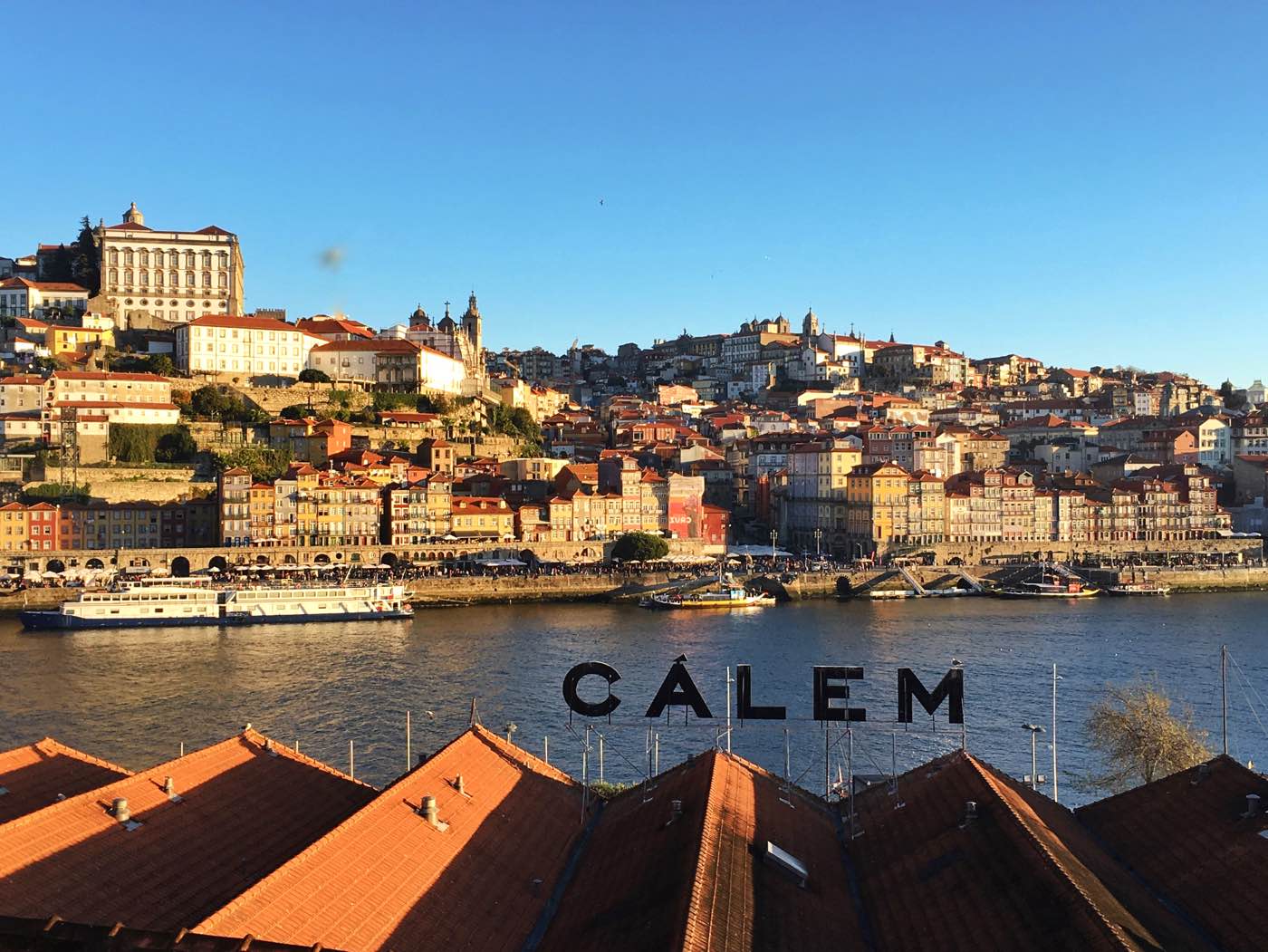
Porto has fewer sights on paper, but that’s partly because the city itself is the sight. The Ribeira waterfront is one of the most visually striking urban landscapes in Europe: tiled houses stacked up the hillside, the Douro below, the Dom Luís I bridge framing everything. Add the wine cellars of Vila Nova de Gaia across the river and Porto’s extraordinary collection of azulejo-covered church facades, and you have more than enough. If you want to go beyond the postcard, read my Porto city guide for the full picture.
Winner: Lisbon, for sheer volume and variety. But Porto punches far above its weight.
Food & drink

Both cities are food lover territory. Portugal as a country is deeply serious about what it eats, and both Porto and Lisbon reflect that. The codfish dishes (bacalhau), the grilled seafood, the pastéis de nata, the house wine that costs less than a coffee in most of Europe: all of it is exceptional and all of it is everywhere.
Where they diverge: Lisbon leans more international and polished. Time Out Market at Cais do Sodré is excellent, the restaurant scene has matured significantly over the past decade, and the variety is much wider. Lisbon lists over 7,000 restaurants on TripAdvisor vs around 3,100 for Porto, which reflects the size gap. But here’s the thing: per resident, the two cities are virtually identical in restaurant density. The difference is scale, not quality.
For fine dining, Lisbon currently holds 18 Michelin-starred restaurants, including two-star Belcanto and Alma. Porto and its immediate area has 14, headlined by two-star Antiqvvm and The Yeatman. Both are serious gastronomy cities by any European standard. Portugal only got its first dedicated Michelin Guide in 2024, and the scene is still accelerating.
Porto has a rawer food culture. Dishes feel more seasoned, more regional, less designed for Instagram. The Francesinha is the obvious flag-bearer: a layered meat sandwich drowned in a spiced beer-and-tomato sauce that sounds wrong but tastes extraordinary. Porto is also where port wine actually lives, and a visit to one of the wine cellars in Gaia with a tasting is a legitimate half-day activity, not a tourist trap.
Winner: Porto, because the food is more distinctive and the experience feels more local.
Accommodation
Both cities have a wide range of accommodation options at every price point, from well-run hostels to serious luxury. The main difference is cost and character.
Porto runs roughly 10–15% cheaper than Lisbon for equivalent accommodation. A mid-range 4-star in Porto averages around €95–130 per night; the equivalent in Lisbon runs closer to €120–160 in peak season. The quality gap that existed a decade ago has closed considerably, and Porto now has an excellent hotel scene, particularly along the river and in the downtown Aliados area.
Lisbon has more options still and a more mature market. The best areas to stay in Lisbon span a wide range of neighborhoods and price points. The downside: Lisbon is one of Europe’s largest city destinations these days, and prices in central areas like Chiado or Alfama reflect that. Book well ahead for peak season (May to September).
Where to stay in Porto
For the full breakdown of Porto’s best neighborhoods, check my Porto city guide. Or start with my top pick:

Decorated with a cinema theme inside a 1930s art-deco building, steps from Aliados square. Exceptional value for the location.
Browse all my pre-filtered Porto hotels (heart of the city, rated 8+).
Where to stay in Lisbon

Music-themed, bold design, rooftop pool, metro at the doorstep near Marquês de Pombal. Great value for the quality on offer.
Browse all my pre-filtered Lisbon hotels (heart of the city, rated 8+). For a full neighborhood breakdown, see my guide to the best areas to stay in Lisbon.
Winner: Tie. Porto wins on price; Lisbon wins on variety and polish. Both have excellent options.
Budget & prices
Portugal is still one of the better-value destinations in Western Europe, but both cities have gotten noticeably more expensive over the past decade and evened out the price tags between them. These days, Porto consistently runs 10–15% cheaper overall, a much smaller gap than five or ten years ago.
Here’s an updated price comparison, based on typical spending in local (non-tourist-trap) establishments:
| Item | Porto | Lisbon |
|---|---|---|
| Espresso (café counter) | ~€0.80–1.00 | ~€0.80–1.10 |
| Lunch menu / prato do dia | From €9–13 | From €10–16 |
| Local beer (small draft) | From €1.50 | From €2.00 |
| Metro single ticket | From €1.40 | €1.85 |
| Mid-range hotel (per night) | From €95–130 | From €120–160 |
| Dinner (mid-range, per person) | €20–35 | €25–40 |
Winner: Porto. You get more for your money there.
Day trips
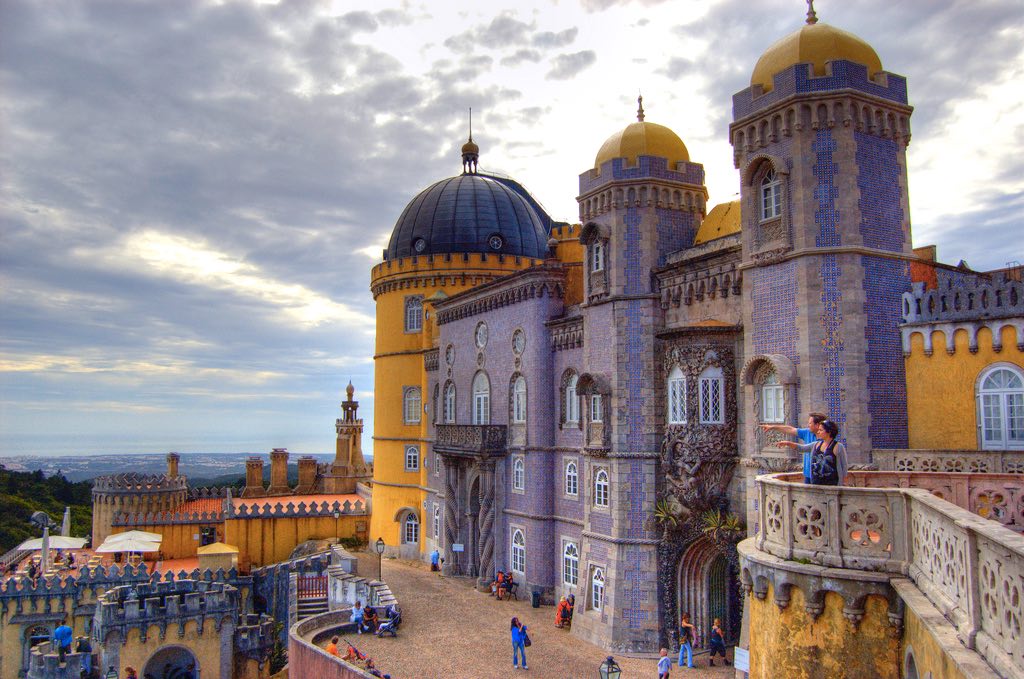
Lisbon has the stronger day trip lineup for most travelers. The iconic Sintra is 40 minutes by train and worth every minute: palaces and castles stacked into green hills in a way that looks straight out of a fairytale. Cascais is a polished coastal town 30 minutes away. There’s a string of quality beaches near Lisbon reachable in under an hour. The medieval village of Óbidos and the pilgrimage city of Fátima are both easy half-day options. See all the options in my guide to day trips from Lisbon.
Porto has excellent day trips, just with a different character. Braga and Guimarães are both historic, fascinating, and reachable by train in under an hour. Aveiro, often called the Venice of Portugal, is 1 hour south by train and well worth a half-day. But the standout is the Douro Valley: a UNESCO World Heritage wine region about 100 km east of Porto, with terraced vineyards, river cruises, and wine estates that have been running for over a century.
Technically yes: the Alfa Pendular train gets you there in 3 hours. But a Porto day trip is a lot of transit for a few hours on the ground, and Porto rewards a slower pace. If you’re based in Lisbon and curious about Porto, one night minimum is much more satisfying than a rushed day return.
Winner: Lisbon. The Douro Valley keeps Porto competitive, but Lisbon’s beach access and diversity of options gives it the edge for most travelers.
Weather & best time to visit
Both cities have good weather by European standards, but they’re not identical.
Lisbon is sunnier, hotter in summer, and milder in winter. It sits further south and benefits from Atlantic light in a way that gives the city its nickname, the City of Light. Expect 30°C+ in July and August. January rarely drops below 10°C. If you’re visiting in winter, Lisbon is comfortably the better choice.
Porto sits further north and is noticeably cooler and wetter, especially from October to March. I remember not seeing the sun for nearly a month during February. Summers are warm but not extreme, which actually makes walking around more pleasant. The city is at its best in late spring and early autumn though, when the light is good, crowds are thinner, and temperatures sit in the 20–25°C range.
For both cities, the sweet spot is May to June or September to October. You get good weather, lower prices than peak summer, and fewer crowds. Avoid July and August unless you have a particular reason: both cities are at maximum tourist saturation and prices spike accordingly.
Winner: Lisbon year-round, with the gap largest in winter. Porto wins on summer comfort if you dislike extreme heat.
Atmosphere & people
This one is hard to quantify, which is exactly why it matters.
Lisbon has the energy of a capital. It moves faster, feels more international, and has absorbed a decade of tourism in ways that have made it more cosmopolitan but also slightly more anonymous. The neighborhoods still have character, the locals are still warm, but the city has grown into its global-city identity in a way that Porto hasn’t.
Porto is smaller and it shows, in the best way. Strangers will talk to you. Restaurant owners will give you an unsolicited opinion on what to order. The city has a certain pride and grit that locals call invicta, unvanquished, and it runs through the culture in ways you can feel. It’s the kind of place where you go for a weekend and start wondering what it would take to move there.
Lisbon has more of everything. Porto has more of the thing that’s hardest to find.
Winner: Porto.

Can you visit both Porto and Lisbon?
Yes, and in most cases you should try. They’re only about 3 hours apart on the Alfa Pendular high-speed train (tickets €25–40 one-way booked in advance on cp.pt), which makes combining them into a single trip very straightforward. Porto and Lisbon are connected by frequent daily departures from Santa Apolónia or Oriente in Lisbon to Porto’s Campanhã, arriving near the city center.
The suggested split most people land on: 4–5 days in Lisbon (enough for the city plus a day trip to Sintra or the coast) and 2–3 days in Porto (enough to cover the main areas and get a feel for the city). Start in Lisbon, end in Porto, fly home from OPO. That structure works well logistically and gives each city fair time.
If you only have a long weekend (3–4 days), pick one and commit. Trying to see both in that timeframe means you’ll spend more time in transit than in either city.
For a full Portugal trip that takes in both cities and more, my Portugal road trip guide covers how to structure a longer itinerary along the coast.
Is Portugal safe to visit?
Both cities are very safe by European standards. Portugal consistently ranks in the top 7 of the Global Peace Index, and neither Lisbon nor Porto has meaningful violent crime directed at tourists.
The main thing to watch in both cities is pickpocketing in crowded tourist areas: Tram 28 in Lisbon, the Ribeira waterfront in Porto, and major viewpoints in both. Keep phones in front pockets, bags closed and in front of you, and don’t leave anything on café tables. Standard city awareness applies. Beyond that, walk around freely, including at night, without concern.
Lisbon has slightly more petty theft simply due to tourist density. Porto, being smaller and less crowded, tends to feel more relaxed in this respect.
Porto or Lisbon: the verdict
Choose Lisbon if:
- It’s your first time in Portugal and you want the most comprehensive experience
- Beaches and coastal day trips are on the agenda
- You’re traveling as a couple looking for a romantic, sun-soaked city break
- You want the widest range of restaurants, bars, and nightlife
- You’re flying in from outside Europe and want the easiest flight connections
Use my 3-day Lisbon itinerary to plan the visit, and my Lisbon travel guide for deeper context. If you want the Lisbon hidden gems most tourists miss, I have that too.
Choose Porto if:
- You want something that feels less packaged and more authentically Portuguese
- Wine culture is high on the list (Douro Valley is unmissable)
- You’re on a tighter budget
- You’ve already done Lisbon and want to see a different side of the country
- You like cities that reward slow exploration over sightseeing checklists
Start with my Porto city guide and pair it with the Porto weekend itinerary if you’re only there for a few days. The day trips from Porto guide handles everything beyond the city.
Frequently asked questions
Is Porto or Lisbon better for first-time visitors?
Lisbon is the more complete first-time experience: more sights, more variety, better flight connections, and easier day trips to places like Sintra and Cascais. That said, if budget is a concern or you prefer a slower, more local atmosphere, Porto is a very strong first choice too.
Is Porto cheaper than Lisbon?
Yes, consistently. Porto runs roughly 10–15% cheaper than Lisbon across accommodation, food, and drink. A mid-range hotel in Porto averages around €95–130 per night vs €120–160 in Lisbon. The prato do dia lunch starts around €9 in Porto vs €10–16 in Lisbon. If budget is a real factor, Porto wins clearly.
How do you get from Lisbon to Porto?
The Alfa Pendular high-speed train is the best option: around 3 hours, city center to city center, tickets from €25–40 one-way booked in advance on cp.pt. Buses (Rede Expressos) are cheaper at €10–20 but take 3.5–4.5 hours. Flying between the two is not recommended as airport transfers cancel out any time saving.
Can you visit both Porto and Lisbon in one trip?
Absolutely. The train connection makes it very easy. The most common split is 4–5 days in Lisbon plus 2–3 days in Porto. Fly into Lisbon, take the train to Porto, fly home from Porto. If you only have 3–4 days total, pick one city and commit rather than rushing both.
What is the best time to visit Porto and Lisbon?
May to June and September to October are the best months for both cities: good weather, fewer crowds, lower prices than peak summer. Avoid July and August as both cities hit maximum tourist saturation. In winter, Lisbon is the better choice thanks to milder temperatures and more sunshine.
Is it safe to visit Porto and Lisbon?
Both cities are very safe. Portugal consistently ranks in the top 7 of the Global Peace Index. Violent crime directed at tourists is rare in both cities. The main concern is pickpocketing in crowded tourist areas like Tram 28 in Lisbon or the Ribeira waterfront in Porto. Standard city awareness applies everywhere.
How many days do you need in Lisbon and Porto?
For Lisbon, plan for 3 to 5 full days: enough to cover the main neighborhoods and fit in at least one day trip (Sintra is the obvious one). For Porto, 2 to 3 days is sufficient to cover the main areas and do a day trip to the Douro Valley or Guimarães. If you are visiting both cities, allow 7 to 10 days total for a comfortable, unhurried trip.
Where does your vote go: Porto or Lisbon? Share your experience below! 👇




















I prefer Lisbon than Porto cause in the region of Lisbon there are much more things to do and to see. And Lisbon’s weather is also better.
But both are amazing cities.
Fair enough!
Regrettably I didn’t experience much friendliness from the locals in Portugal (Algarve). Notably, while visiting a small antique shop in Tavira, a coupe of elderly owners in response to my greetings began making strange gestures, as if “swiping” me out of their shop, clearly desiring for me to leave (which I did, of course).
I also was thoroughly disappointed with the fried fish and sardines. Seafood industry (including product development) has been my bread and butter, so to speak, for over 30 years and I was looking forward for my experience of Portuguese seafood to be on par with my expectations. Instead it was fried to death and didn’t taste good. But pastries were great.
Sorry to hear your experience was not as expected!
Porto is amazing. It difficult to find another place with history and a great beacj climate. We were two couples and stayed in a better appartment thant many hotels i’ve beeen. very clean, well located and with a sun roof. i recommend to look for Oporto Sun Terrace in Airbnb.
In the morning we did to beach in Matosinhos , a great beach with good vibe and my surfers, and by the afternoon we visited the Historical city and vineyard where the Porto wine is produced.
Probably one of the best destinations in Europe.
Thanks so much for comparing Porto and Lisbon in your article! Your thoughts really helped me to decide on staying in Porto for a quick week long trip I am planning next year. Both cities have buses/trains to Our Lady of Fatima and I really wanted to spend a day there. My grandparents on both sides are from Portugal (my parents were born in Brazil) but I really wanted to see more of Portugal one day to get in touch with my roots. One day I hope to retire to beautiful Portugal. That is my dream 🙂
Hey, Diego Pietruszka. Can you please be polite and do not write obscene foul language? Please be polite and considerate. Thank you.
Interesting, but it would have been easier to read if the writer’s first language was English. While the information may have been correct, the writing was not always clear. I give the writer an A for effort.
That is what can be defined as a shitty comment!
Don’t like his english, just don’t read it, move on and you will save everybody from having to read your stupidity.
Maybe it’s time to look at other places in Portugal as both Lisbon and Porto are expensive and packed with tourists these days. I would rent a car and drive along the stunning coast of Portugal.
Great suggestion, Pedro, that’s one of my favorite things to do too.
Hi, Great site, Just found this one, have to say one of the best and easiest to read and use. We are wondering if you could help with this question. We are two artists retiring from the US to Portugal this spring and are overwhelmed as where to go, Oporto areas or Lisboa areas. We have visited before and loved to many areas. Cost is a factor of course. I have written to many site regarding artists and sadly have not heard from anyone, so here’s hoping you can help, any ideas are helpful. We don’t want to be in an expat community per se as we love culture and diversity. Thank you in advance and keep up the great work. (apologies that this is not in Portuguese as we are just learning) Obrigada
I’m unsure here: what is the question? If it’s Lisbon vs Porto this article should provide some help!
I’m a very big fan of yours. I followed your Azores itinerary to a t and it didn’t disappoint and I came back to see if you have a road trip itinerary from Porto – Algarve. Do you have one or do you think this plan will be way too packed? We are planning a trip in April 19-28 and will be flying to Porto and leaving from Porto. We live in NYC so we are looking for a laid back, traditional and child friendly experience. From my initial research the must see places are Porto and the surrounding areas, Sintra and Algarve region (Lisboa as well but not sure how we can squeeze it in). It will be a big bonus if we can also find places to swim during this time of year. Any feedback will be appreciated. Thanks
What a brilliant website! Thank you for an articulate and well written review of the options. Most informative and it has definitely helped me decided on … Lisbon AND Porto!
Best possible scenario! 🙂
I”m considering retiring to Portugal, making my first visit to Lisbon next month. Not really a city person but want cultural stimulation. Also like to walk the beach. I initially was thinking Silver Coast but now am wondering if I should look Aveiro and north, especially as I love gardening and trees. DOn’t love high rise buildings on the beach. Thoughts?
Yes if you don’t like rise buildings on the beach, I’d stick to the northern or central regions.
Thanks, great read, I’m actually going to do both as well as azores as have 16 nights. But on a shorter time scale I think I would have to choose Lisbon from what you have wrote 🙂
That’s a wonderful itinerary, enjoy your time in Portugal!
this was awsome answered all my questions and made my choice of the 2 cities easier
Good, that’s the whole purpose! 🙂
Your article was the first to pop-up when I googled with keywords “Porto or Lisbon better”.
Thank you for writing this comprehensive article! We will be traveling with two kids ages 5 and 9. At the moment, we are definitely leaning toward spending more time in Porto than Lisbon, judging from your description. The good food, laid-back atmosphere and small city feels very inviting. The winery is a great idea! Would you happen to have a list or bookmarks on a map of your favorite spots for coffee, bakeries, and/or restaurants in either or both cities that you can easily share? Again, thanks for taking the time to write it!
Not at the moment, but I will probably create a list on Foursquare. Send me an email and I can send it to you!
This was very helpful. My husband and I are going to Portugal for one week in early to mid December. Which destination makes the most sense for this time of year?
It depends on many things, read the post again! 😀
Thanks for posting this. This post gives me idea on what to expect from each city. If you have a layover, which city is easier to navigate in short time period?
Both are reachable by metro. On a short time period (e.g. 1 day) you can see more of Porto than Lisbon.
Thanks so much for the article. Wow! What a tough decision. It’s my honeymoon and I need to choose.
Which would you go for? We’re Londoners looking to relax and explore. But then we’d love to visit, theatre’s, cinemas and other forms of entertainment in the night. Does the nightlife in Porto support this?
There is definitely a decent nightlife infrastructure in Porto – maybe smaller than Lisbon and more focused on weekends but still good stuff. It also depends on where you’re going. If it is September I recommend Douro Valley, great romantic getaway from Porto.
Thank you! We are trying to plan a trip through Azores getaways but we missed out on the Lisbon/Algrave deal. Porto was next up.
Now I’m not sure which way to go!!!
What a dilemma!!!!
Fear of missing out? 🙂
Choose whatever your curiosity wants, you’ll have a great time nevertheless!
I’m going to Portugal for one month for an internship. I’ll be doing some weekend trips so I’ll see both cities but which one should I choose to live in? I like the “hip and alternative”, laid-back description of Porto, but I also like the idea of busy and beachy Lisbon. I can’t choose, my head is gonna explode soon!
Haha touch choice. I can’t decide that for you, but I’ve lived in both and for me and that time, Lisbon made more sense. Maybe today I’d choose Porto though, much more relaxed.
In your case, Lisbon has the geographical advantage as it’s in the middle of the country. A weekend trip from Porto to the south might be more tiring, but you also have Ryanair….
Really though one. Let me know what you decide in the end! 😛
For us it was definitely Porto. Lisbon was very crowded. People were sceptical. Lisbon is more expansive. We liked the easy going feeling in Porto…
Thanks for sharing, Porto definitely feels more laid back. Lisbon more and more has more people and more things happening!
Great article !!!
Thank you, glad you liked it!
A week in Portugal, we are not a beach goer but love history, culture, old town and countryside. Which do you suggest or should we do 4 nights in Lisbon and 4 nights in Porto? We can’t drive so got to rely on bus / train. Is there a must visit in Portugal?
If you combine some day trips, sounds like a good plan! 😉
Thanks for your informative article!
We are going to Spain, Portugal and Morocco in May/June.
We currently have 8 nights in Portugal. I had originally wanted to travel to Porto, Lisbon and The Algarve coast, however now I am thinking that it might be better to cut it down to two destinations.
Do you have any suggestions? I was thinking Lisbon and The Algarve? But Porto also looks so wonderful..
Thank you!
Carly
It all depends on what you want to do. If you’re into beaches, Lisbon and Algarve is a good choice. However if you’re going to beaches in Spain already, it might be better to stick to Lisbon and Porto.
We’re flying into Lisbon next month, spending 4 nights there then getting the train to Porto for another 3 nights. Is it worth going to Aveiro/Costa Nova as well? They look pretty instagrammable but not sure if they’re worth the detour. Thanks!
Never been to Costa Nova. Aveiro is not a very big city and the main points of interest are seen quite quickly.
Can’t say whether it’s a worthwhile detour to you, but I personally think Nazaré/Óbidos, a day trip to Douro Valley in Porto or Sintra in Lisbon are more interesting options.
Both – going to fly into Porto, stay near Lisbon and fly out of Faro!
That sounds like a great plan!