
TL;DR: The Azores are nine volcanic Portuguese islands in the middle of the Atlantic Ocean, and they’re unlike anywhere else in Europe. The weather is unpredictable, inter-island travel is pricey, and there’s zero nightlife to speak of. What you’ll find instead: crater lakes that look like CGI, geothermal pools in the middle of ancient forests, some of the best hiking in Europe, and food that punches well above its weight. Rent a car, go slow, and book early.
I’m Bruno, born and raised in São Miguel, and people have been asking me the same questions about the Azores for years. What’s the weather actually like? Is it expensive? Is it safe? Are there good beaches? This post is my honest answer to all of them, no fluff.
Food, sights, logistics, culture, what to pack: it’s all here.
Quick tips before you visit the Azores
- ✈️ Flights: Most international flights land in Ponta Delgada (São Miguel). Check this Azores flights guide for routes and timing.
- 🏨 Hotels: Book early. Browse my pre-filtered hotel list with top reviews, parking and free WiFi included or explore this list of the best with a sea view.
- 🚗 Car rental: Pretty much essential for all islands. Book your rental car the moment you book your flight.
- 🌦️ Weather: Pack a rain jacket regardless of season. Seriously.
What do you need to know before visiting the Azores?
The Azores are nine volcanic islands spread across 600 kilometres of North Atlantic Ocean, about 1,500 km west of Lisbon. They belong to Portugal, but they feel like their own world. No mass tourism infrastructure, no beach resorts, no nightclubs. What they do have is raw, dramatic nature: crater lakes, geothermal pools, black sand beaches, whale-watching routes, and hiking trails that will wreck your legs in the best possible way.
The most important thing to know before you go: the Azores reward slow travelers. Rush through, and you’ll miss the whole point. Go slow, and the islands will reward you for it.
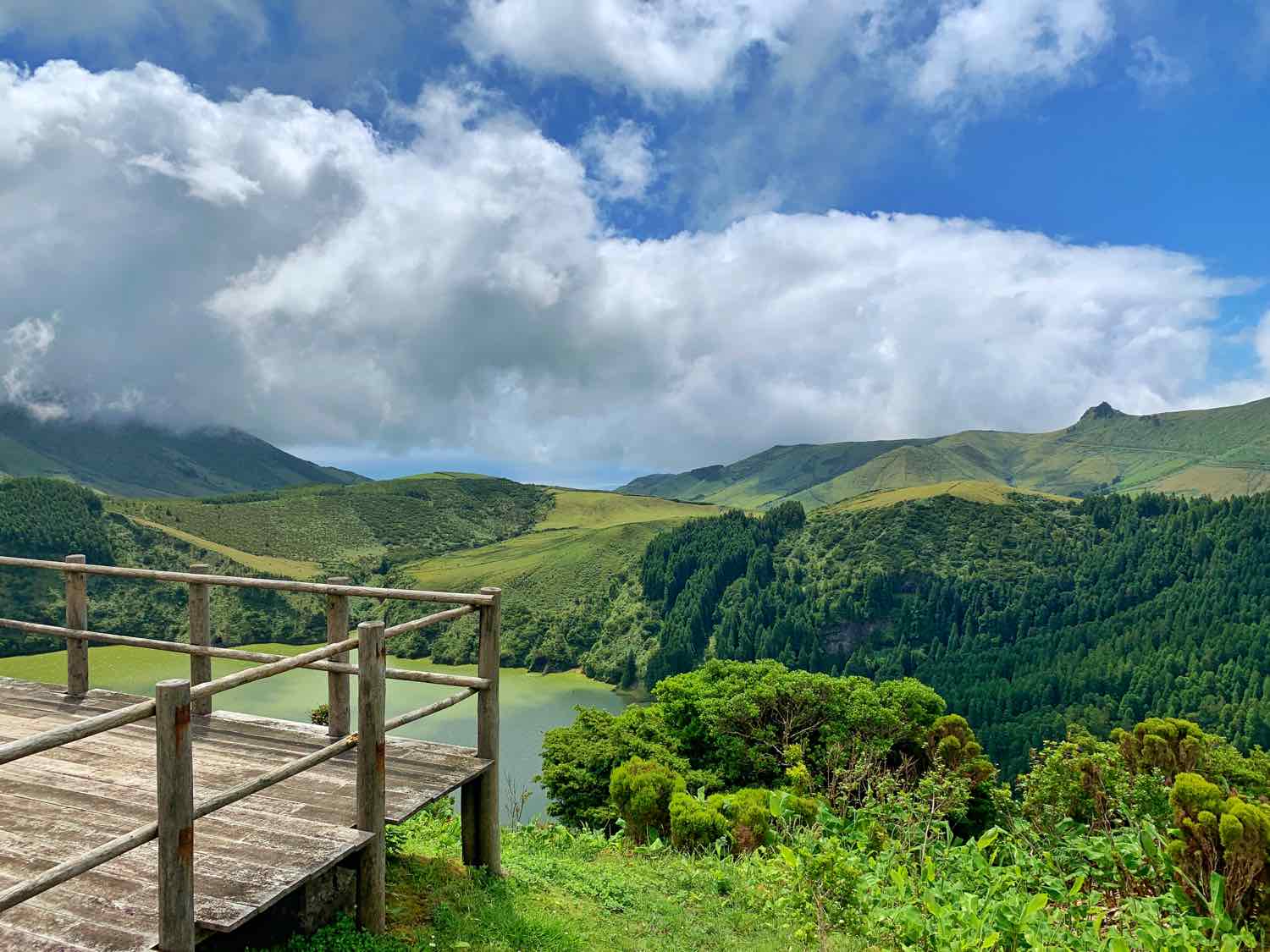
1There are 9 islands.
Starting with the basics. The Azores are nine islands divided into three geographical groups. The Western Group has Flores and Corvo. The Central Group covers Terceira, Graciosa, Faial, São Jorge, and Pico. And the Eastern Group is São Miguel and Santa Maria.
Most visitors start (and sometimes end) in São Miguel, the largest island and the one with the most direct international flights. It’s a solid choice for a first trip. But if you have two weeks or more, the smaller islands like Pico or São Jorge are absolutely worth the detour.
A word of caution: don’t try to tick off to many islands in one trip. It ends in exhaustion, cancelled flights, and regret. Read my guide on which islands to visit in the Azores before you plan anything.
2It’s NOT a party destination.
Don’t expect to party hard in the Azores. If you’re looking for Ibiza-style nightclubs or cocktail bars with a dress code, this is the wrong archipelago. The Azores are remote, tranquil, and locals are proud of exactly that. Call us boring, but we don’t care that much about clubs or the latest fashion trends.
Now, of course there are small bars, pubs, and unpretentious local spots where people meet. Sometimes the party spills onto the street. Those are the best places to get a feel for local culture. But if nightlife is a dealbreaker, reconsider.

Pre-filtered list of hotels with top reviews and location with parking and free WiFi included.
3What is the weather like in the Azores?
The Azores have a mild maritime climate year-round, but the defining feature is unpredictability. The islands sit in the middle of the North Atlantic, which means weather systems collide here constantly. A clear blue morning can turn into a sideways rainstorm by afternoon. This happens all year, including summer, so be prepared to have alt plans.
If I had a penny for every time someone asked me “What will the weather be like in the Azores in [random date]?”, I’d retire immediately. The honest answer: nobody knows. What I can tell you is that the best time to visit the Azores in terms of weather stability is June through September, with July and August being the sunniest months. But even in summer, pack a light rain jacket. I’m not joking.
I went to school every single day with an umbrella, even on the sunniest mornings. A clear blue sky at 9am and a storm at 3pm is just Tuesday here. Check the Visit Azores webcams for real-time conditions before heading out.
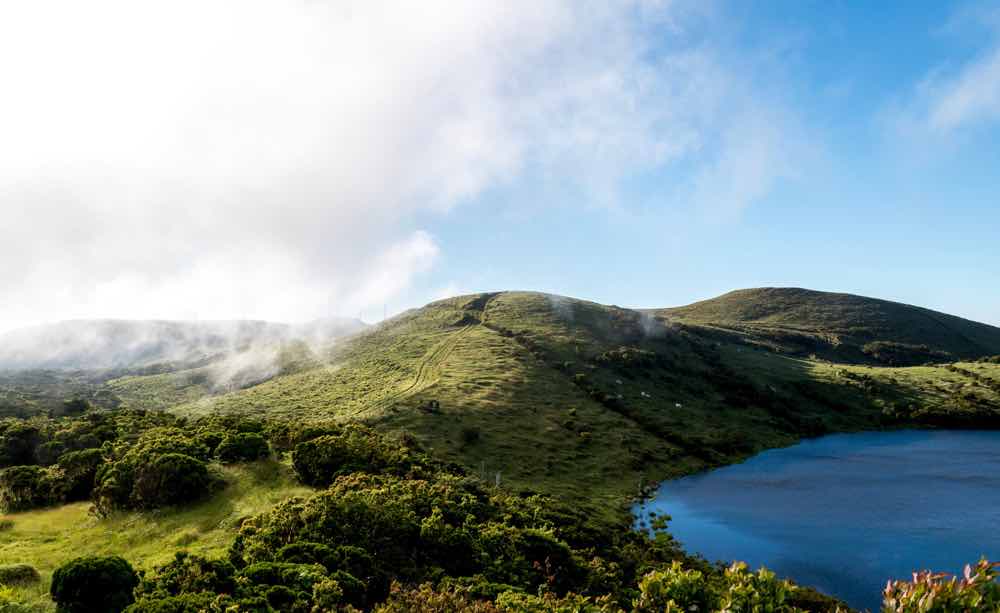
4There are signs of volcanic activity everywhere.
The Azores are often called the European Hawaii, and the volcanic origin is a big part of why. You’ll see evidence of it everywhere you look:
- Dark grey, almost-black volcanic sand on nearly every beach.
- Geysers in Furnas Valley, where hot steam rises straight from the ground. You can eat a stew cooked underground there.
- The Capelinhos volcano in Faial, where you can walk on apocalyptic lava fields from a 1957 eruption.
- Geothermal pools scattered across the islands, warm enough to swim in year-round.
This is not background decoration. The volcanic landscape is the whole experience.
5Bathing in thermal springs is a must-do!
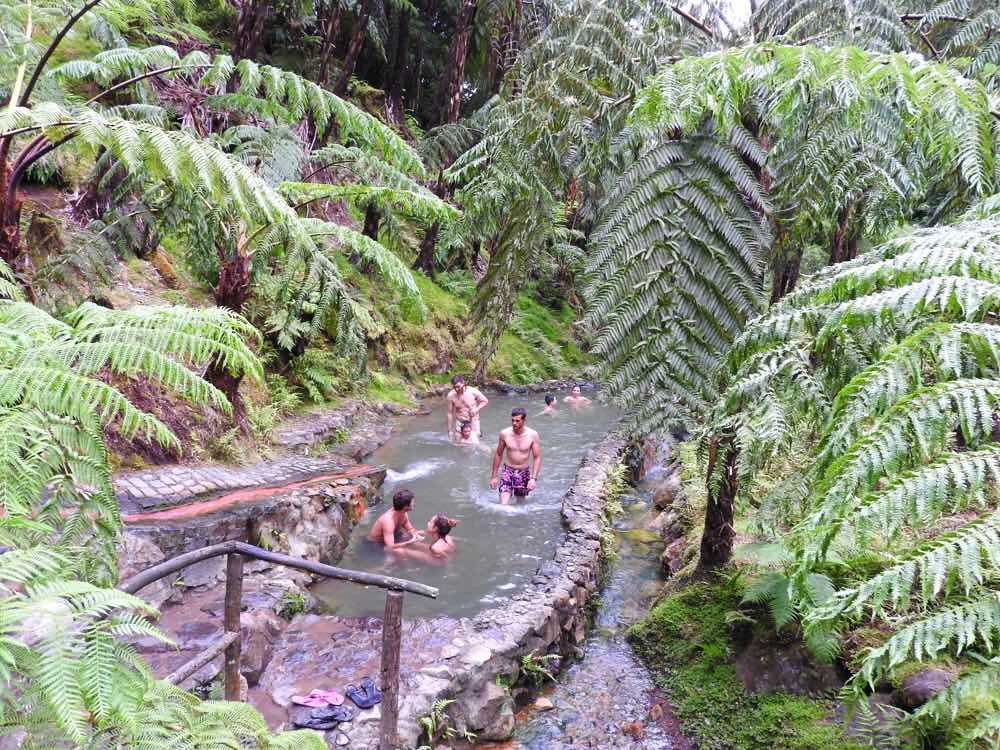
Even though the Azores benefit from the Gulf Stream, the open Atlantic is still cold. The thermal springs are the answer. Natural geothermal pools are common in São Miguel: Poça Dona Beija, Caldeira Velha, and Terra Nostra are iron-enriched, rust-colored waters surrounded by ancient forest. They’re unlike anything else in Europe.
Pro tip: save the hotsprings for your gloomiest, rainiest day. Warm water feels infinitely better when it’s cold outside.

The best places to enjoy a mineral-enriched bath in São Miguel island. Includes important tips for a safe swim.
6It’s the place to try new outdoor activities.
From hiking to horse riding, world-class whale-watching to paragliding over volcanic craters, the Azores have an almost embarrassing range of outdoor activities. If you’re going to come all the way out here, you should do something properly adventurous. In São Miguel, Picos de Aventura is a reliable local operator with a wide menu of expeditions.
Outdoor activities to do in the Azores 🌲
- Hiking: Dozens of official hiking trails across the islands. The most challenging is climbing Pico Mountain, the highest point in Portugal at 2,351m.
- Canyoning: Waterfalls surrounded by lush green forest. São Miguel and Flores are the best islands for this.
- Whale watching: One of the world’s top destinations. Pico island is the hub; April-May is peak season for species diversity.
- Horse riding: Private companies arrange tailored tours around lakes and coastal paths.
- Paragliding: Tandem flights over the calderas of Furnas and Sete Cidades in São Miguel are growing in popularity.
- Kayaking: Most major lakes in São Miguel have rentals (except Lagoa do Fogo, a nature reserve). Sea kayaking is available across almost all islands.
- Surfing: The wild Atlantic delivers good waves. A stage of the World Surf League is held in Ribeira Grande, São Miguel.
- Diving: Exceptional dive sites including the Rosais reef (São Jorge), whale sharks at Santa Maria, and the bay at Angra do Heroísmo (Terceira).
- Swimming with dolphins: Most responsible operators have stopped offering this. It stresses the animals. Avoid.
7There are plenty of dope crater lakes all around.
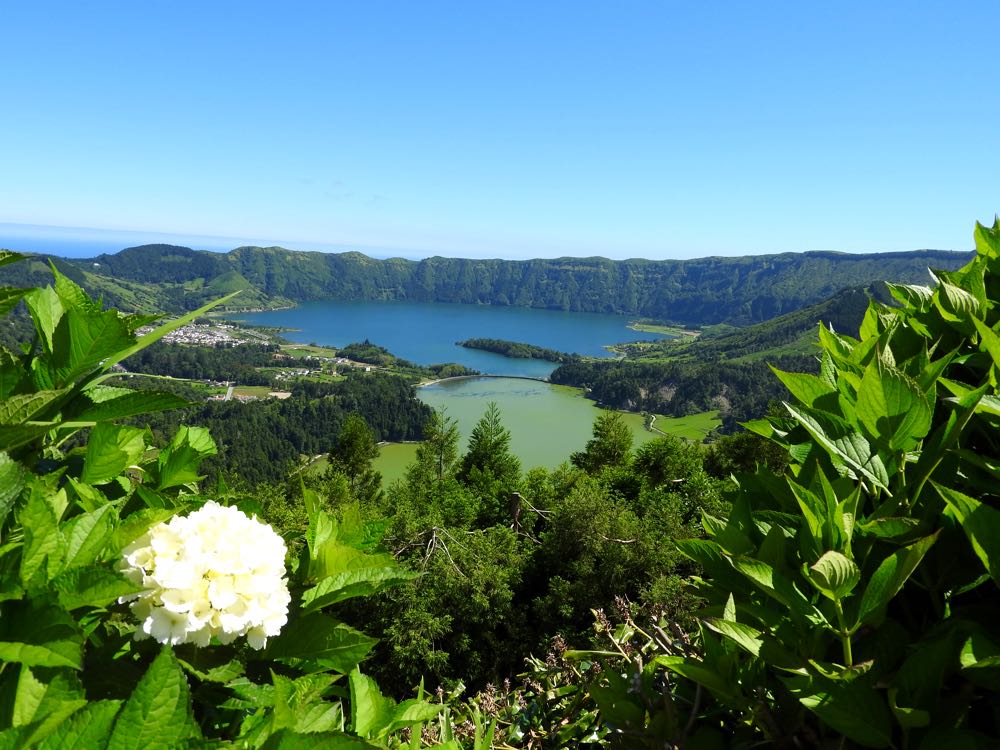
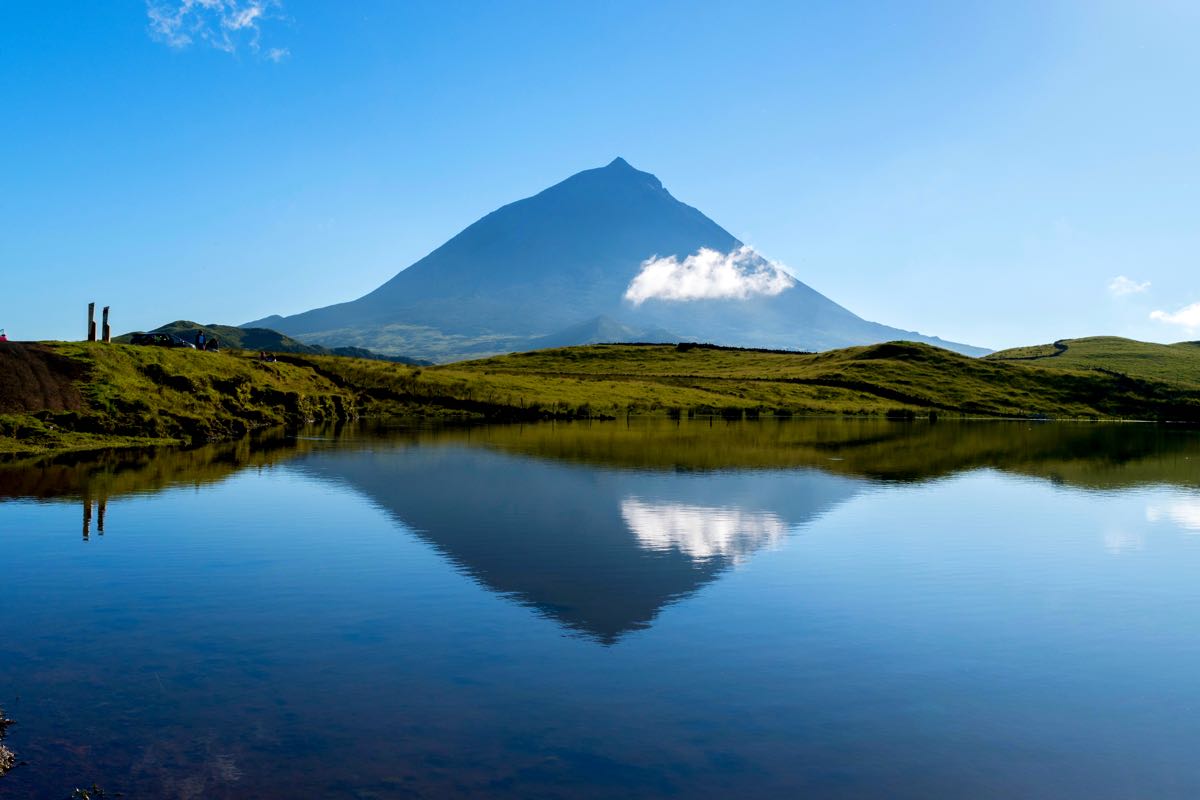
If there’s a single thing the Azores are most famous for, it’s the lakes. They sit inside volcanic calderas, surrounded by green ridges and forest. The color of the water is almost offensively beautiful. Lagoa das Sete Cidades in São Miguel is the one that ends up on every travel brochure, and rightly so.
Most of the major lakes have hiking trails around them, which means the views just keep changing. Take the whole morning. Don’t rush it.
The best lakes in the Azores 🏞️
- Lagoa das Sete Cidades – São Miguel
- Lagoa do Fogo – São Miguel
- Lagoa das Furnas – São Miguel
- Lagoa do Capitão – Pico
- Lagoa Negra & Comprida – Flores
- Poço Ribeira do Ferreiro/Lagoa dos Patos – Flores
- Caldeirão – Corvo
8Mother Nature is in charge.
This is the most important thing to take away from this entire post. The Azores have kept their lakes, cliffs, and meadows so beautiful for so long because locals have a deep respect for the land and ocean. Sustainability isn’t a marketing slogan here, it’s genuine culture.
When you’re out there, act accordingly. Always put trash in bins (especially plastic), don’t play loud music outdoors, and don’t stray off marked trails. The Azores have been named one of the world’s top sustainable destinations multiple years in a row. Help keep it that way.
9Pick the islands to visit with logistics in mind.
Choosing which islands to visit is one of the most important decisions you’ll make for this trip, and the logistics do really matter. Read my overview of which islands to visit in the Azores before committing to anything.
A trip to São Miguel alone gives you a solid taste of what the Azores are about. If you want to add more islands, study the ferry schedules and inter-island flight prices before you book. They will surprise you.
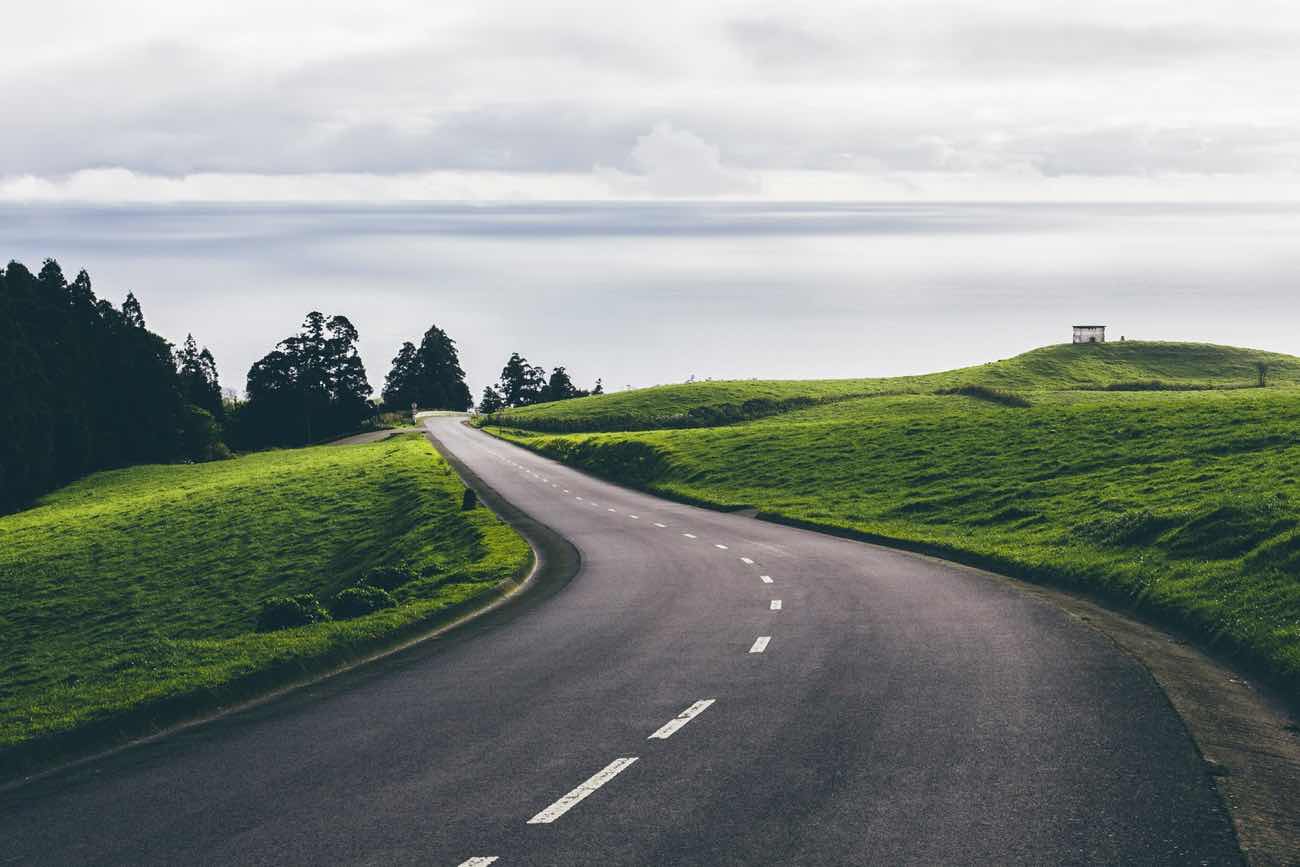
Which islands to visit in Azores?
Advice and planning tips to pick an efficient travel itinerary around the islands.
10Traveling between islands is not easy or cheap.
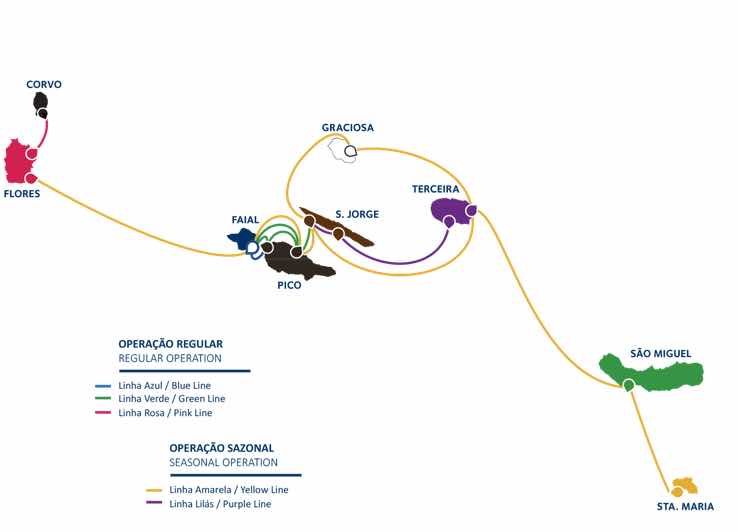
Public transportation in the Azores is limited, and getting between islands is tricky. You have two options.
Flying: SATA/Azores Airlines operates all inter-island flights. With no competition, prices are steep. A short 45-minute hop from São Miguel to Pico costed me €100.
Ferry: Atlântico Line runs routes between most of the islands. It’s more affordable, but journeys are long. São Miguel to Santa Maria alone takes around 3 hours on open Atlantic water.
My personal rule: fly between islands from different groups (Western, Central, Eastern), and use the ferry only for short hops within the same group, like Faial to Pico or Flores to Corvo. And whatever you do, leave the island you’re departing from for last in your itinerary. Weather cancellations happen more than you’d expect.
Ferries in Azores ⛴️
All inter-island ferry services fall under the Atlântico Line parent company:
- Eastern Group (São Miguel and Santa Maria): Summer only. Around 3 hours. Book via Atlântico Line.
- Central Group (São Jorge, Pico, Faial): Several times daily, year-round. Very reliable given the short distances. Book via Atlântico Line or Transmaçor.
- Western Group (Flores and Corvo): Atlântico Line runs to Flores. A small ferry connects Flores to Corvo, capacity of around 10-15 passengers.
11Get your own wheels.
Taxis are expensive, private guides even more so, and the bus network won’t get you anywhere near the main sights. The only practical solution is to rent a car. I cannot stress this enough.
In peak summer, São Miguel can run completely out of available rentals. Zero cars. I’ve seen it happen. Book your car rental the same day you book your flights, not the week before you travel.
12It’s always tea o’clock.

The Azores are the only place in Europe where tea is commercially grown. The tea estates of São Miguel have been producing organic black, green, and orange pekoe teas since 1883. Stop by Gorreana or Porto Formoso for a visit. There’s a hiking trail through the tea fields, the tour is free, and the little tea boxes make excellent gifts. This is one of those underrated stops that most visitors skip and later regret.
Pre-filtered list of hotels with top reviews and location with parking and free WiFi included.
13Get used to a different kind of beaches.
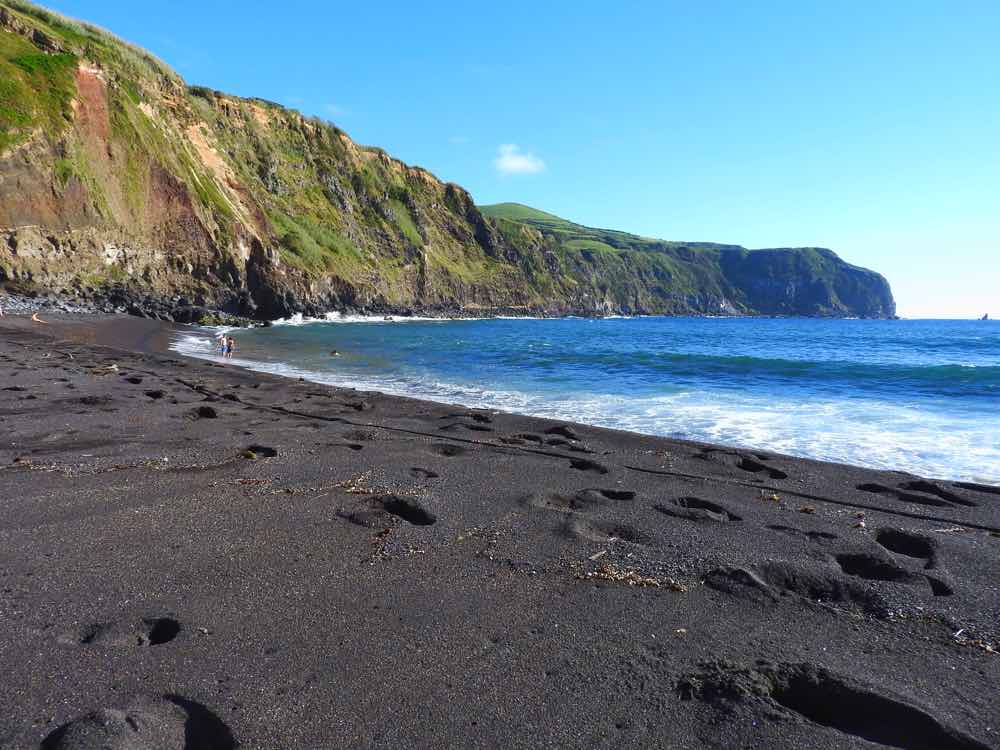
Don’t arrive expecting white sand and turquoise Instagram water. The beaches in the Azores are volcanic, with dark grey sand and rougher Atlantic waves. The water visibility is lower than the Mediterranean, but the character more than makes up for it.
On the upside, the Gulf Stream keeps sea temperatures at around 27°C in summer, which is warm for the North Atlantic. In winter it drops to around 15°C. Still swimmable if you’re brave.

Beaches in Azores
The best Azores beaches plus important tips before you go for an ocean swim.
14Your budget won’t get hurt.
The Azores are slightly more expensive than mainland Portugal (insularity has a cost), but still very affordable by European standards. A realistic daily budget of €120-150 covers accommodation, food, and local transportation. The prices below give you a better idea of what to expect.
Prices in Azores (as of 2026)
| Item | Price in Azores |
|---|---|
| Dinner for two + bottle of wine (inexpensive restaurant) | From €55 |
| Espresso coffee | From €0.80 |
| Local beer (bar) | From €1.50 |
| Whale-watching tour (3 hours) | From €65 |
| Double room per night (high season) | From €120 |
| Double room per night (low season) | From €60 |
15Pack smart.
Dress code across the islands is relaxed and practical. The most important item is a waterproof jacket, regardless of season. After that: good hiking shoes with grip (flip flops are a bad idea on wet cobblestones and muddy trails), comfortable clothes that dry quickly, and a small daypack.
In summer, shorts are fine even on rainy days since legs dry faster than fabric. In winter, it’s not freezing but the combination of wind and rain can be brutal. Come prepared.
Packing checklist for Azores 👕
- Light waterproof rain jacket
- Hiking shoes with good grip
- Camera: an action cam like a GoPro pairs well with a compact DSLR
- Small daypack
- Old swimwear and towel (the thermal springs leave light orange iron stains that won’t come out)
- Water filter bottle to avoid plastic waste
- Travel adapter plug (Portugal uses Type F)
- Power bank: there are no outlets in the wild
See 20 travel accessories worth packing for the full kit.

Make sure you have all the apps and equipment for safe and worry-free travels.
16The food (especially the meat) is delicious.
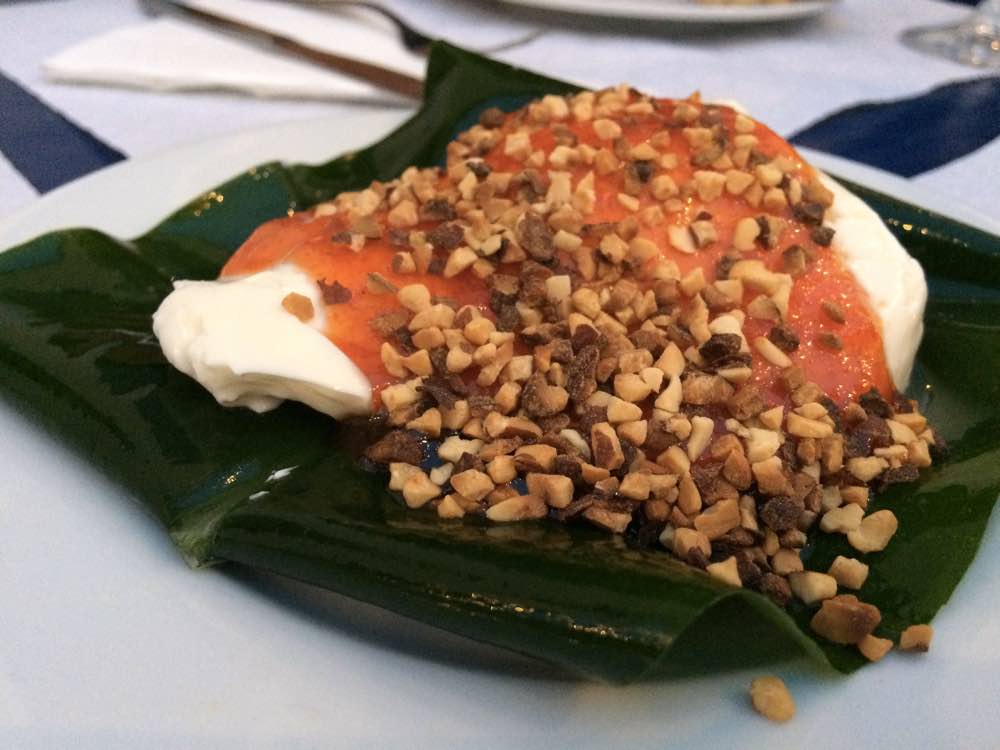
I’ve dedicated an entire post to food in São Miguel because the topic deserves it. Azorean food is based on a Mediterranean diet with generous portions and honest prices. The quality of the dairy and meat is exceptional: pasture-raised cattle, no factory farming, and it shows on the plate.
The most famous dish is Cozido das Furnas, a slow-cooked stew prepared underground using volcanic geothermal heat. It’s a novelty worth experiencing. But personally, the bife (steak) is what makes me nostalgic. Tender, juicy, and from cattle that actually graze. I stopped eating red meat elsewhere because nothing compares.
Don’t miss: alcatra from Terceira island, the iconic Azorean pineapple (nothing like the supermarket variety), and fresh queijadas pastries.
17A bit of Portuguese can go a long way.
English is widely spoken in the Azores, especially among younger generations. Older locals may be more comfortable with some Spanish or French. Either way, making the effort to say a few words in Portuguese goes a long way: locals appreciate it, and you’ll often get warmer service and better tips in return.
Basic Portuguese words and expressions 🗣️
- 🗣️ Hello – Olá (Olah)
- 🗣️ Good morning – Bom dia (Bom deeya)
- 🗣️ Good night – Boa noite (Boa noite)
- 🗣️ Thank you – Obrigado (males) / Obrigada (females)
- 🗣️ Yes / No – Sim / Não
- 🗣️ Excuse me / Sorry – Desculpe (des-kul-pe)
- 🗣️ See you tomorrow – Até amanhã (Atay aman-yah)
18Adapt to local infrastructure.
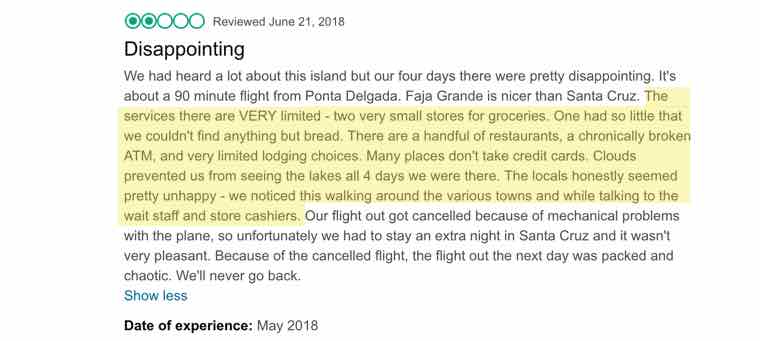
No big shopping malls, no premium restaurants, no party venues. Even São Miguel, the most developed island, keeps things simple. The other islands are more remote still. This is not a bug. It’s the whole point.
The Azores are for disconnecting from routine and reconnecting with nature. Adapt, respect the culture, slow down, and you’ll love it. Even if the WiFi signal is weak.
19Practice slow travel.
The #1 mistake I see in trip plans sent to me: cramming too many islands into too few days. People want to see everything. But the Azores punish rushed itineraries with weather delays, expensive last-minute flights, and exhaustion.
The whole point of this trip is not ticking boxes but letting the place actually get to you. Enjoy the unexpected detour. Sit by a lake for an hour doing nothing. Book a full day for a proper hiking trail. Less is more here.
20Get there before mass tourism does.
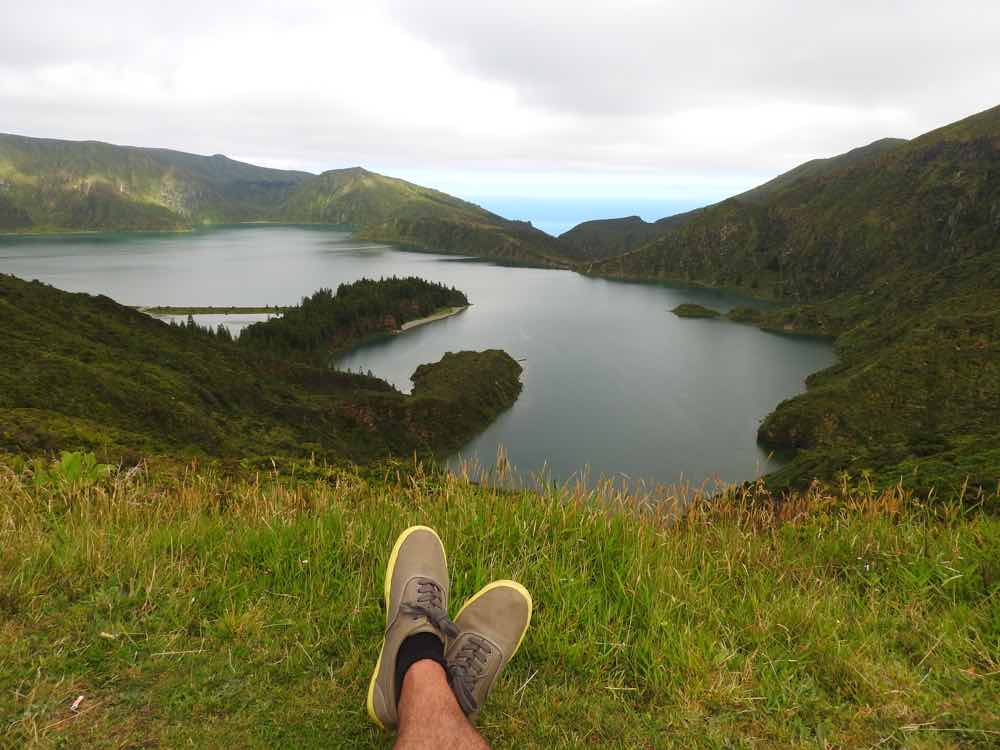
Ten years ago, most people outside Portugal had never heard of the Azores. Now several airlines have opened direct routes, tourism numbers are growing 5-10% per year, and São Miguel in peak summer is starting to feel crowded in places. It’s still nowhere near spoiled, but the trajectory is visible.
Go now, while you can still have a crater lake mostly to yourself on a weekday morning. That window is getting smaller every year.
Planning a trip to Azores by yourself
Booking your flight
Most international flights land at Ponta Delgada airport in São Miguel (PDL). You’ll find direct connections from the US, Canada, mainland Portugal, and several European cities. Check the Azores flights guide for current routes. As a general rule, flights from Porto, Lisbon, or London tend to be the most affordable options.
Booking a hotel
Start with my pre-filtered hotel list across all islands. I have also put together a list of the best hotels with a sea view and the top LGBTQ-friendly hotels.
Booking a car
If you ask me, renting a car is the single best investment you’ll make for this trip. An island road trip adds a sense of freedom that tours and taxis simply can’t replicate.
The sustainability of Azores
The Azores are beautiful and fragile in equal measure. These are not party islands or beach resort destinations. They’re living ecosystems that need care from every visitor who steps foot on them.
The islands have been consecutively named one of the top sustainable destinations in the world. When you’re there, minimize your impact at all times. Leave nothing but footprints, avoid loud music outdoors, and take ALL your trash with you until you find a bin. Especially plastic.
Thank you for keeping my home green. 💚
Ready to go?
The Azores are one of those places that are hard to describe without sounding like a travel brochure. You have to be there to understand it. My advice is simple: rent a car, go slow, eat the steak, and don’t try to see everything at once. The islands will reward patience every time.
If you are ready to start planning your trip to Azores, start here!
Is the Azores safe for tourists?
Yes, the Azores are very safe. Crime rates are among the lowest in Europe, and violent crime is extremely rare. The main safety considerations are natural: unpredictable weather, rough Atlantic waves on beaches, and slippery volcanic terrain on trails. Always check conditions before hiking, swim only at supervised beaches, and respect ocean warnings. The local population is welcoming to visitors.
How many days do you need in the Azores?
A minimum of 5 full days is recommended for São Miguel island alone. If you plan to visit multiple islands, add at least 2-3 days per island. A typical first visit runs 7-10 days. Less than a week and you'll feel rushed. The Azores reward slow travel, so resist the temptation to cram in too many islands if your time is limited.
What is the best time to visit the Azores?
June to September offers the most stable weather and the longest days. July and August are peak months for sunshine, though they're also the most crowded and expensive. June and September hit the sweet spot: good weather, fewer tourists, and lower prices. Whale-watching peaks in April and May. Winter is rainy and windy, but thermal springs are at their best when it's cold outside.
Do you need a car in the Azores?
Yes, on every island. Public buses are infrequent and don't reach the main sights. Taxis are expensive, and private guides remove the freedom to explore at your own pace. Renting a car is the single best decision you can make for this trip. Book it when you book your flight, because peak-season rentals sell out completely in São Miguel.
What currency is used in the Azores?
The Azores use the Euro (€), as part of Portugal and the EU. Cards are widely accepted in hotels, restaurants, and larger shops. Carry some cash for smaller local markets, roadside stalls, and more remote villages where card machines may not be reliable.
Can you visit the Azores on a budget?
Yes. The Azores are affordable by European standards. A realistic daily budget of €120-150 covers a mid-range hotel, three meals, and local transportation. Budget travelers staying in hostels or guesthouses can do it for less. The main expenses are inter-island flights and car rental. Food and day-to-day costs are very reasonable.

















Thank you for your time and wisdom! I am thinking about traveling by bike packing or at least would love to ride daily on the trip and f possible road, gravel or trails. Your thoughts??
Was wondering about cost of staying in a villa compared to a hotel. Any reccomendations? A villa, I think, would allow for a more cultural experience having to shop for food, etc. Any thoughts?
Different trip experience for sure – it allow you to be more in touch with the day-to-day of locals, specially if you venture out to smaller villages
and settlements. Personally I love the idea, but each to its own I guess I’d also say it also depends on how much time you’ve got to cook, etc.
Anyone made this trip from Hawaii?
It seems daunting and from the looks of it adds an extra layer of difficulty in traveling to the Azores.
Been looking into this a bit lately. Seems incredibly expensive with long layovers. Anyone have any tips or experience?
wonderful place ! enjoyed reading your post and lovely pics. https://oneearthhotels.com/patnitoph.aspx
Perfect articles to help me plan our trip to the Azores this year. This is a bit off topic but I’ve heard that there are a lot of stray animals and animals kept chained outside ‘guarding’ the house on the islands?
Bom Dia!
Would love a list of critically acclaimed Azorean writers, or award-winning book, or literary fiction set in the Azores.
Ha! Great idea. I’ll add this to my to do list.
Thank you for the great tips, you sure know and love your islands! I wonder if you can help us find a nice, quiet and (somewhat) remote house for three months in Sao Miguel – to relax, work and travel…, between March and June 2022. We looked in many websites and apps, so far without success… of course we’re happy to pay for the assistance 🙂
Great article…thanks!
A fantastic site about the Azores! Your dedication and love for your islands shines through. I had heard of them but didn’t have a clue where they were or what they were about. They are now on my itinerary list (prob 2023).
Thank you – Conor Nolan (Ireland)
Thank you Conor, appreciate your kind words coming from a fellow islander
I have small shiba inu……here in Cascais life is made difficult with adog. Who is it in the Azores?
I’m afraid it’s the same. You can’t enter most public places (including beaches) with a dog. Sorry!
I’m confused. You talk about travel between the islands and how it’s difficult…but, it seems also the ferries run certain months of the year? Which months are those?
Number 10 on the above list has more information about ferries.
Basically it depends on which islands you’re traveling from/to.
In 2020, there’s even less routes than usual due to the COVID pandemic.
Hi I am planning to visit Azores in October 2020. I am a solo traveller. I would love to enjoys beaches ,hiking and cave walks. Which island should I prefer as I want to spend 7 days. What should be my budget for 7 days excluding flights. Can you please let me know a ball point figure? Also I don’t know to drive so any other alternative?
I encourage to read Which island to visit in Azores – only you can decide which island is more appealing 🙂
In terms of budget, that really depends on your travel style: where you eat, where you stay, the tours you take, etc. 70-90 euros/day is the bare minimum I’d say.
Public transportation is poor in the islands, and doesn’t get to the best sights, so I really recommend getting your own wheels somehow.
My brother and I are planning a trip there soon. Our grandfather is from Pico, but came to the US in the 1920s. Do you have any idea where I could find records? I’ve been trying to at least find baptism records, but I’m wondering if they’re in a church somewhere. We are wanting to see where he is from and maybe if genealogy is well documented find some distant relatives! A lot of his family stayed. Thanks for your help. Article was awesome!
Sorry, I have no idea where to start with that investigation!
Hi Bruno
Thank you for your amazing effort in providing us with so much information, and giving us a good idea on what to look forward to.
We have a trip booked for the first week of June 2020. However it looks like the Azores will still be closed of for those of us from outside Portugal due to the Corona-virus crisis. We still have not had any definite answer but I fear we will have to delay our trip by a year. What do you think?
Meantime we will enjoy your photographs!
Thank you Bob.
The islands are not closed, they are enforcing preventive measures (e.g. you need to test negative at arrival and 5-6 days after) but I personally don’t think this is the time to travel abroad.
I’m from the Azores. Was adopted and want to go back to visit. But you didn’t say much about tercira.
I focus on other islands I know better. 🙂
Love the Azores, have wonderful memories, Have been there several times, people are very friendly and helpful. Looking forward go going again.
Glad to hear that Betty! 🙂
Hi Bruno!
Extremely helpful current info! I am planning to visit around end of February. I’m expecting mild temps, 15-20C, not hot, but not cold. Concerned about rain though. Thinking about Sao Miguel and maybe 2 others. Sounds like not going to be hot enough to chill at the beaches or be a warm beach vacay?? Thanks!
Well, all depends on your resilience, but I would definitely not count with warm beach. Keep in mind 15C in Azores are deceiving because of the humidity, it feels colder.
if your goal is to go for the beach around this time, I suggest looking into Cape Verde or Canary Islands.
This a great collection of travel tips, Keep inspiring People like me 🙂 (link removed)
Thank you!
Hi Bruno,
first of all – your blog is amazing and full of really useful advice. When I found it – it was like treasure for me 🙂
But, I would like to ask for your advice.
Me and my friend are planning to visit Azores in late May 2020 (from May 19 to May 28).
We are planning to fly from Porto to Terceira and from Terceira to take ferry and visit Sao Miguel and get back from Sao Migel to Lisbon.
I had downloaded the AtlanticoLine for ferry schedules, but it’s somehow tricky to understand whether ferries are operating on May? Maybe you know from your experience? 🙂
Greetings from Lithuania!
Thanks Gintare.
It’s indeed tricky because Terceira-Sao Miguel route operates only on summer time. This year (2019) it started on the 23rd May, as far as I know they didn’t release the operating dates for 2020 yet. I suggest booking a flight.
Hi Bruno:
Solo GWM traveler here from Washington DC will be in Sao Miguel Oct 12-16. Mostly unplugged, mixed frugal/splurge type DIY adventurous traveler. Looking forward to it (go away hurricane) immensely. Much gratitude for the Azores articles. Your love of your home shows!
1. In general, are the hiking options ones that do not have the availability to file a hiking plan with local authorities? Always something to be aware of when off the beaten path solo.
2. What is the island like on a Sunday? Meaning are some/many attractions or restaurants closed?
3. Are there any gay friendly bars in Ponta Delgada? I don’t expect Lisbon-style nightlife (that is not my scene anyways) but the option to meet some locals for low key conversation and a beer/wine is always nice.
First of all GWM?
1. Usually hikes in Azores are freestyle and there’s no need to advise authorities (a notable exception is climbing Mount Pico). Check my hiking in Azores article for more info.
2. Some shops are closed, but plenty of restaurants open, especially in larger towns.
3. No. Some of the more hip and stylish places naturally attract some gay people though.
Very informative and thorough site. Thank you.
I was wondering San Miguel would be suitable for a winter sun vacation?
What weather is normal during February and March?
Thanks
Define “normal” please?
It’s some of the coldest months of the year for Azores (12-18C), but all is relative. If you’re coming from Russia, it’s excellent. If you’re coming from Malta it’ll be awful.
I would love more information on visiting
What would you like to know?
How does one mail postcards on Sao Miguel? Is there an alternative to the post office? Thanks!
What do you mean?
As far as I know, any mail item has to go through a normal post office. There’s plenty of them in São Miguel.
DON’T FLY SATA / AZORES AIRLINES. SEE (link removed)
Links are not allowed in comments. Care to explain what happened?
Muito obrigada por um artigo super completo e pormenorizado sobre a maravilha que são os Açores.
Esse artigo /guia é super completo para quem quer visitar e ter noção daquilo que o espera.
Seja Wi-Fi lento, ou ATMs reduzidos, etc etc .
O meu avô paterno é das Flores , não o conheci mas até agora ainda não tive a oportunidade de visitar e descobrir esse paraíso.
Resido na Inglaterra e tenho planos de visitar as ilhas este ano ainda ou para o ano sem falta.
Deve ser destino porque assistia ao programa da RTP1 hoje que está a ser filmado nos Açores e fiquei com mais vontade de visitar e conhecer.
And not you are not bragging about Azores, it’s truly amazing and should be keep unspoilt as it is! We can only talk about what is truly good and elevate our beautiful country always.
Obrigada ,
Marcela Fontes
Obrigado Marcela! The islands await your visit…
Love this
Thanks Helio!
Hello, we (couple) are travelling to Azores in August. We were thinking of renting scooter for travelling around an island. Is it good idea or do you recommend car? Thanks a lot for answer. Lea
That will depend on the island you’re visiting.
Flores? Sure, it works.
São Miguel? Doable, but too big to rent a scooter, IMHO.
Hi Bruno, I shall be travelling to Sao Miguel for 9 days with my son 19th till 27th July. Is it possible to take a ferry from Sao Miguel to Pico? Would a days’ trip be enough – would it be a good idea? We just want to have a good feel about visiting Pico. Also, can one actually be lucky enough to watch dolphins with the ferry ride? I still need to read a lot in advance before we leave for our holiday – but your tips are very helpful ☺. Thanks a lot!
Plus: we plan to go for the whale watching trip anyways…I hope we’re lucky to spot a few of these wonderful sea beauties…
It’s possible to take a ferry to Pico but it’s not direct, check the routes on Atlântico Line. DEFINITELY not a day trip, please allow 2-3 full days there. As for dolphins, you may or may not, they’re around but who knows when they decide to show up 😛
Hi Bruno, I’ve always wanted to go to Azores and now is finally my time. So thank you for this pretty useful overview before we go. You also mentioned in the article some adventures which I really want to try, I found the site called outdoorvisit.com and everything looks pretty amazing and responsible to the environment. Do you have any experience with this company? Thank you.
xx Jojo
I don’t know this company, sorry.
All my tips are for an almost 100% independent travel, with no tours.
Hi Bruno,
Your site is wonderful and very helpful! I am visiting the Azores in Sept (a dream trip!), but I am having trouble understanding how the inter-island connecting flights through SATA works. I contacted SATA’s customer service but I still didn’t understand their answer. I am flying round-trip to Lisbon from NYC, then to PDL for 4 days, Pico for 3 days and Terceira for 3 days. I thought the flight from Terceira back to Lisbon qualified but SATA said no. Any inside perspective would be appreciated. Thanks so much!
Interconnecting flights are a system to compensate the islands more poorly connected and thus, are only eligible for islands who do NOT have a direct connection with the mainland. You’re flying to PDL and coming back from Terceira directly to Lisbon, so there’s no free flight.
Hi Bruno,
I am so happy to have found your site; great information! We are coming to the Azores this June. Adventure-nature-culture-loving family of 4 (my kids are 6 & 7). We have 9 days. I was going to spend the entire time in Sao Miguel, but move hotels to get a little mix-up and some different “feels” (Santa Barbara Eco Hotel and then moving to Furnace Villa Lakes; possibly ending in the Azore Hotel before we leave for a night-ish.) However, I have found that the festival of SanJoanias falls during the time we will be visiting. The kids would probably like a parade and some festival action to mix in with our nature activities. I can book the Tereira Mar hotel for two nights (June 26th-28th). Is it worth the travel time, extra airfare (ferry looks really LONG) and logistical stuff to hop over there? I would take out the furnace hotel stay… Thanks in advance! Appreciate your local input 🙂
Best, Jen
**Furnas (excuse my spelling! took me longer to google how to spell these destinations, then the actual writing of the post 😉 ) thanks again.
Sanjoaninas are a big party – one of the largest in Azores – and definitely fun, lively, and vibrant. Could be interesting to add it to your itinerary, but I guess only you can decide if it’s worth the extra hassle or not. Check planes too.
Hey Bruno –
Just want to say thank you!
Your information is definitely helps people to know the island better, make me REALLY wanna visit the islands someday. p.s. your article is fun to read, keep it up!
Thank you Minnie!
Good morning sir.
I was wondering, are you experiencing a plague of drones? Do I need to bring a shotgun? Please tell me this is regulated…
Portuguese law allows drones in Azores up to 120m, except in areas confined to airports. There have been some drones flying around, but nothing overwhelming.
We are going to San Manuel in May. We will have our two kids, 1 & 2 years old. I would LOVE to do whale watching but am hesitant with the littles. Do you have recommendations on perhaps a larger-ish boat that isn’t too speedy? Or would renting a private boat be an option?
The island is called São Miguel.
Companies have larger and smaller boats, pretty sure there’s one big enough suited for little kids.
Hello Bruno,
We wish to come in Azores in September. I am looking for a nice luxury place to stay. What do you suggest ? I want to pamper my self ! 🙂 Thanks !
Hi Jojo, you deserve it!
Check here my suggestions.
Hey there! After weeks and weeks of eyeing it, my wife and I are coming over on Saturday for a four day first trip!! (I work for an airline so can be pretty spontaneous…so why not!) Anyway, we can’t wait. Seriously, though, this is a really inspiring site/blog you’ve put together and I appreciate that you posted the heartfelt guidance for first timers. Anyway, I have this feeling I am going to fall in love with Sao Miguel. I’ll make sure comment here on our successful pursuit of the itinerary when we return next week!
Thanks for passing by Evan, please let me know what you thought of Azores 🙂
Dear Bruno, We are planning to come to Sao Miguel end of March. Would you know the best place to go whale watching ? either in Sao Miguel or Pico ? thanks 😀
No company or island can guarantee you sightings, but if I were you, I’d do it in Pico.
Worried about the treatment of dogs on the islands…anybody have any comments/experiences good or bad?
What can I say – it’s not the best place to go in terms of animal rights, but definitely not the worst either.
Hi, I found you blog excellent, very informative, key issues, thanks!
I visited Ponte Delgada back in 2008 in November for a short business trip. I would like to repeat it for a longer trip. What would you say about traveling to Azores in second half of March? Blanka
Expect rainy days, mild temperatures and it’s the start of whale-watching peak season. Flowers blooming too.
Hi Bruce, my husband and I are planning to visit Portugal in October. If we were to only visit one Azore island which would you suggest? We would most likely be flying from Lisbon. We love nature, hiking, cycling and good food. I know you mentioned that it is best to have your own transportation. What is driving like there? Narrow roads? Aggressive drivers? traffic? Neither of us enjoy driving.
I’m Bruno 🙂
I added this section in the post today. Definitely São Miguel, it has the most things to do and see. Roads are generally in good shape, very curvy and sometimes narrow. I don’t think we’re particularly aggressive drivers. Parking can be a problem in downtown Ponta Delgada.
Spent time in Azores with the Air Force. Beautiful country. I asked about getting a bike while I was there but told the winds were so strong and frequent few people rode them. People in military bought cars when they arrived and sold for a HIGHER price when they left. Always wanted to return , maybe I still will, to enjoy islands and people more.
I don’t think winds are the reason people don’t bike. It’s more a combo of 1) lack of bike lanes 2) strong car-based culture 3) long-distances involved (at least in São Miguel).
P.s all being well we are very open to moving there perminantely.
Again, if you’re looking for stimuli and excitement, might not be the best move long-term.
Bruno thank you for your comprehensive guide to the azores.
We are a family of 5. We homeschool our 3 children and are excited to have made a decision to travel to the Azores in Feb.
We are thinking of going for 3 months to allow ourselves proper time to explore.
This country seems to be amazing and we are very much into sustainability, looking after the planet and respect to all living things.
My one concern is that we may feel isolated and that my entrepreneurial husband may not find enough “excitement/ stimulus” and the children, as they are homeschooled, may not find enough children to play with. ( we come from a large homeschool network in Norfolk UK).
I look forward to hearing your insightful words.
Thank you
Emma
Well, it all depends on what you’re looking for but Azores are by definition remote and chilled islands, so if you’re looking for “excitement” it’s definitely not your travel destination.
You may find some other children to play with yours, but I’d recommend you to connect with other parents too to open up to new friendships. Homeschooling is almost non-existent in Portugal so most children will be at school during weekdays.
Thank you for all the helpful tips. I have friends that visit the Azores annually and their breathtaking pictures and stories have inspired me to put it as my next travel destination. In many of my travels I’ve rented a good bicycle. I’m not a hard core cyclist, but an enthusiast who likes to explore by bike when I can. Are the islands bike friendly and are their places to rent good quality bikes?
Thank you.
Don’t expect bike lanes in most places. The smaller islands are bike friendly because roads are in good shape and there’s little traffic, but biking around São Miguel, for instance, can be problematic.
Plenty of places where you can find good quality bikes.
What would you suggest as a Christmas present for a mother of three and their father who is going there on Christmas Eve as a Christmas present- say €50 worth
This might be too late – but why not some hiking clothes?
Hi Bruno!
Thank you for taking the time to write about your beautiful home islands 🙂 Those tips were all very helpful! My boyfriend and I are traveling from Budapest and would love to road trip to Lisboa, but were wondering if there was a car ferry that could transport us and our car to the islands?
Thanks so much in advance!!
Hey! There are no ferries between Lisbon and Azores, I’m afraid.
You’ll have to make two separate rentals.
Have a great trip!
These tips are very helpful and insightful. Thank you for this amazing and interesting post to read and to reflect. Glad I have found your blog!
Thank you for passing by!
Hey, thank you so much for all this information! I’m planning a trip from the US and your blog has been the most helpful. I’m currently looking into airfare – do you happen to know the avg flight prices for Boston > Azores flights? Thank you in advance.
You can book these from as low as $300/$400 return. Gotta wait for a deal though!
Hi Bruno, great website! So nice that you provide so much information about these beautiful islands. Very useful! I still have a small question though. I was wondering whether it is necessary to plan ferry trips in advance? Me and my brother are planning to visit Pico from Sept 15 to 24 2018, and planning to visit Sao Jorge and Faial for 2 days each with the ferry from Pico with our rental car we arranged for the whole period. If you believe the ferries are likely to be fully booked in that period we will book the ferry in advance but if you believe this is not the case, we may not plan it ahead in order to be a bit more flexible. Any information would be greatly appreciated! Thanks in advance! Greetings from Holland. Best, Joris
Thanks for your kind words and good question!
Considering it will be summertime, I’d recommend booking ferries in advance – it’s extra peace of mind too. I don’t predict it will sell out, but it’s better to be safe than sorry.
Hi Bruno! How are you? Greetings from NYC. I’m planning on visiting Azores this month. I totally want to bring a drone and good camera gear. Do you have time to meet up?
Sorry just checked this right now – in any case I wasn’t in Azores at the time!
I wish to surprise my wife and take her to the Azores. Her family long ago is from there in San Miguel. We live in Madeira Beach Florida outside of the Tampa area. We wish to travel for 7 to 10 days and see all the wonderful sites throughout the islands. We wish perhaps to have a preset in ternary and all travel, hotel, transportation and agenda pinned down, making it a assured success. Please help. You are the experts not us. Thank you. Would late December of 2018 or Early to middle of January be a good time for our trip? I could surprise her at Christmas
This blog intends to help 100% independent travelers, hence I’m not a travel agency so can’t make any bookings or reservations for you.
Between December and January there isn’t much difference – I would count with some rainy and chilly days.
I thinking about going there in July 2019. It all sounds good. I assume the best way to get there is via Lisbon. Is it expensive?
It all depends on early you book and when you want to go.
What is the best time of year to visit the Azores, weather-wise?
I think winter is the best time for visit Azores.
Hi Beth, please have a look at this page.
Hey!
I am going to be in Sao Miguel for 6 nights in August. I know it is not the best time of year for whale watching, but is it still likely to spot them? I am interested in going on a tour, but do not just want to see dolphins.. Is it better to see them in the morning or evening?
I am probably taking a PADI diving certification whilst on the island, which will take 4 half days. Considering whale watching and ilheu de vilafranca do campo are half day activities.. what do you recommend I do on my ONLY full day on the island? DAY 1 of your blog?
Thanks a lot!
Luisa
No one can guarantee you’ll only see whales… You may be lucky and see some, but you might also just see dolphins (or none).
Definitely spend a day in Sete Cidades or considering you have an action packed itinerary, Lagoa do Fogo + relax in Caldeira Velha.
Dear Bruno,
thanks for your valuable information. I am trying to evaluate if it is affordable for my family, two adults+1 4 years old toddler, two weeks in August (11-26). I have many questions, but the main one is: is it possible to rent a car in Faial airport and take it to other islands (from a preliminary search I made It seems not possible) and alternatively, assuming to rent a different car on each island ( not so easy or convenient), is it possible to rent a car in different spots other than at the airport (e.g. port?) do you have a reference site for doing this? or is there an alternative way to shortly visit the islands, daily tours are affordable? Many thanks, Giorgia
By default, you should drop the car in the island you rent it from. If there’s any rent a car allowing inter-island rentals at the moment, I’m sure the fee will be high.
Where you rent a car depends on the island, some it will be just at the airport, others have different spots around. Daily tours will be always more expensive, I recommend making your own journey.
Hi Bruno, fantastic information on your website. I’m wanting a ferry from Horta to Madalena on 25 August 2018 but there only appears to be a service running from Horta (going the long route) to Sao Roque on that date. I’m stuck with my dates. Wondering if there is an alternative for a direct service Horta-Madalena other than flying? Something that can be arranged locally, perhaps? Thanks a million. Love your work!! Sue
I suggest contacting Atlantico Line directly and ask away.
The alternative would be to ask around locally, but you should be there for that…
Hi Bruno, our car hire man in Portugal suggested we visit The Azores (his homeland) and after a bit of research, we are hooked and plan on visiting next spring (2019) for about 3 weeks. We enjoy walking and seeing the scenery, we are not interested in nightlife. We are thinking Sao Miguel, Sao Jorge and Terceira in May/June. May we ask your advice on these choices and is there anything else you would suggest please. Thank you in advance and also for this very helpful website.
Hi Yvonne,
I think that is a very reasonable and exciting itinerary. Maybe 3 weeks is too much for only 3 islands but if you plan to relax and chill, the more the better.
Hello, we will travel to Azores in June for 9 days. We plan to stay only on Terceira (flight Lisbon – Terceira – Lisbon) . Is too many days for Terceira? Should we visit some other island(which one) ? All webs talking only about San Miguel and I have really problem to find information about some interesting places on Terceira. And one more question, Is possible to camping (we would like to sleep in tent for a few nights) ? Thanks
Personally I feel it’s too long but all depends on your plans and goals for the trip. 😉
yes, check camping parks – wild camping is ILLEGAL in Portugal.
Seems that you are mostly taking about St Michael and forgot about the other islands, especially Terceira, were all the good stuff happens and people are friendliest and like to have party’s all summer long. And let’s not forget the only volcano in the world , we’re you can visit.
That’s why they call it 8 islands and one amusement park.
Thanks for your input.
I’m talking about Azores in general in this article. Plus, not everyone is into partying “all sumer long”, and come for natural attractions instead – in that department, everyone would agree there are other islands much more worth it.
PS: Pretty sure that’s not the only volcano you can visit in the world, have a look at Thrihnukagigur.
Hi, Bruno, I decided to book a flight to Ponta Delgada in early July by myself. No one wants to visit the Azores with me so I will have to do it myself. I do not want to drive. I already have my Air BnB reserved. The problem I am finding, though, is that it is almost impossible to get a tour for myself. The tour companies many times will not book just one ticket. And private drivers simply don’t answer. Any advice for me? I really, really want to see Sete Cidades and Lagoa do Fogo.
Did you try day tours available on Viator.com? I’ve used them while traveling in other countries and they worked out great.
Not sure which companies did you book, but I’m sure if you join a group tour they will be happy to accept you. I recommend Picos de Aventura.
Hi Bruno,
I just discovered the Azores and have decided to do a trip in August! If I only have two weeks, which islands do you recommend and for how long each? I definitely want to include Flores in there.
Thanks!
Please have a look at this article!
Thanks so much for this website – really helpful and interesting information.
My girlfriend and I will be in the Azores June 1-10, 2018. Given that amount of time, would you suggest that we stay in São Miguel the whole time, or perhaps split up the trip and stay at another island – or two? We love hiking, swimming, biking, exploring, eating/drinking – and even parasailing. So, there’s nothing we won’t try/do.
Are there any particular accommodations/locations that you recommend? We’d love to have our own place, and we’re hoping to find a nice spot in the mountains for some of the time and another place on the coast for the other half of our time there. A studio or apartment would be best – rather than a traditional hotel.
Thanks so much for your suggestions!
With 10 days, you can do 2 islands. Maybe 3 is too much, but São Miguel-Pico-Faial is perfectly doable. 🙂
I’d check the area of Ribeira Grande for a place next to the sea and Sete Cidades or even Furnas for a spot in the mountains. Good luck!
Great information and practical suggestions, thank you.
Thank you Lorna, appreciate it!
So looking forward to going to the Azores esp San Miguel ~ my grandparents came to Rhode Island from there John Pacheco Corvello and Cecelia SousaCorvello☮️
Have a great trip Patricia!
Can you easily book excursions when you get to the Azores and what sort of price and package are there?
Yes you can but it’s advisable to book in advance if you go during peak months.
Hi Bruno,
We have booked to come in early August for 2 weeks (my fiance and myself). We are looking at visiting Pico, San Jorge & Terceira alongside Sao Miguel.
We are planning on making our ways to Pico by ferry and flying back from Pico to San Miguel for the last 4-5 days (and hopefully following your itinerary). Would you reccomend this/ how long at each island? Also would it be worth spending the extra to fly the first leg from Sao Miguel to Terceira in your opinion?
Thank you!
I think you have a balanced itinerary. 4/5 days Sao Miguel, 2/3 days Pico, 2/3 days Sao Jorge and 2 days Terceira is just fine.
Is it a safe place to visit? Is there anything I should know if I decide to travel there?
No place on Earth is aafer!
Hi Bruno! My husband and I are going to the Azores for 6 nights in early January. We’ll be on Sao Miguel and staying at the Furnas Boutique hotel. What other island should we visit, given the time of year and our short-ish stay? We like seeing local cultures, talking to strangers, and beautiful views (but we’re not ambitious hikers). Thanks so much for any advice?
With only 6 days, I’d stick to São Miguel only.
The author forgot to mention our summer months, our ocean, our delicious fish, our religious festivals, and bullfights. The best food in the Azores is not meat or beef is fish. We have the best FISH in the world around those islands in the Atlantic Ocean. Water activities like fishing, deep sea fishing, scuba diving are becoming very popular. Traveling by boat around the islands during the summer is not that expensive
Thank you for your suggestions.
– I mention a lot about the delicious fish on my blog. Fish is great throughout the entire country and not really “specially great” in the islands, with the exception of some species like tuna. Also the most unique dishes you can have in the islands are meat-based (Alcatra and Cozido das Furnas).
– I do not support bullfights or any kind of animal cruelty. I respect them, but not support them so don’t feel the need to advertise them in any way.
– Traveling by boat to other islands may not be expensive, but it’s time consuming. Hence it’s not “easy” to get around as I mention on the article.
Although I talk about them in other articles, I will look into incorporating the religious festivals into this one. Thanks again for the feedback!
thank you so much for your tips and link! I’m trying to plan my holydays in Azores since a couple of years but never really been successful! now I hope it will be the right time
ciao
Silvia
Now is the time to do it!
Wow, my sister is going and I am jealous…I’ll have to get to your homeland soon. Thanks!
Go along! 😛
Azores is a place which I have always dreamt of going.It is very close to the nature and a worth place to tranquilize our soul.Thank you for sharing this article as it proved very informational to me.Next month I am planning a trip there.
It really is, I hope you find your zen there!
Hi,
It’s coming to the end of the year and I still have vacation time to use. I want to go somewhere nature destination and this seems like the spot. However I’m thinking of going early December. We’re planning on hiking and seeing nature. Do you think it’s a bad idea to go during Dec?
Thanks
I don’t think it’s ever a bad idea to come to Azores. Temperatures are mild – rarely dropping below 8-10 degree Celsius and you can even get lucky and get some sunny days.
That said, I would count with rain and wind and pack accordingly. But it’s definitely doable: it’s cool, but not freezing cold to be outside.
This is a great post! You shared a lot of helpful tips. I’d add that you need to pack carefully – to accommodate the changing weather and also so your luggage fits in a smart car!
Thanks Kristen, these are very valid tips regarding packing, it’s very important to be flexible in your clothing.
I had to remove the link as I don’t accept URLs in the comments.
Thank you so much for this useful info, I have found a great deal with Travel Azores from Toronto. 9 nights, 3 islands, starting March 22 2018! Can’t wait! I will definitely ask for itinerary advice for hiking…
Sounds great, hope you have a blast!
Thank you for so much useful information. I am looking for a place to go maybe during the month of February. My son surfs, is it too cold there during that time?
Well that would depend on what’s too cold for you… Temperatures rarely drop below 7-8 degree Celsius even in the peak of winter, but I would expect rain and wind and hope for some sunny days.
For surfing I’d be more concerned with the stormy weather and potentially unsafe currents – unless we’re talking about an expert 😉
Very good experienced advice.
We discovered Pico four years ago, been here every September since.
Same place, self catering, is like my holiday home now.
I personally recommend very high Acores, is unique and not tourist modified so far.
Next year we’re going in June
Thank you for the validation! 🙂
Even for Azorean standards, São Miguel is getting too touristy already so Pico is a great choice, amazing contrasts, beautiful landscapes!
Hi! Thanks for all the useful tips! I’m considering going solo to the Azores in December, but I barely found information about the Azores in Winter. What will it be like? Will the ferries and the experiences (ex. whale-watching, paragliding, diving etc..) stopped operating in December?
You definitely should expect less activity in winter time. The ferries in the Triangle islands (Faial, São Jorge, Pico) are still operating, but the other lines will NOT.
I think the whale-watching tours are still active, but cancellations due to bad weather are more often. It’s not the best time of the year to go on this tour either, as the migration routes of the whales pass in Azores between April-October.
Hello, thanks for all the information. I am thinking about making a trip to the islands early October with my wife and two children 3 and 7 years old, they are adventurous and travel well. How long do you recommend staying for? We were planning on spending 3 weeks in Portugal Algarve until we found these islands, how long is too long?
It really depends on many islands you want to visit. I’d say at least 4/5 days for São Miguel alone. If you want to go somewhere else, i’d add 2 days per island.
Finn,s Irish pub and grill…best value for money and great homemade burgers..
Thanks for the tip!
What information do you have on birdwatching on the various islands.
Apart from Serra da Tronqueira in São Miguel being a great spot, none, sorry.
Hi Bruno! Thanks for your tips! Planning on going solo to Azores in October and seeing Sao Miguel, Terceira and Pico with possibly a day ferry trip to Faial. Any suggestions for a solo female traveler? I was thinking of renting a car maybe one day on each island to keep the budget in check but noticed you said I might need to book in advance? Is that true for mid-October too you think? Any other advice is appreciated!
In mid October it should be fine, it’s in the peak summer months that rental companies run out of vehicles.
Hi! Great guide, it was very helpful! I am thinking of visiting Sao Miguel in October. Do you still think I should rent a car even if only visiting this one island? As I am going to be short of turning 25, I’m scared the prices will be pretty high!
Yes, I do, otherwise you’ll be missing out on the best places and/or spending too much time in public transport.
We’re considering heading to the Azores in 2018 – everything I’m seeing says the weather is variable, but March into April can be miserable. What’s your take on visiting during different times of the year?
I’ve been in March in São Miguel and got a bit of everything: but mostly sunny clear days. Definitely wouldn’t say is “miserable”.
Check this page for more weather info.
8 of us are headed to the islands in July (4 sisters of an Azorean mother, husband of one sister, 2 school age girls and one 16 years-old, yes, we are family)–is it possible to rent a car that fits 8 people? Also, in tribute of our mother, we plan on visiting Sao Jorge where she was born, Terceira where she met our father, and Sao Miguel because it’s a can’t miss island. Any tips on car rental, places to stay and or inter-island travel to keep costs down?
Yes, there are some vans who fit everyone. Not many, so I’d advise to book quickly.
I have a full São Miguel itinerary on my website, give it a look. As to keeping costs down, the best way is to go by boat, but this mean spending 6-10 hours in a boat connection (São Miguel to either São Jorge or Terceira).
Visiting for 2 wks with Azores Getaway to Faial, Terciera, Sao Miguel & Pico (last 2 wks of May)
Renting a car on each island (day tour on Pico)
Availability of maps, tourist destinations, & itinerary? Easy to navigate around?
Can’t wait to discover the Azores…sounds like our kind of place!
I ♥️ Islands
I have an itinerary of São Miguel in this website, it should be very straightforward to navigate, roads are usually well kept and signalized 😉
We downloaded google maps for offline use while on the islands and it worked perfectly … just like google maps works at home (but without data since it’s on your phones harddrive, temporarily). Hope that helps!
I am interested in traveling to the Azores in July of 2018 and I have some questions. I would be flying from Boston and was thinking of flying into PDL (spending 4/5 nights)and out of TER (spending 1 night) to avoid having to go back to PDL. I was interested in also spending a couple of nights in Flores and Pico but I’m having some trouble routing myself using the inter island flights. I definitely want to go whale watching and do some hiking. Thank you for any input.
Check Azores Airlines website, they’re the only ones with inter-island flights at the moment.
Hi Bruno,
Thanks for all the great tips. My Moms’ family, on both sides, is from the Azores. The family names are Azevedo and Alves. I’ve been told S. Jorge, Pico and Faial were the islands of origin. I’m planning my first trip to the Azores for this summer and would like to hear some feedback concerning these three islands. Of course, I want to see and experience some family history. However, I also want to maximize my trip for as many points of interest as possible. I would like to hear your suggestions. Thanks!
These are the “Triangle” islands are worth a visit. Pico and São Jorge are larger and have more stuff to do, Faial is smaller. I will be in Pico for the first time this summer too!
What are the grocery stores like in Furnas? We usually eat most of our lunches out but dinners at our hotel or rental house. Do the stores have a good selection of beer and wine?
Thanks
There are some small supermarkets where you can buy a bit of everything. There’s beer and wine, but not a huge selection.
Thanks for all the great info. We are going to Terceira next week! We booked through Azores Getaways so I hope it will be good. What should be on our must see list? We did book a whale watching trip and a hiking tour but not a car. Should we get a car?
Don’t miss Biscoitos viewpoint! Well it depends how long you’re staying for many days: if so, I would get a car.
We are traveling for the first time the middle off June so looking forward to visiting your island, coming from an island myself newfoundland I do have and apreciate for the layback life style..soo excited
I hope you have a great time, I’m sure you’ll fit right in!
Hi Bruno, great guide, thanks. Can you tell me where that wonderful path that you put on instagram is please?
It’s called Miradouro da Boca do Inferno or Miradouro da Lagoa do Canário.
Hi, Bruno. Thanks for this helpful info. Do you suggest renting an SUV as opposed to a smaller car for some of the rougher terrain I’ve read about? In particular, some of the descents to the beaches via road? Also can you recommend a car rental company?
I don’t think an SUV is needed, a normal car will do just fine. Some places will need the driver to be extra careful, but that’s about it. You can find some recommendations on the “How to get around” section of my 4-day itinerary here:
https://www.geekyexplorer.com/sao-miguel-island-in-4-days/
We are off to Horta on 10th January. Really looking forward to it. Thanks for all the info, Bruno.
Happy New Year to you and all your followers 🙂
Thanks ! I hope you start off the year with a memorable trip to Azores!
You missed mentioning the wonderful Alcatra in Terceira. 😉 But great article!
Thanks for the input, that’s definitely something to add in 🙂
We are planning on visiting the Azores, mainly Faial where my husband is originally from, in Sept, 2017. We’ll be making more definite plans later in the new year. Loved reading all this information about the Azores. Can’t wait to visit.
Sounds like a great plan, I’m sure you’ll have a great time and the islands will treat you well 🙂