
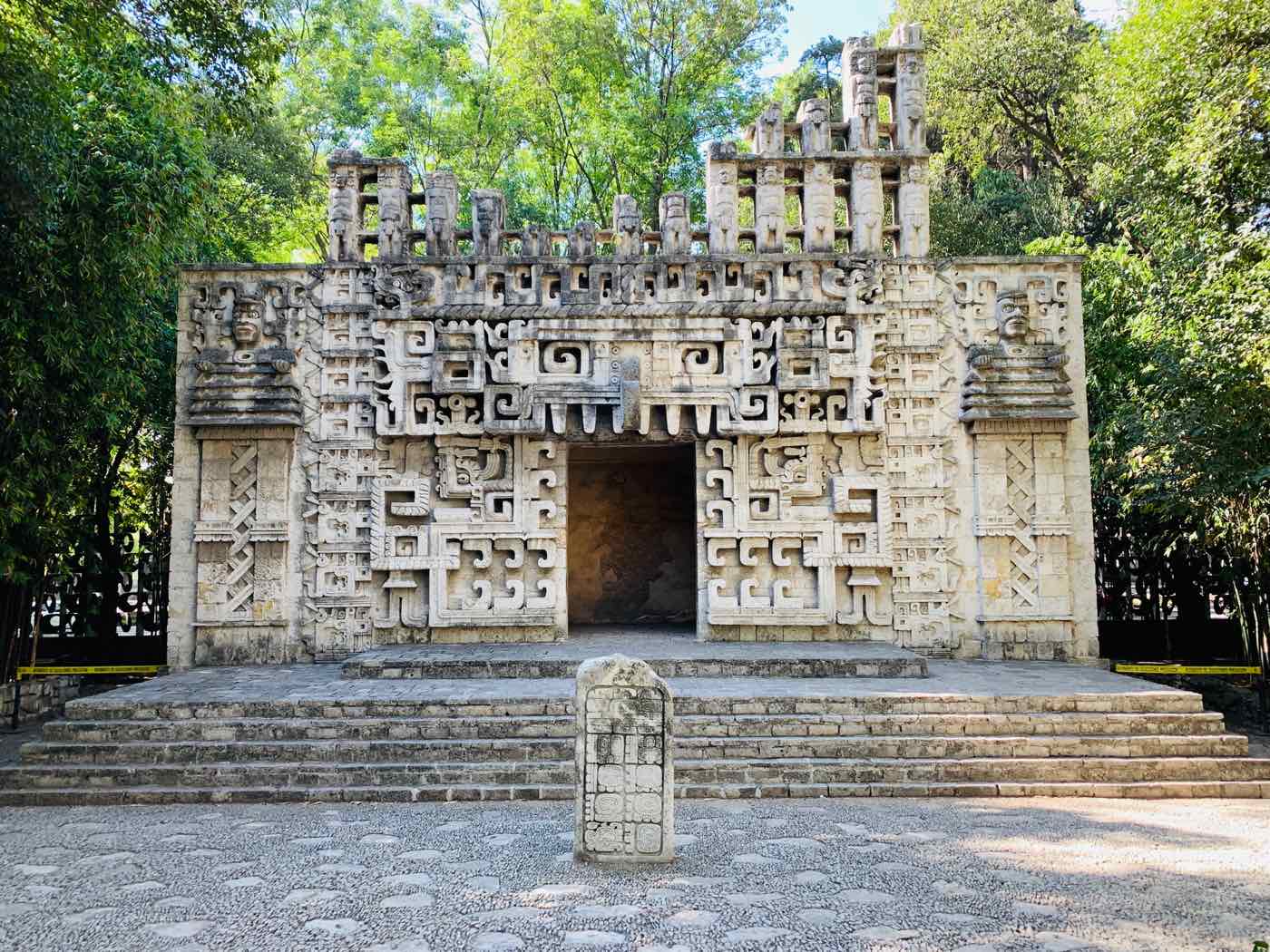
This 3-day Mexico City itinerary covers the best of CDMX for first-time visitors. Day 1 is Centro Histórico: Zócalo, Templo Mayor, Bellas Artes, and a cooking class. Day 2 is Teotihuacán in the morning and bohemian Roma in the evening. Day 3 includes Chapultepec Park, the Anthropology Museum, and the leafy streets of Condesa. Stay in Roma or Condesa, use Uber to get around and you’ll be fine! The city is safer than its reputation suggests.
Mexico City. The largest city in the Western Hemisphere is a vibrant, culturally rich metropolis with a staggering amount to see and do. Adding CDMX to your Mexico trip gives it real depth — it’s the difference between a beach holiday and actually understanding this extraordinary country.
Quick tips for Mexico City 🇲🇽
- 🏨 Stay in the Roma or Condesa areas, the safest and nicest areas with a lot to explore on foot
- 👨🍳 I highly suggest a cooking class with locals but there’s a ton of things to do
- 📅 Best time to visit CDMX is October-November for cooler temperatures and Day of the Dead festivities. March, April and May is also a great option for warm, sunny weather.
- 🔒 Travel insurance is recommended in Mexico. I use Heymondo on my travels
- 🛡️ CDMX is significantly safer than people assume but if safety is on your mind, read my safety guide first.
In this guide:
3-Day Mexico City Itinerary: Overview
Three days is the right amount of time for a first visit to CDMX — enough to get deep into the city without burning out. Here’s how the days break down:
| Day | Area | Theme |
|---|---|---|
| Day 0 | Arrival | Get settled, choose your neighborhood |
| Day 1 | Centro Histórico | History, architecture, street food, cooking class |
| Day 2 | Teotihuacán + Roma | Ancient pyramids in the morning, hipster vibes at night |
| Day 3 | Chapultepec + Condesa | Museums, parks, and the city’s most elegant neighborhood |
I’ve mapped all the places mentioned in this itinerary on a custom Google Map — restaurants, sights, and a few hidden gems included.
Where to stay in Mexico City
Where you sleep in CDMX matters more than in most cities. The neighborhoods are wildly different from each other, with different satefy levels, and being based in the wrong one means burning time in traffic every day.
Here’s a quick breakdown:
- Condesa — the most upscale option. European-feeling streets, excellent restaurants, relaxed bars. Great base if you want to feel comfortable immediately.
- Roma — the hipster pick. Trendy cafes, alternative shops, street art, fantastic taquerías. Where I stayed, and where I’d stay again.
- El Centro — convenient for Day 1 sightseeing but honestly not recommended for staying overnight. Several readers have flagged that the area around Zócalo goes dark and deserted after hours, and the proximity to La Merced — one of the rougher parts of the city — makes it a poor choice for tourists, especially at night. Stick to Roma or Condesa.
- Zona Rosa — home to the Angel of Independence monument and Mexico City’s LGBTQ district. Lively nightlife, less culture.
I’ve done the hard work for you. This is a pre-filtered list of hotels in the safest areas to stay in Mexico City.
Day 0: Arriving in Mexico City
Getting from the airport to the city
You’ll likely land at Benito Juárez International Airport (MEX). You have three options to reach the center: metro, taxi, or Uber.
My advice: get an Uber. It’s the safest, most reliable, and most transparent way into the city. You see the price upfront, no negotiation needed, and no risk of being overcharged or worse.
The metro is an option, Line 5 reaches Terminal 1, but you’ll need to change lines at least once to get to most central neighborhoods, which is annoying with luggage.
If you take a taxi, only use licensed cabs booked from the official booths inside the airport. Do not accept rides from anyone approaching you in arrivals. This isn’t scaremongering — unlicensed taxi incidents do happen.
Day 1: Centro Histórico — Where Mexico City Began
The first day is dedicated to the historic heart of the city. During the Aztec empire, this area was known as Tenochtitlán: the capital of a civilization that stretched across much of Mesoamerica. It was literally built on a lake inside a volcanic crater. The Spanish arrived in 1521, razed it to the ground, and built their own city directly on top of the ruins.
Walking through Centro Histórico today means walking on centuries of layered history. It’s a lot to absorb, in the best way.
Zócalo
Start at Plaza de la Constitución, known simply as Zócalo. This grand square was the ceremonial core of Tenochtitlán and today remains the symbolic heart of Mexico City. No monuments, no statues — just a massive Mexican flag at the center and a ring of the country’s most important buildings surrounding it.
Don’t miss the Museo del Templo Mayor, right at the edge of the plaza. It sits on the exact site of one of the Aztecs’ main temples and contains a remarkable collection of artifacts excavated from beneath the city. It’s one of the most effective ways to understand Mexico’s pre-Hispanic history in a single visit. Across the square: the Metropolitan Cathedral, the largest in the Americas, and the Palacio Nacional with Diego Rivera’s famous murals inside.
Francisco I. Madero Street
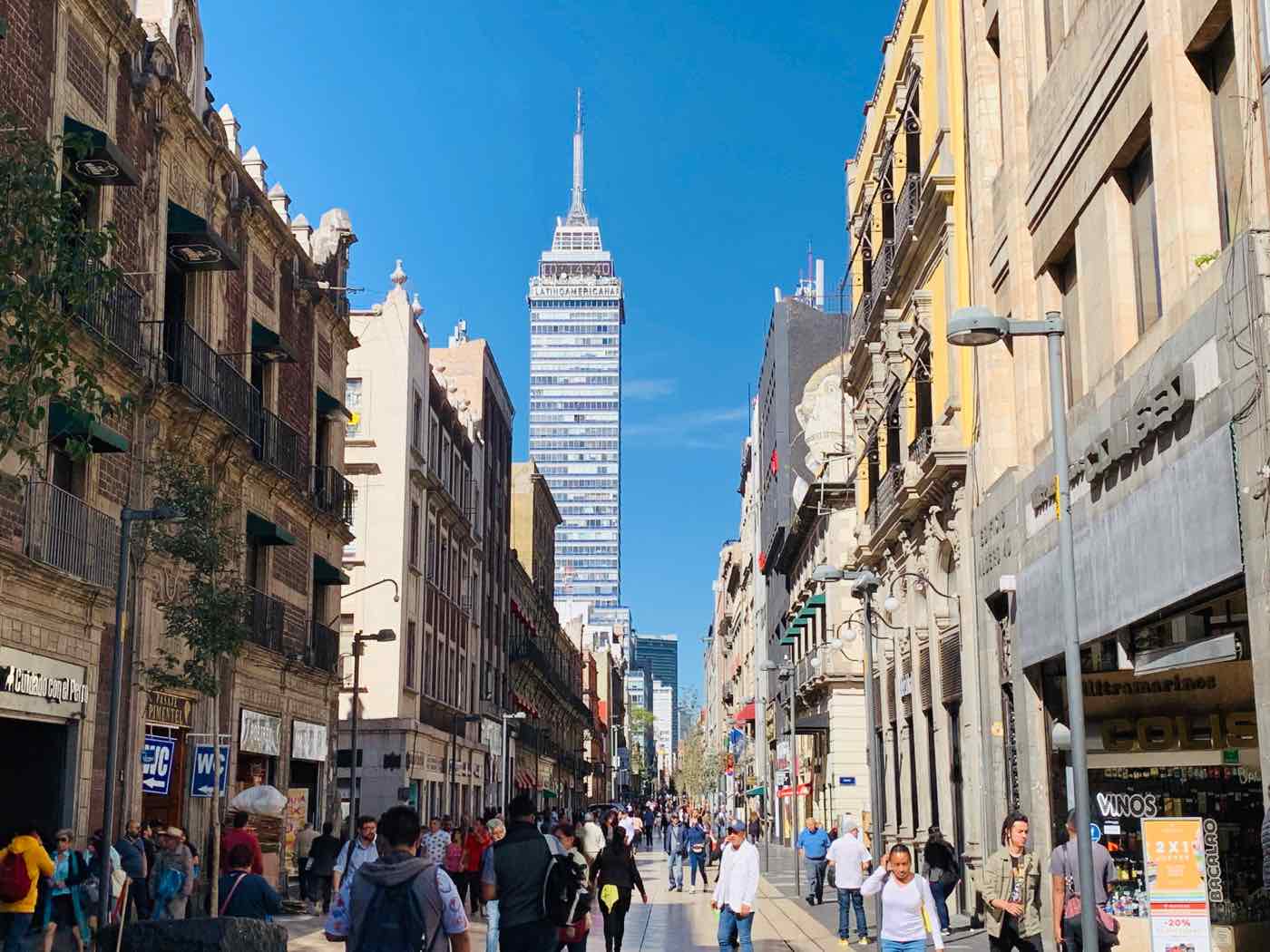
From Zócalo, head west along Paseo Madero — the commercial artery of Centro Histórico, lined with shops, street vendors, and colonial architecture. Quiet at 10am, chaotic by 2pm. Go early.
The street ends at Torre Latinoamericana. I’ll be honest: the building itself is not much to look at. But it’s celebrated by engineers worldwide for surviving Mexico City’s worst earthquakes with nothing more than a cracked window. The views from the 37th floor observatory are worth it — you’ll finally grasp just how enormous this city really is.
Open daily 9am–10pm. Check current entry prices at the door — the 37th floor observatory is worth it for the views. Skip the food upstairs.
Palacio de Bellas Artes
One of the most stunning buildings in all of Mexico City, Palacio de Bellas Artes is an art deco palace that functions as the country’s premier cultural venue — dance, theater, music, and architecture all under one magnificent mosaic roof. For the best view of the building, go to the top floor of the Sears department store on the opposite side of Avenida Juárez. Order a coffee, take in the rooftop panorama with the mountains behind it, and try to remember you’re at 2,240 meters of altitude.
Cooking Class
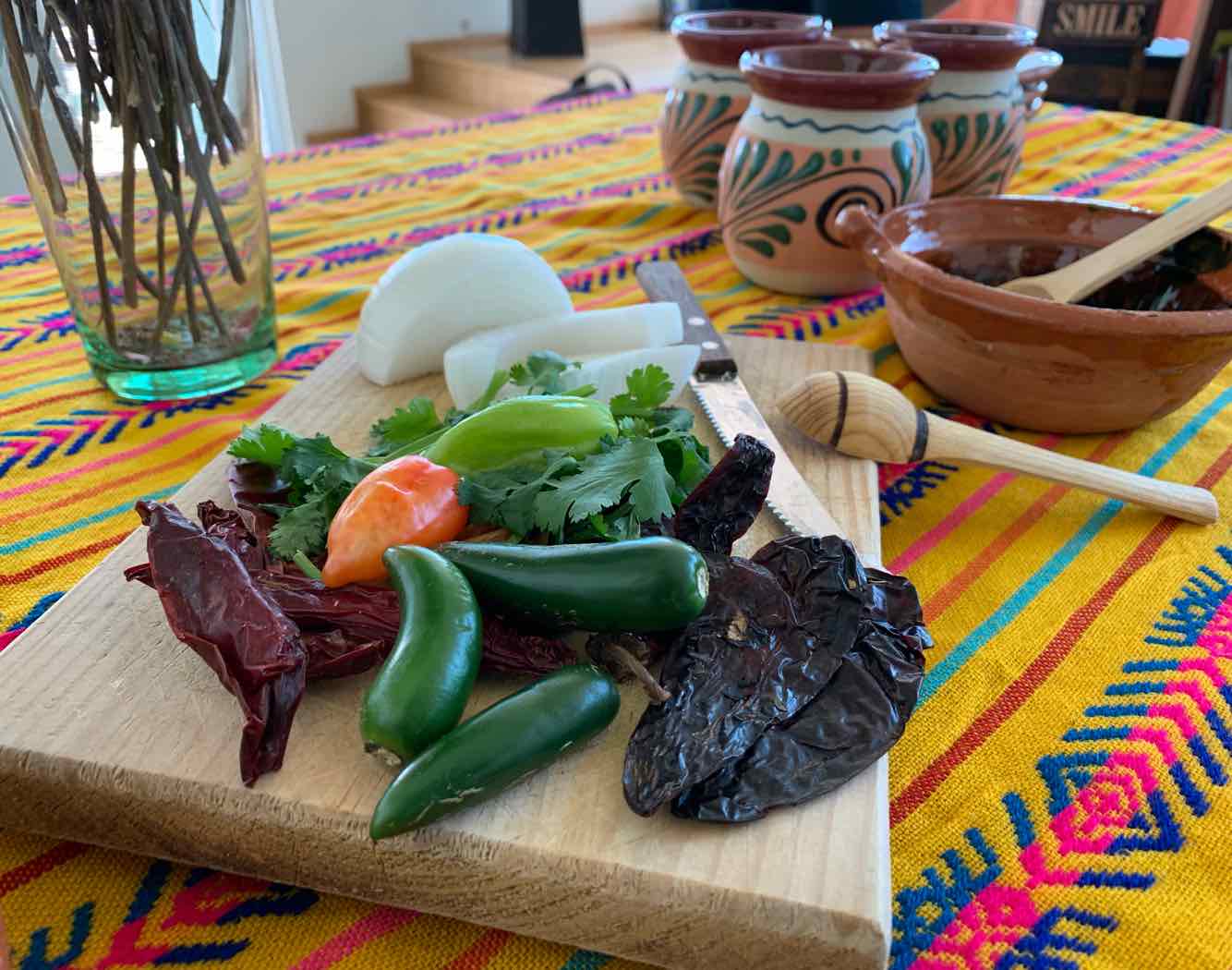
I do a food-related activity in every city I visit. It’s the fastest way to understand a culture, and in Mexico it pays off immediately — you’ll make better food choices for the rest of the trip. In CDMX, the options range from street food taco tours to proper cooking classes.
I did a 3-hour cooking class that included a visit to the local market, buying tortillas at a tortillería, and making enchiladas, chilaquiles, and sopes from scratch. One of my favorite things I did in Mexico.
Day 2: Teotihuacán and Roma
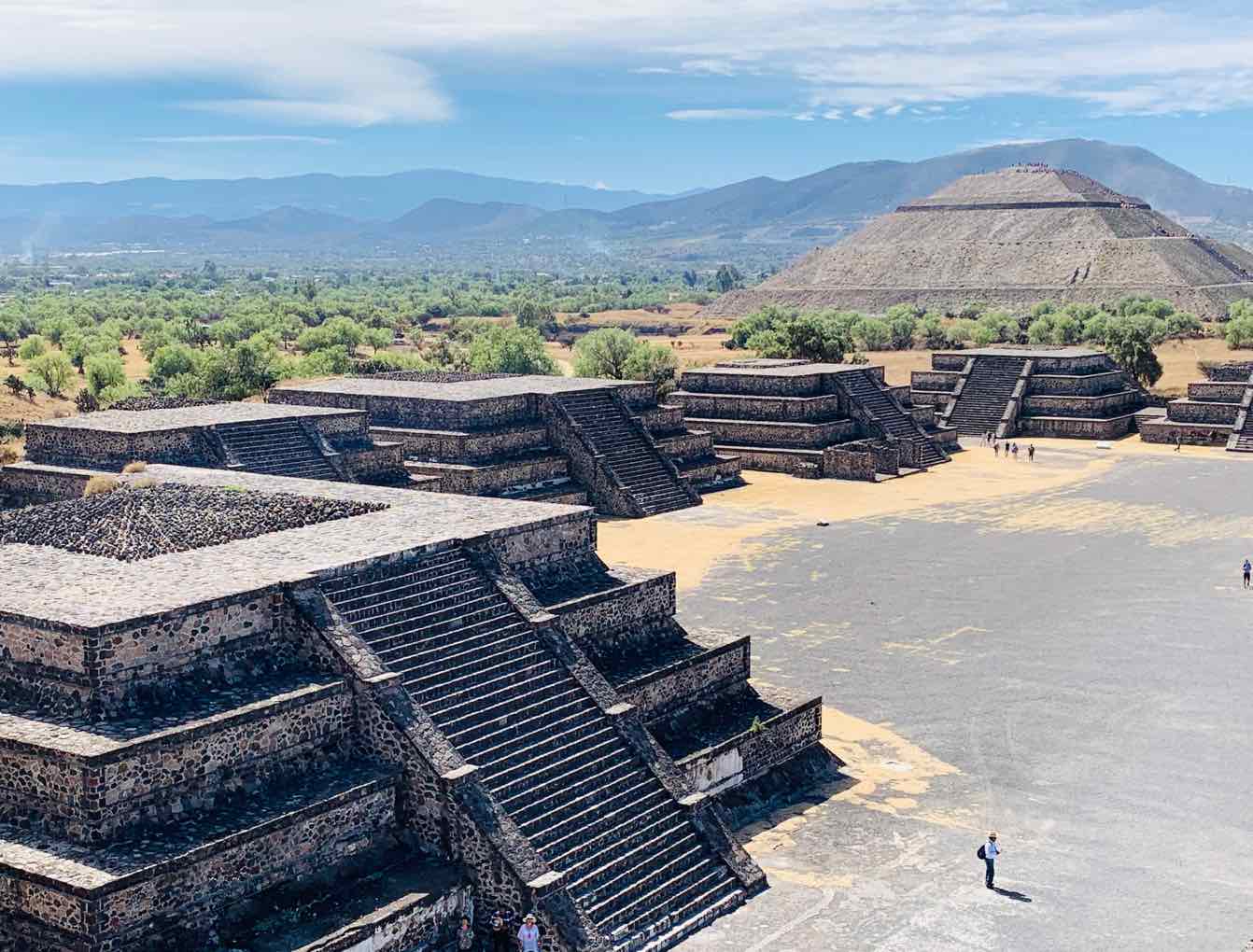
Day 2 splits neatly in two: ancient history in the morning, contemporary cool in the evening. Wear comfortable shoes. Bring sunscreen. The pyramid site is relentless under the sun.
Teotihuacán
50 kilometers northeast of Mexico City lies one of the most extraordinary archaeological sites in the world and UNESCO World Heritage site. Teotihuacán — the City of Gods — was not built by the Aztecs or the Maya, as many assume. It was an entirely separate civilization that at its peak, between 100 BC and AD 650, held up to 125,000 people. That made it one of the largest cities on Earth at the time.
The Pyramid of the Sun is the third largest pyramid in the world. You don’t fully grasp the scale until you’re standing at its base looking up. Climbing it is no longer allowed — INAH banned access to the summit in 2020 to protect the structure, and there are currently no plans to reopen it. You can still get right up to the base, walk around it, and take it all in at close range. The scale alone is enough to stop you mid-sentence.
The Pyramid of the Moon partially reopened in May 2025 after five years of conservation work. You can now climb the first section (five platforms and 47 steps) which gives you a great elevated view back over the Pyramid of the Sun and the entire Avenue of the Dead. The upper levels remain closed. It’s a worthwhile climb and worth building your morning around.
Then walk the full Calzada de los Muertos — the Avenue of the Dead — that connects the entire site. Give yourself at least 3 hours. If you want aerial views of the pyramids, a hot air balloon ride at sunrise is the way to go — operators depart from the site area early morning.
How to get to Teotihuacán from Mexico City
Skip the tour buses. Going independently is easy and considerably cheaper:
- Uber or metro (Yellow Line 5) to Autobuses del Norte bus station.
- Go to the ticket booth near Gate 8, labeled Autobuses Teotihuacán.
- Buy tickets to Pirámides or Zona Arqueológica. Around 55 pesos each way, cash only.
- Board the bus from Gate 8.
Buses run every 15 to 20 minutes from around 6am. The site opens at 8am and closes at 5pm (last entry 4:30pm). The ride is about 1 hour each way. Entry costs 90 pesos per person (~$5 USD). Mexican residents enter free on Sundays, which also makes it the busiest day — a weekday visit is quieter.
Roma (afternoon and evening)
Back in the city, spend your afternoon and evening in Colonia Roma. This is where I based myself for the whole trip and I’d do it again. Roma is bohemian, leafy, and dense with good food — taquerías on every corner, alternative galleries, old mansions repurposed as cafes, street art tucked into side streets.
Some of my favorite spots:
- Chico Julio — best ceviche I had in the city
- Mercado Medellín — local produce market, full of chili varieties you’ve never seen
- Cafebrería El Péndulo — a coffee shop inside a bookshop, exactly as good as it sounds
- Pulquería Los Insurgentes — try pulque, a mildly alcoholic drink made from fermented maguey sap. Acquired taste. Worth acquiring.
I’ve done the hard work for you. This is a pre-filtered list of hotels in the safest areas to stay in Mexico City.
Day 3: Chapultepec and Condesa
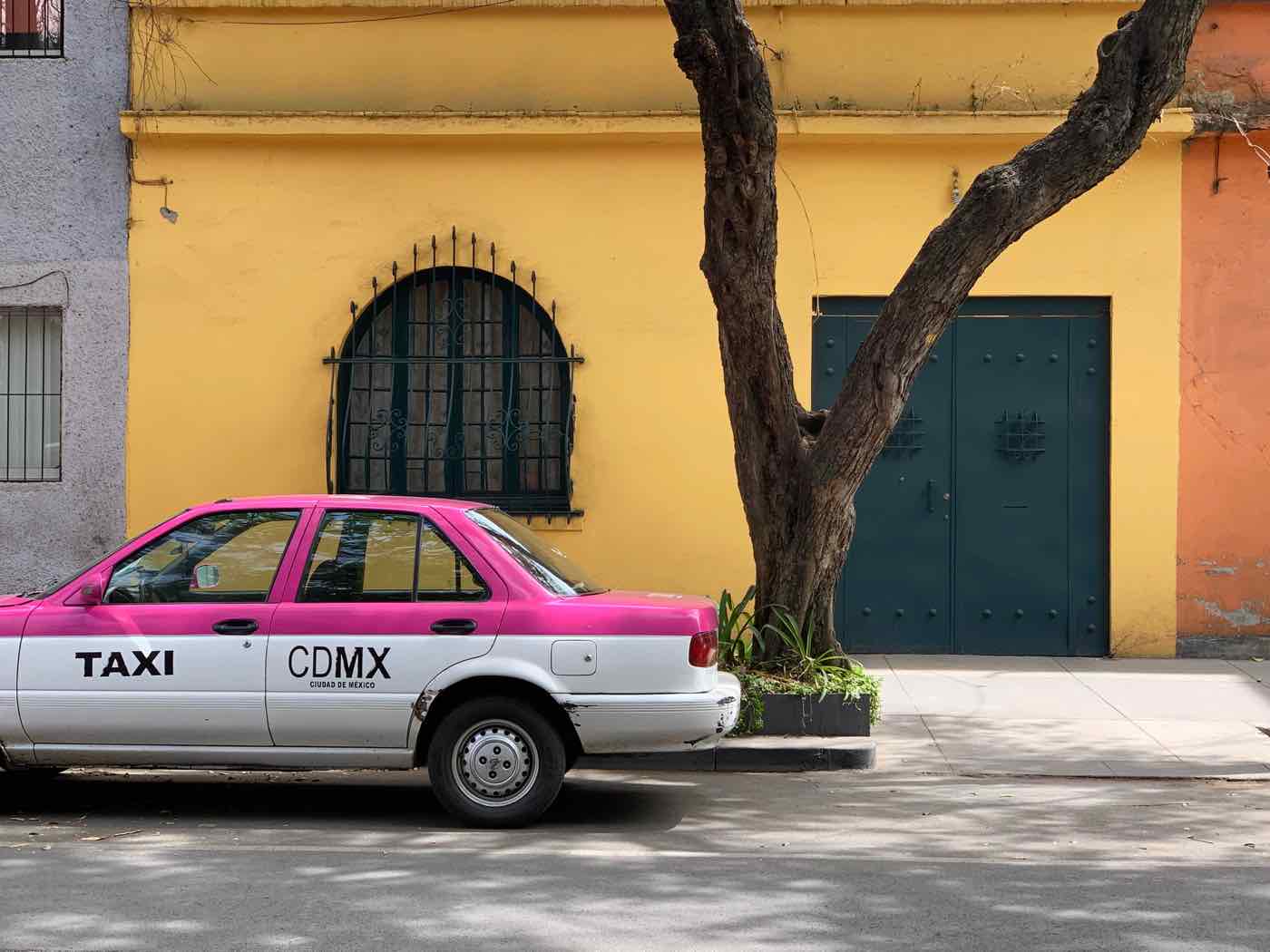
The third day brings a more elegant, green version of Mexico City — the city at its most breathable.
Museo Nacional de Antropología
I’m not generally a museum person. This one is an exception.
The Museo Nacional de Antropología is hands down one of the best museums I’ve been to anywhere in the world. It doesn’t just show you artifacts, it gives you the framework to understand all of Mexico’s pre-Hispanic civilizations in one place. After visiting scattered archaeological sites, everything suddenly clicks into context here. The architecture itself is remarkable: 600,000 objects displayed across separate buildings representing different eras, connected by a vast central courtyard with an artificial waterfall.
Open Tuesday–Sunday, 9am–6pm. Closed Mondays. Entry: 210 pesos per person (from January 2026, per the official INAH website). Free for Mexican residents on Sundays. Plan your visit — the full museum takes around 6 hours. Pick the sections most relevant to what you’ve already seen on the trip. Official website →
Bosque de Chapultepec
Every city needs a park like this. Bosque de Chapultepec is Mexico City’s green lung — larger than Central Park, and in some ways more interesting. It has a castle on a hill (Castillo de Chapultepec, the only royal castle in the Americas, now home to the National Museum of History), open views over the city, lakes, and enough space to decompress after days of sensory overload.
After the Anthropology Museum, a slow walk through the park before heading to Condesa is the right call.
Condesa
Colonia Condesa is Roma’s more polished cousin. The streets here feel almost European — wide, tree-lined, bookended by art deco buildings and sidewalk restaurants. Vegetarian options are everywhere, which says something about the neighborhood’s character. The nightlife is good and goes late.
Don’t leave without eating at El Pescadito — the best fish tacos I had in Mexico, not just in Mexico City. El Tizoncito for tacos al pastor. And walk through Parque México at least once — it’s the most beautiful small park in the city.
Extra Days: More Things to Do in Mexico City
Got more time? Here are a few bonus ideas, with honest takes on each.
Frida Kahlo Museum (Coyoacán)
The former home of Frida Kahlo in the Coyoacán neighborhood. I didn’t visit — fellow travelers I met described it as underwhelming given the queues involved. If you’re a genuine Frida fan, go. If you’re mildly curious, your time might be better spent elsewhere.
Mercado de la Merced
The largest market in the city. An absolute maze of piñatas, chili peppers, candied fruit towers, and street food stalls. If you want to see how the city actually feeds itself, this is the place. Try tostadas, gorditas, and tacos al pastor at the antojitos stands inside. Note: the market area itself is lively and fascinating during the day, but it sits in one of the rougher parts of the city — don’t linger after dark and keep your belongings close.
Xochimilco
A network of ancient canals navigated by colorful trajineras (flat-bottomed boats). Honest take: it felt like a tourist trap to me: an hour from downtown, 500 pesos for a boat ride while vendors try to sell you things the entire time. That said, the Isla de las Muñecas (Island of the Dolls), where thousands of decaying dolls hang from trees, has a wonderful eerie appeal if that’s your thing.
Soumaya Museum
The futuristic silver building alone is worth walking past. It houses the largest private art collection in Mexico and is free to enter. I ran out of time, but it’s on my list for a return visit.
Best areas to stay in Mexico City
Stay in Roma or Condesa. Both are safe, well-connected, full of restaurants and cafes, and enjoyable to walk around in the evenings. They’re also conveniently central for this itinerary.
I’ve done the hard work for you. This is a pre-filtered list of hotels in the safest areas to stay in Mexico City.
How to get around Mexico City
Mexico City is enormous, so walking is not a sustainable strategy. The metro is cheap and extensive, but I found it confusing: stations are identified primarily by symbols rather than names, which takes getting used to. Useful for budget travelers with time and patience.
In practice, I used Uber for almost everything. It’s cheap by European standards, safe, and removes all friction from getting around. The only downside: rush hour traffic in CDMX is brutal, and surge pricing reflects that. Avoid travelling between 7–9am and 5–8pm if possible.
Is Mexico City safe for tourists?
Mexico City is safer than its reputation suggests, but it’s a city of 20 million people, and common sense applies. The areas in this itinerary (Roma, Condesa, Chapultepec) are all well-trafficked and generally safe during the day and evening.
One thing worth being direct about: Centro Histórico changes character at night. During the day it’s vibrant and perfectly safe for tourists. After dark, much of it empties out quickly, and the areas adjacent to Zócalo — particularly toward La Merced — have a higher crime rate. Explore it fully during the day, but don’t plan to wander there after dark and do not use it as your accommodation base.
The practical rules for the whole city: don’t flash expensive cameras or jewelry, use Uber at night rather than hailing cabs on the street, and stay aware in crowded places. My full Mexico City safety guide covers this in detail — worth reading before you go.
Skipping Mexico City because of safety concerns would be a mistake. It’s one of the most culturally rich cities in the Americas.
Useful Resources for Your Mexico Trip
- 20 Mexico Travel Tips to Know Before You Go
- Full Mexico Itinerary: 12 Days, 100% Independent
- Is Mexico City Safe? 11 Tips for a Stress-Free Visit
- Valladolid, Mexico: Complete Travel Guide
Mexico City itinerary: FAQ
Is 3 days enough for Mexico City?
Three days is enough to cover the essential highlights — Centro Histórico, Teotihuacán, Chapultepec, Roma, and Condesa — without rushing. It won’t cover everything the city offers, but it gives first-time visitors a solid, well-rounded introduction. If you have 4 or 5 days, use the extra time for Coyoacán, Xochimilco, or more time in neighborhoods you enjoyed most.
What is the best area to stay in Mexico City?
Roma and Condesa are the best neighborhoods for most first-time visitors. Both are safe, centrally located, full of restaurants and cafes, and enjoyable to walk around. Roma is slightly more bohemian and affordable; Condesa is more polished and upscale. Either works well as a base for this itinerary. Avoid staying in Centro Histórico — it’s great to visit during the day but goes quiet and unsafe at night.
How do I get to Teotihuacán from Mexico City?
The easiest independent route: Uber or metro (Yellow Line 5) to Autobuses del Norte bus station, then buy a ticket (~55 pesos each way, cash only) from the Autobuses Teotihuacán booth near Gate 8. Buses run every 15–20 minutes from around 6am; the site opens at 8am. Entry is 90 pesos per person. Go early to beat the heat and crowds.
Can you still climb the pyramids at Teotihuacán?
Partially. The Pyramid of the Sun has been closed to climbing since 2020 with no plans to reopen. The Pyramid of the Moon partially reopened in May 2025 — you can now climb the first section (five platforms, 47 steps), which gives a great elevated view over the site. Upper levels remain closed. If you want aerial views, book a hot air balloon ride at sunrise.
Is Mexico City safe for tourists?
Yes, in the tourist areas and with basic precautions. Roma, Condesa, and Chapultepec are safe for daytime and evening exploration. Centro Histórico is fine during the day but avoid it at night, particularly toward La Merced. Use Uber at night rather than street taxis, keep valuables out of sight in crowded places. Read the full Mexico City safety guide for detailed tips.
What should I eat in Mexico City?
The city is one of the best food destinations in the world. Don’t miss: tacos al pastor from a street taquería (El Tizoncito in Condesa is excellent), tamales, enchiladas, chiles en nogada if it’s in season, and chilaquiles for breakfast. Take a cooking class on Day 1 to get an overview of the cuisine before you start eating your way through the city.
Do I need to speak Spanish in Mexico City?
Basic Spanish helps significantly, especially outside tourist areas. In Roma, Condesa, and most restaurants and hotels, English is spoken well enough to get by. Learning a handful of words — por favor, gracias, cuánto cuesta (how much?), sin carne (without meat) — goes a long way. Check the Mexico travel tips for more practical advice.
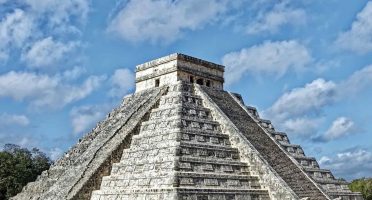




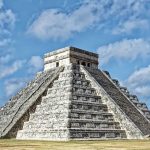

Hi! Thank you for a lovely article! Two concerns – this article was published in 2022, but that photo of the pyramids cannot be recent. It has been forbidden to climb the pyramids the entirety of the pandemic, and as of Jan 2022 it is still forbidden. How long ago were you here, before publishing this article?
Additionally, Centro is NOT a safe place to stay. It is deserted and dark at night, extremely high crime, and foreigners will really stand out as targets for crime. It seems a little irresponsible to suggest this as one of the best neighborhoods to stay in. The specific area you advise – near the Zocalo – is adjacent to the famously dangerous La Merced area of town, where tourists should not be at night.
The article is far from being a “perfect” itinerary, it is actually very limited and with bad advises.
I’m from Mex city and just took some nordic friends to take a tour in the city.
As a foreigner in Mexico you have to be very aware of safety of yourself and safety of your stomach, if you don’t want to be in the doctor the rest of your trip. So: never stay in downtown! And no, that disgusting street in downtown is not the “commercial heart of Mex city”! Hahahahaha
NEVER go inside or try to buy anything there!!
If you visit downtown be aware of pickpockets and eat only in nice, clean and safe restaurants, NEVER in the street or taco shops.
It’s not necessary to visit “food mercados” are disgusting and dirty places with nothing to see, NEVER eat there! The only place can be recomended to go because is a little turist-friendly and safe is “Mercado la Ciudadela” for handcrafts and souvenirs.
I agree that Frida is an “uninteresting” place to go, not worth it. Take a look instead to the work of the best Mexican surreal artist: Leonora Carrington.
Always is better to visit the fancy places than the hippie-favela-crappy ones.
Polanco, Campos Eliseos, Masaryk, las Lomas, Santa fe and all the upscale neighborhoods have great restaurants , malls and shops, and are also a good way to know about local lifestyle: CDMX “whitexicans” lifestyle.
Thanks for your concerns!
That particular photo was taken in 2019. That doesn’t mean the article hasn’t been updated since then, but honestly I didn’t know climbing the pyramids was not allowed now. Thanks for the insight!
I’ve also updated the article with your concerns around Centro. Thanks! A work colleague born in the suburbs of CDMX recommended Roma or Condesa areas as places to stay but she also mentioned Centro as an alternative, so I decided to include it.