
Three days in Lisbon is enough to cover the highlights without feeling rushed. Start with the monumental riverfront of Belém on day one, move through the grand squares and iconic viewpoints of downtown on day two, and finish in the ancient streets of Alfama and the modern waterfront of Parque das Nações on day three. This itinerary skips the tourist traps, upgrades the hidden gems, and is built around walking. A lot of walking. You’ve been warned.
🇵🇹 Lisbon Quick Tips
- 🏨 The best areas to stay are along the central axis of the city: Cais do Sodré, Marquês or Baixa have the best access. See my Lisbon neighborhood guide for more details.
- 🏨 Montecarmo12 or Hotel HF Fenix Music are my top hotel recommendations. Use this curated Lisbon hotel list to find other options.
- 🚗 Getting around: Walk as much as possible. For longer stretches, use the metro or bus. Avoid taxis from the airport at all costs.
- 🔅 Best time to visit Lisbon are the April–June or September–October periods
- 💰 Daily budget: Expect to spend €60–90 per day including food, transport and entry fees.
- 🚗 Car rental is only useful for day trips outside the city. Compare car rental prices here.
- 🎡 Book tours and attractions in advance, specially during peak months. GetYourGuide has a great selection.
What can you do in Lisbon in 3 days?
In 3 days, you can comfortably cover Lisbon’s three distinct faces: the historic riverfront of Belém with its UNESCO monuments, the grand downtown axis from Parque Eduardo VII down to Comércio Square, and the ancient Moorish quarter of Alfama crowned by São Jorge Castle. Add in a handful of viewpoints, some custard tarts, and a cold beer by the Tejo, and you’ll leave with a very complete picture of what makes this city so addictive.
Lisbon is a city that earns its reputation. I lived there for almost nine years and still find something new every time I go back. The seven hills make every walk slightly more dramatic than expected (thighs will confirm this), but the views from the top make the climbing worth every step.
Lisbon has become one of the most crowded destinations in southern Europe, especially between June and August and during Easter. For a more authentic experience, visit in spring (April to May) or autumn (September to October). Avoid staying in heavily AirBnB-converted areas like Castelo and Alfama if you want to be around actual neighbours.
To navigate this itinerary more easily, follow the map below. Green pins are Day 1, yellow are Day 2, red are Day 3. Purple pins mark suggestions for extra time.
Where to stay in Lisbon
First things first. Deciding where to stay. The best areas to stay in Lisbon are along the central axis: Príncipe Real, Marquês de Pombal, Avenida da Liberdade, Cais do Sodré, and Baixa. All are well-connected, walkable, and close to the main sights. See my full breakdown in the guide to the best areas to stay in Lisbon.
One note: if possible, book a hotel rather than an AirBnB. The city’s housing market has been badly affected by short-term rentals, and staying in a hotel means your money goes somewhere that isn’t actively displacing locals.
Boutique hotel in Lisbon
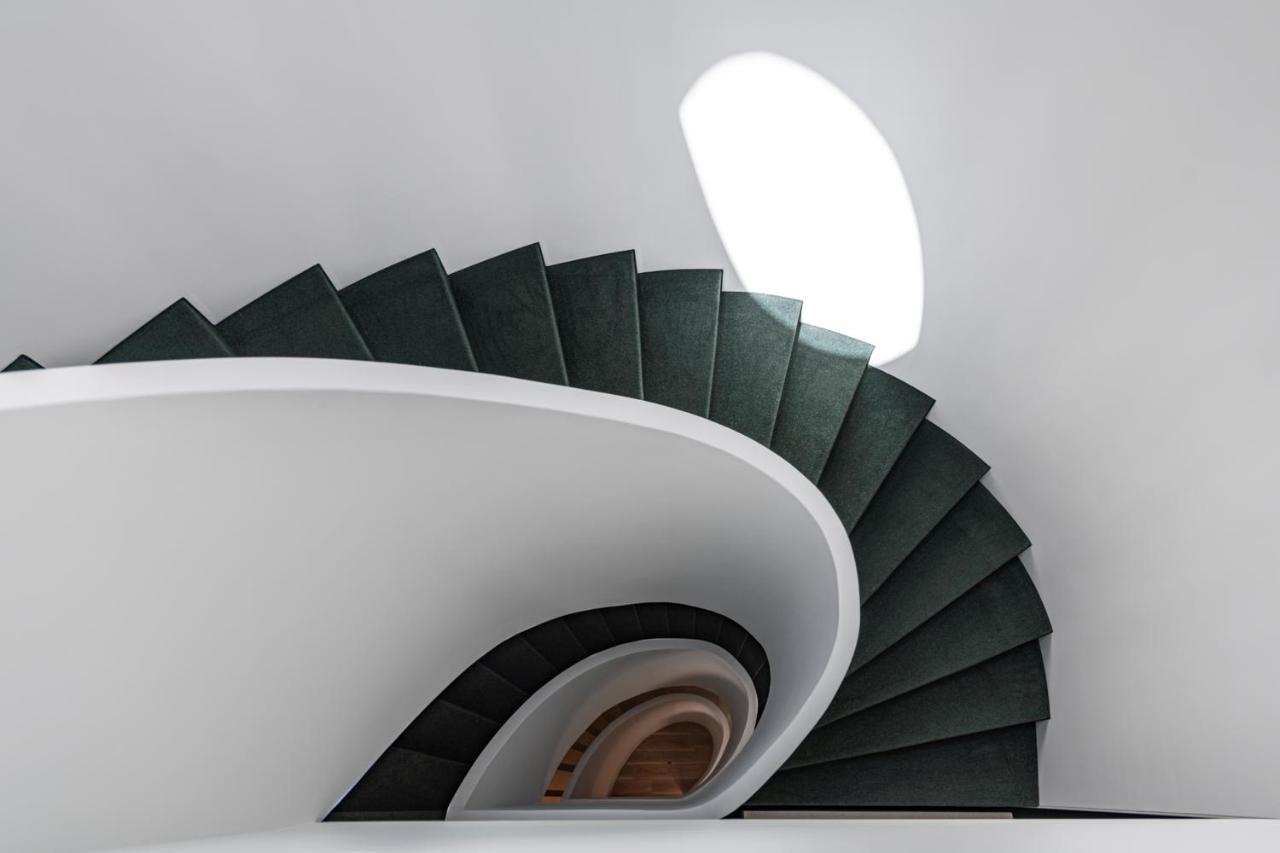
Sleek and stylish without trying too hard, tucked into a charming spot close to the Lisbon buzz. Great pick if you want boutique character in a central location.
Mid-range hotels in Lisbon
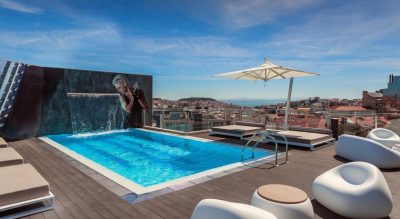
Music-themed, close to the centre, rooftop pool. The pool alone makes this worth it in summer.
Budget hotels in Lisbon
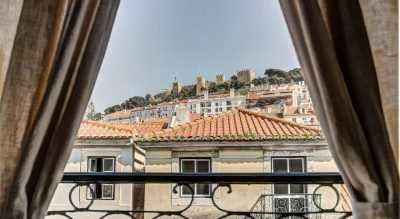
Right in Rossio, the heart of Lisbon. Great value, social atmosphere, perfect location for this itinerary.
Day 1: West Lisbon (Belém and Chiado)
Day 1 is dedicated to West Lisbon.
I always like to start a city trip by heading to the farthest point first and working my way back. In Lisbon, that means beginning in Belém, a riverside district packed with some of Portugal’s most important monuments. Spend the morning there, then head back to Chiado in the afternoon before finishing the day at a viewpoint with a drink in hand.
Torre de Belém (Belém Tower)
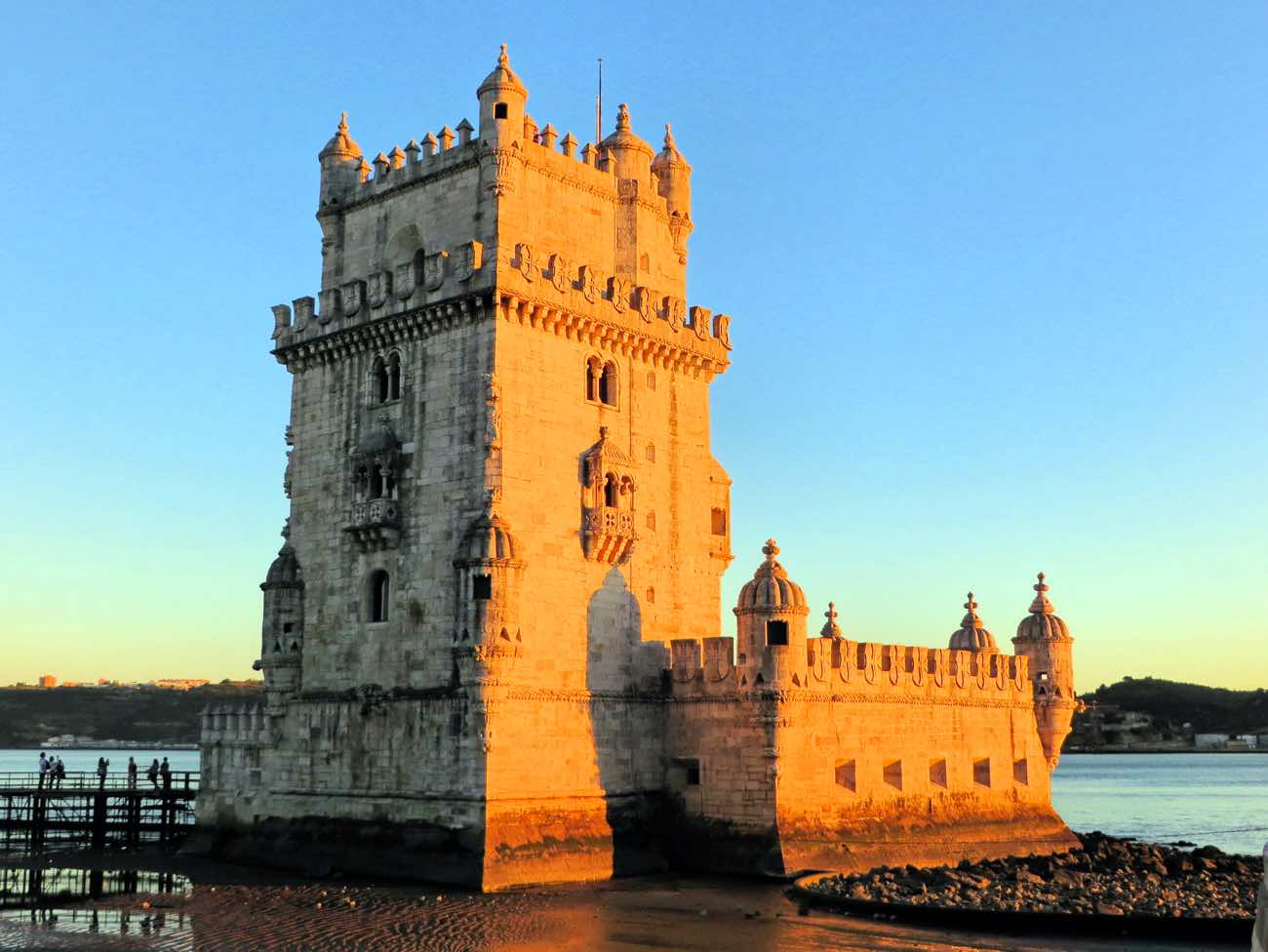
One of Lisbon’s finest landmarks, Torre de Belém was built between 1514 and 1520 to guard the mouth of the Tagus and became the symbolic departure point for Portugal’s great explorers heading to Brazil, India, and Africa. The setting alone is worth the trip: on a sunny day, the white Manueline stonework practically glows against the river.
My take on going inside: it was never really worth it. The interior is cramped, the staircases are claustrophobically narrow, and the queues could be brutal. As someone with a complicated relationship with tight spaces inside 500-year-old towers, I speak from experience. For great elevated views in Belém, Padrão dos Descobrimentos is a far better option.
Torre de Belém closed in April 2025 for a year-long conservation project funded under Portugal’s Recovery and Resilience Plan, with a contract value of €1.05 million. Intermittent reopenings are possible depending on safety conditions. The exterior and surrounding riverfront are fully open and free. Check the official Torre de Belém website for the latest status before you visit.
Tips for Torre de Belém
- ⏱ Hours: Check the official website; reopening timing depends on restoration progress.
- 💰 Entry fee: Around €8 for adults when open. Combo ticket with Jerónimos Monastery available.
- 💡 Pro tip: The exterior view from the riverfront promenade is free and, frankly, the better angle anyway.
- 💻 Website: Torre de Belém
To get to Belém, take the train (Cascais Line) from Cais do Sodré for a quick 8-minute ride, or tram 15E from the same station. Buses 714 and 728 also serve the area.
Mosteiro dos Jerónimos (Jerónimos Monastery)
Mosteiro dos Jerónimos was built to commemorate Vasco da Gama’s return from India, commissioned by King Manuel I in 1501. What started as a prayer of thanks turned into an extraordinary monument as colonial wealth grew: intricate marble carvings, soaring cloisters, and a chapel that still makes people stop mid-sentence. The construction was partly funded by a 5% tax on trade from Africa and the East, which amounted to roughly 70kg of gold per year. That explains the scale.
This is 500-year-old Manueline craftsmanship at its absolute peak, and it earned its UNESCO World Heritage status in 1983. Don’t let the queues put you off. Book tickets online, arrive early, and give yourself at least 90 minutes inside.
Tips for Jerónimos Monastery
- ⏱ Hours: May to September: 10:00–18:30. October to April: 10:00–17:30. Closed Mondays and major holidays.
- 💰 Entry fee: €18 for adults. The church itself is free. Free entry on Sundays until 14:00 (lines can be very long).
- 💡 Pro tip: Book tickets online in advance during peak season. Lines at the door can stretch over an hour.
- 💻 Website: Mosteiro dos Jerónimos
Pre-filtered list of hotels in the best areas, all rated 8 or above.
Padrão dos Descobrimentos

Padrão dos Descobrimentos stands at the point on the Tagus from which Portugal’s explorers set sail during the 15th and 16th centuries. Shaped like the prow of a caravel, it was built in 1940 and rebuilt permanently in 1960 to mark the 500th anniversary of the death of Prince Henry the Navigator. Infante D. Henrique leads the procession carved into the stone, with Vasco da Gama, Pedro Álvares Cabral, and Ferdinand Magellan close behind.
My favourite part is the large compass rose and world map on the marble floor at the base, where you can trace the routes of every major Portuguese voyage. It puts the scale of the Age of Discoveries into perspective in a way that no museum caption quite manages. The viewing platform at the top gives you a clean panorama of Praça do Império and the Belém waterfront below.
Tips for Padrão dos Descobrimentos
- ⏱ Hours: October to February: 10:00–18:00. March to September: 10:00–19:00. Last entry 30 minutes before closing.
- 💰 Entry fee: Around €6 for adults to access the monument and viewpoint.
- 💻 Website: Padrão dos Descobrimentos
MAAT
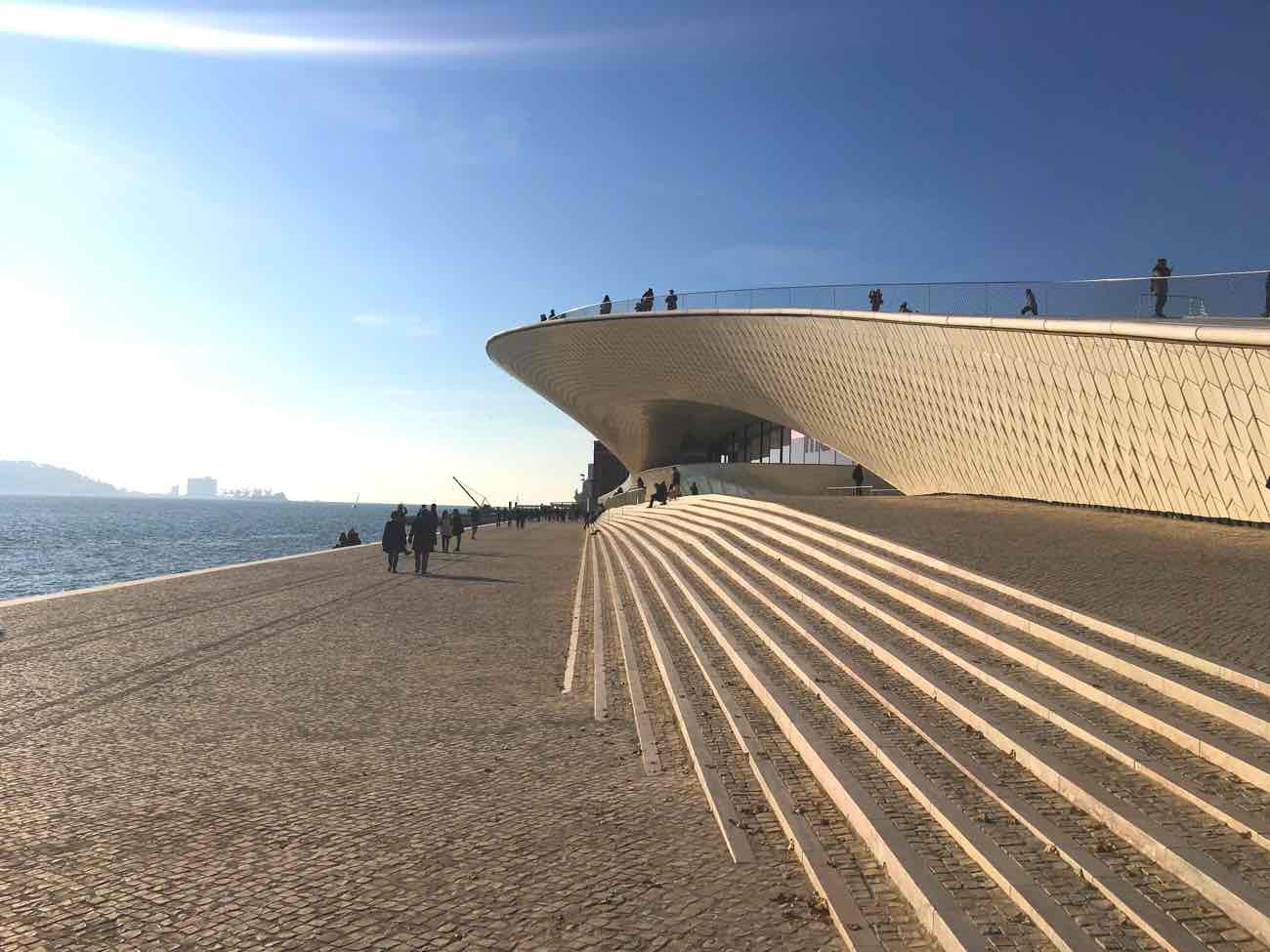
The MAAT (Museum of Art, Architecture and Technology) opened in 2016 and still feels like a provocation in the best way: a gleaming futuristic building dropped into the most traditional capital I know. Whether the temporary exhibitions inside land for you depends entirely on your taste for contemporary art (the one I visited was a touch too conceptual for my blood).
The real draw is the building itself. Set right on the riverbank, its arching form was designed as a continuation of the promenade, and visitors can walk across the roof. The 15,000 glazed tiles shift colour throughout the day as the light changes. If photography is your thing, come back at sunset.
Tips for MAAT
- ⏱ Hours: Open Wednesday to Monday, 12:00–20:00. Closed Tuesdays.
- 💰 Entry fee: Tickets from €5. Free entry on the first Sunday of every month.
- 💡 Pro tip: The rooftop walk is free and worth doing even if you skip the exhibition inside.
- 💻 Website: MAAT
Largo de Camões (Camões Square)
Time to head back to the city centre. If you take the train from Belém, get off at Cais do Sodré and walk up Rua do Alecrim. You’ll pass the famous pink street on your left, a nightlife hotspot that looks very different in daylight.
Sitting at the crossroads of Bairro Alto, Chiado and Bica, Largo de Camões has everything a classic Lisbon square should: cobblestone pavements, trams rattling past, coffee kiosks, and pastry shops selling pastéis de nata. The statue honours Luís de Camões, the 16th-century poet whose Os Lusíadas remains Portugal’s defining literary epic.
Here’s what you do: buy a fresh batch of custard tarts at Manteigaria, carry them to whichever viewpoint you choose below, and eat them while the city turns orange. You’re welcome.
Miradouro (end of Day 1)
There are two great viewpoints within walking distance of Camões Square. Pick one based on your mood.
Option 1: Miradouro de São Pedro de Alcântara faces east and north. It’s spacious, the pavement has beautiful geometric patterns, and there’s a kiosk if you need a drink. From Camões Square, walk uphill heading north until you pass Ascensor da Glória on your right. The viewpoint is right after it.
Option 2: Miradouro de Santa Catarina faces south and west, feels more secluded, and draws a younger, more local crowd. There’s a terrace bar called Noobai and a statue of Adamastor, the mythological sea monster from Camões’ poem. From Camões Square, follow west along the street with tram tracks, pass Ascensor da Bica on your left, take the next left, and walk until the viewpoint appears.
Both are excellent. I’d choose Option 2 for sunset, since it faces west.
Day 2: Downtown Lisbon
The second day is for the grand downtown axis of Lisbon. Prepare to walk a lot, because this city rewards the people who don’t reach for the metro every five minutes.
Parque Eduardo VII
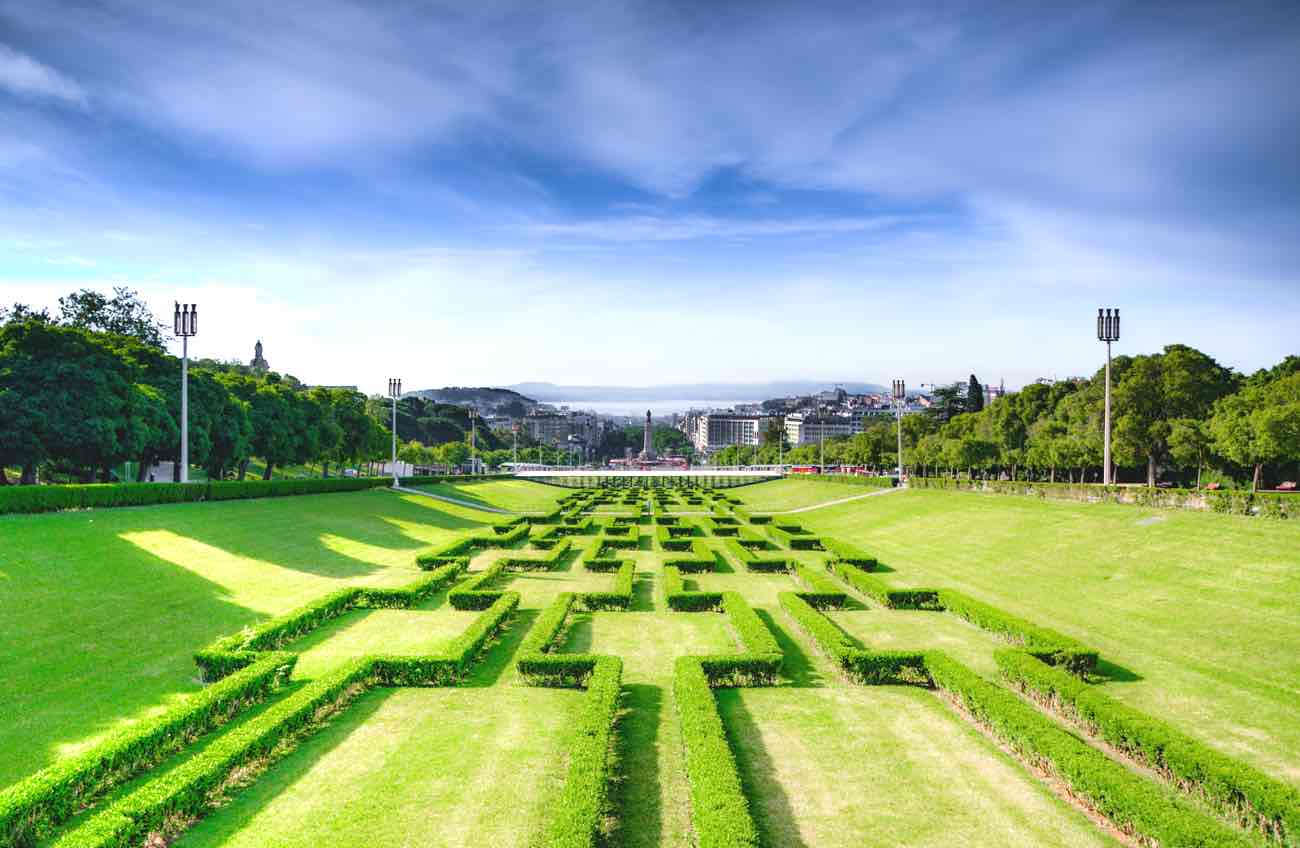
Start the day at the northern end of the main downtown axis. Parque Eduardo VII is where locals walk their dogs and jog in the morning, but the real reason to come here is the viewpoint at the top. From there, you can see the entire downtown corridor stretching all the way to the Tejo, with vivid green labyrinthine gardens in the foreground. A great way to orient yourself before heading south.
Avenida da Liberdade
Walk south toward the city through Lisbon’s most elegant avenue. Avenida da Liberdade is tree-lined, wide, and flanked by the city’s high-end boutiques, grand hotels, and outdoor cafés. The cobblestone pavement has the intricate wave patterns typical of Lisbon’s streets. Stop for a coffee here before pushing on.
Elevador da Glória (Glória Funicular)
One of three funicular railways in Lisbon, the Elevador da Glória has been running since 1885 and connects Restauradores to Bairro Alto. The bright yellow cars make a nice photo. Taking it is a different story: it’s a 3-minute noisy jam-packed ride that costs close to €4 one way, which feels steep for a commute that walking handles in about 10 minutes. Skip it unless your legs are already staging a protest.
Rossio
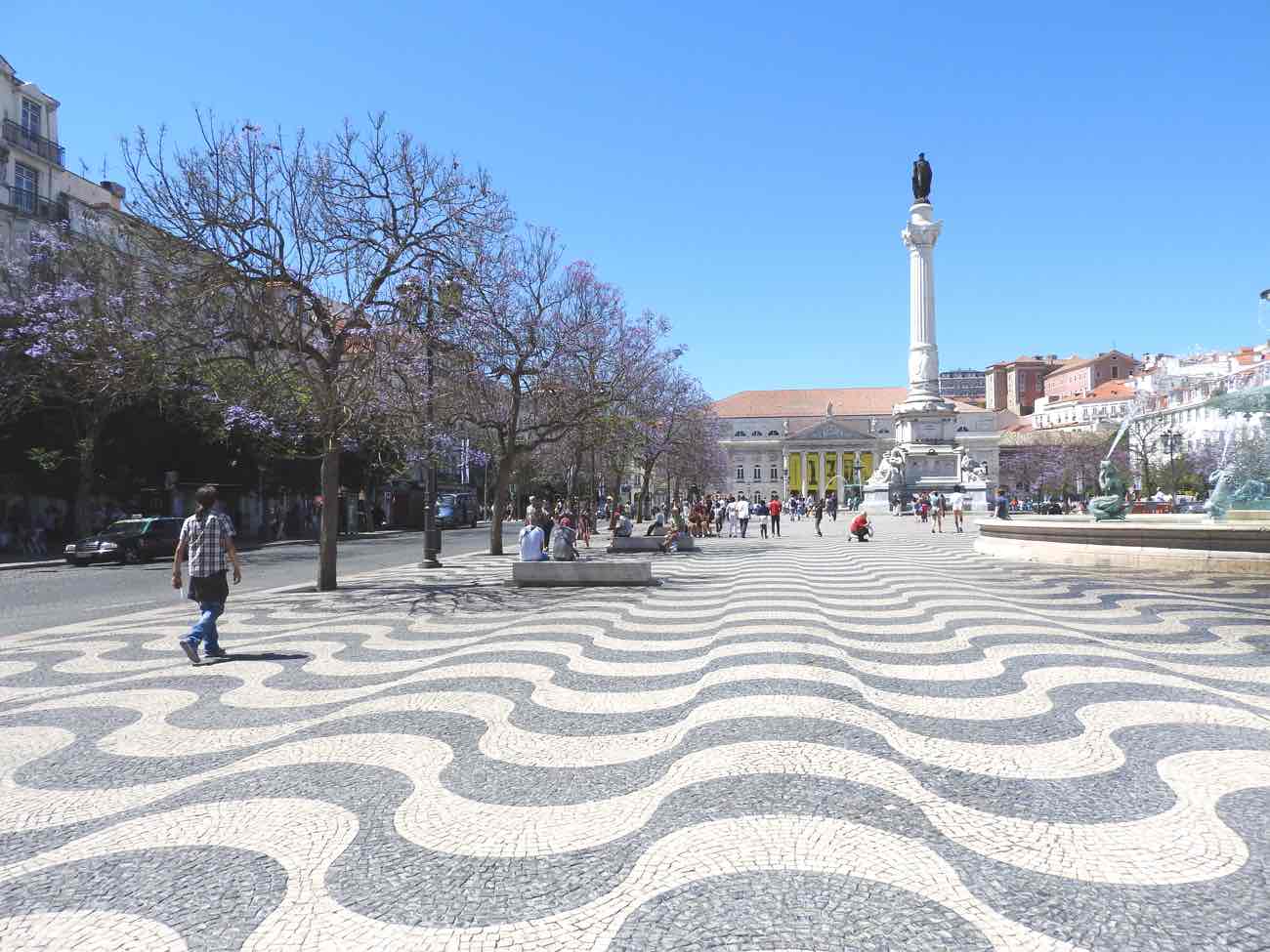
Also known as Praça D. Pedro IV, Rossio is the beating heart of Lisbon. Paved with 19th-century calçada portuguesa in a dizzying wave pattern, it’s where workers protest, students celebrate, and tourists eat overpriced food in outdoor seating. Welcome to the centre of everything.
Two small things in Rossio that will make you smile:
- The tie mirror. Engraved on a mirror at number 115 of the square, the inscription reads “Componha aqui o nó da sua gravata”, roughly “Correct your tie knot here.”
- Ginjinha. The most iconic Portuguese liquor, made from sour cherries soaked in aguardente. Try it com ela (with the cherry) or sem ela (without) at the old-school bar A Ginjinha on Largo São Domingos. One of the real hidden gems of Lisbon.
Convento do Carmo (Carmo Convent)
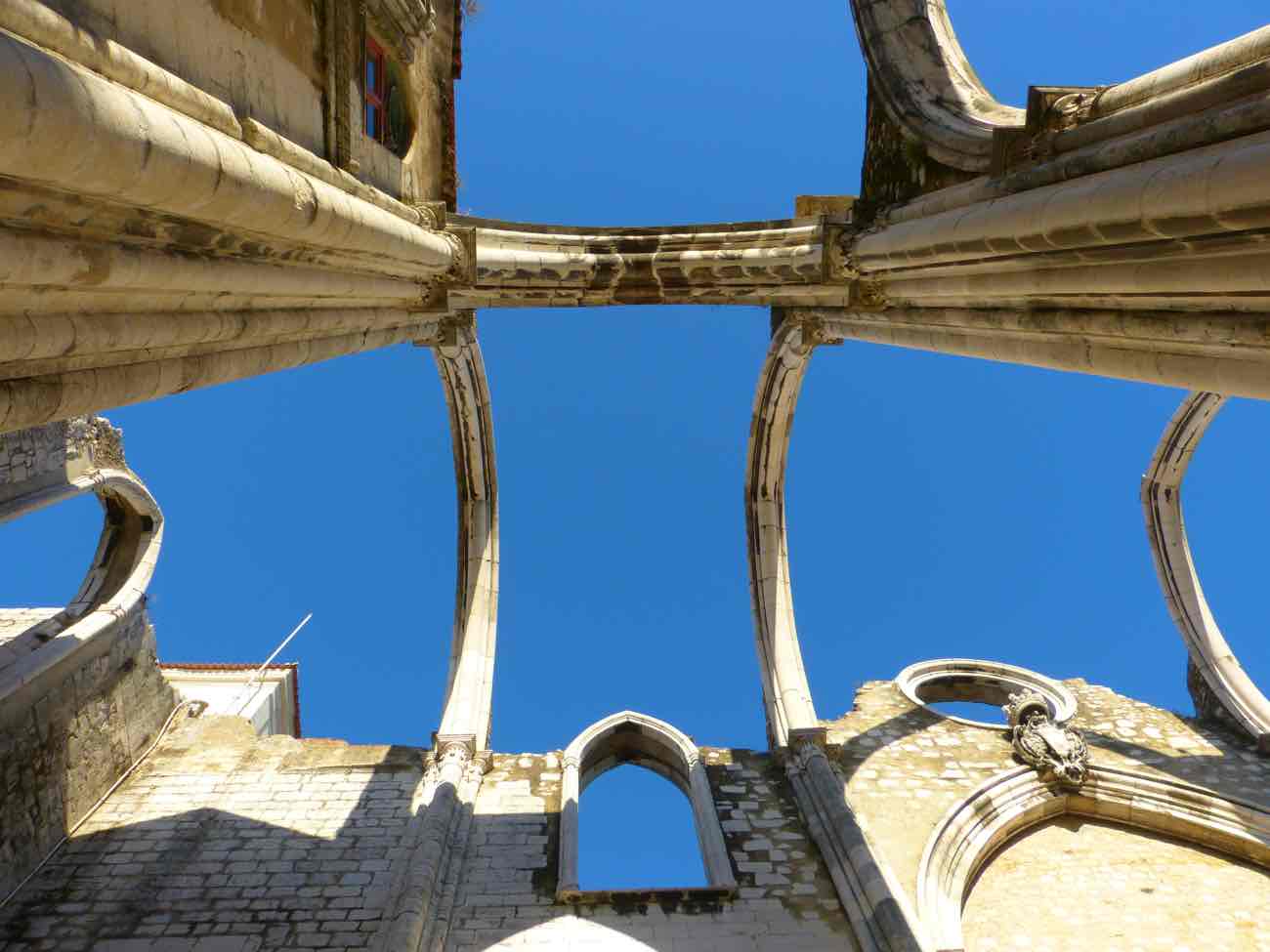
Destroyed by the 1755 earthquake along with most of the city, this Gothic church was deliberately left as ruins. No roof, no restoration, just the standing arches and the sky above. It’s a haunting and beautiful choice, a permanent memorial to the Lisbon that was.
The Carmo Convent is a compact visit but a calming one. There’s a small square in front where you can sit among the ruins with a drink. Crucially, a free staircase here connects to one of the upper platforms of the Santa Justa Lift, so skip the paid lift queue and use this instead.
Tips for Convento do Carmo
- ⏱ Hours: Open daily 10:00–19:00 during peak season.
- 💰 Entry fee: Around €5 for adults.
- 💡 Pro tip: Free staircase access to one of the upper floors of Santa Justa Lift is via Carmo. Use it and skip the queue outside.
- 💻 Website: Convento do Carmo
Elevador de Santa Justa (Santa Justa Lift)
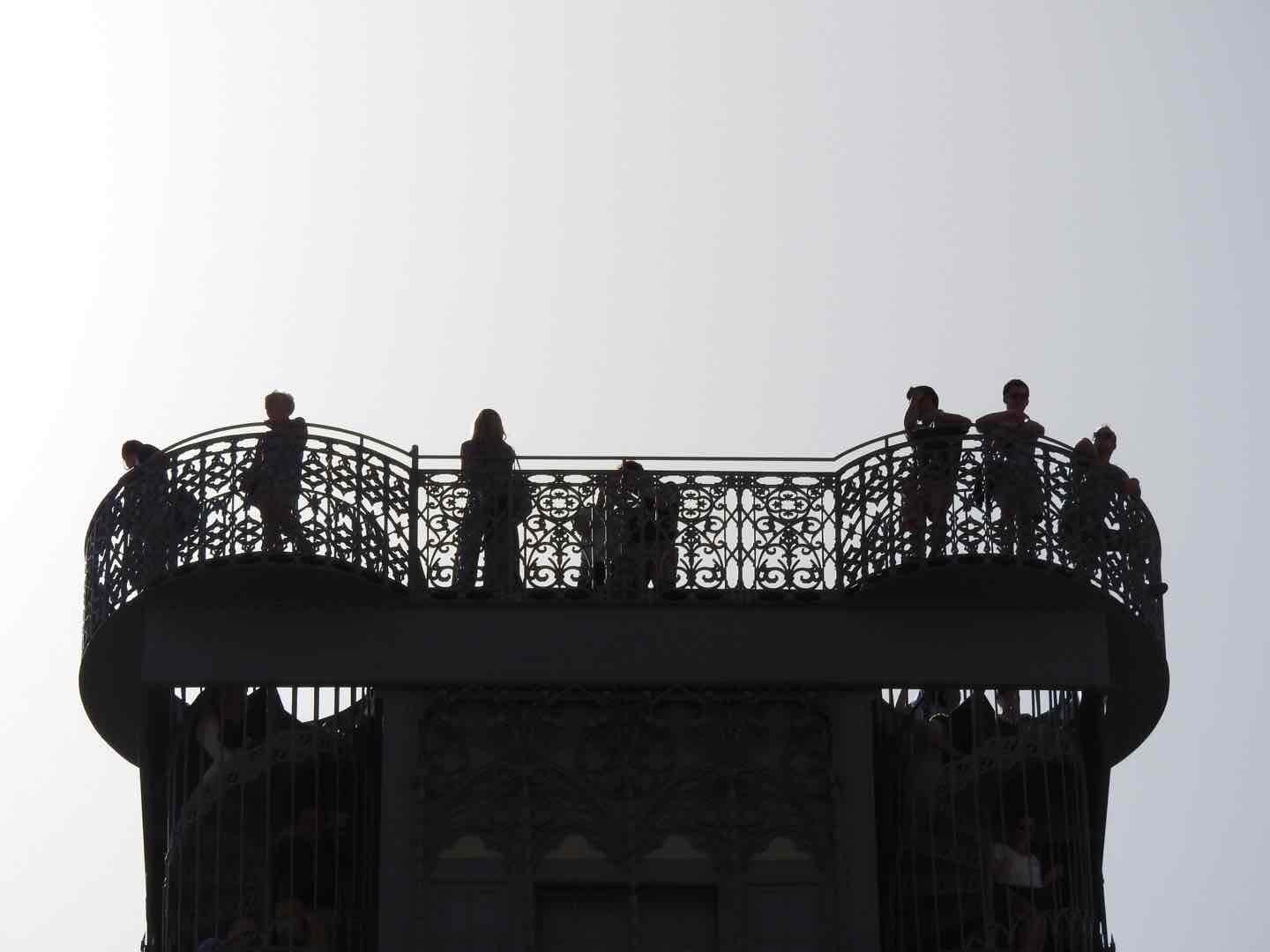
Built in 1902 to connect the lower Baixa streets with Carmo Square, the Elevador de Santa Justa is a gorgeous piece of ironwork engineering and a useful vantage point. The panoramic platform at the top gives you a bird’s-eye view of the downtown grid.
Skip the paid lift queue. You can access one of the upper platforms for free via Carmo Convent, then reach the top observation deck from there via a staircase. No queueing, no fee.
Tips for Elevador de Santa Justa
- ⏱ Hours: Open daily 07:00–23:00.
- 💰 Entry fee: Around €5.15 for the return ride. Free via Carmo staircase.
- 💡 Pro tip: Enter via the Carmo Convent, access the upper platform for free, then climb the last staircase to the top. Much smarter than queuing outside.
Arco da Rua Augusta (Rua Augusta Arch)
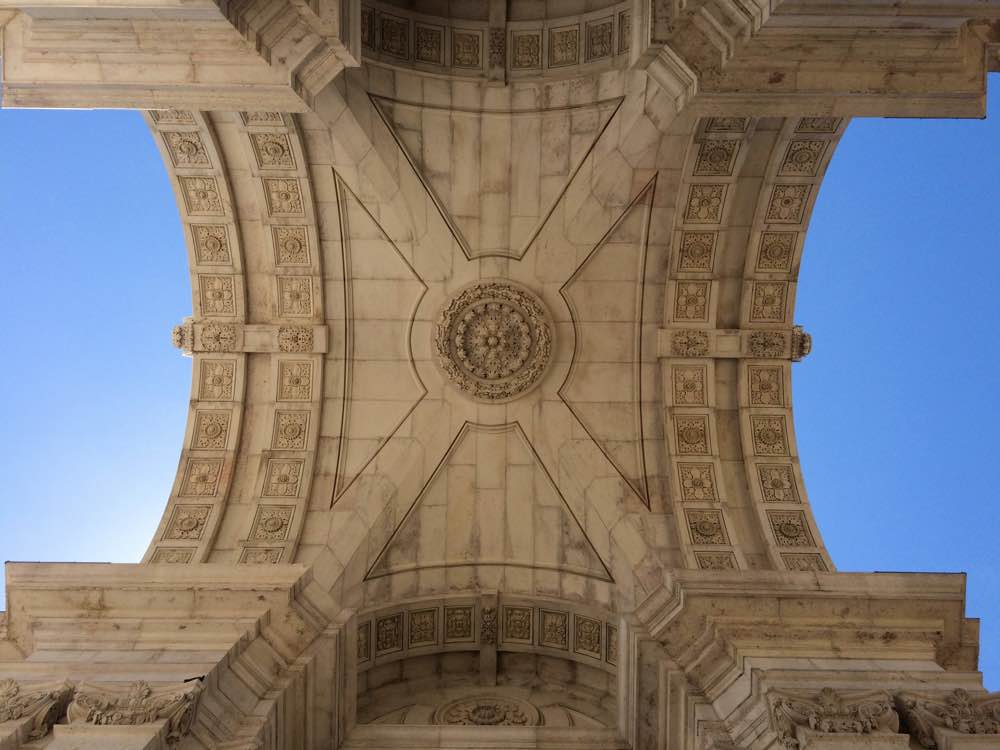
Standing at the southern end of Lisbon’s busiest pedestrian street, this white triumphal arch was the city’s symbol of rebirth after the 1755 earthquake, fire, and tsunami that destroyed most of what came before it. Completed in 1875, it’s covered in marble sculptures of Vasco da Gama, Viriatus, and other historical figures.
The arch is impressive from every angle, but the best views are from the top. Go up for 360° panoramic views of downtown Lisbon, including Alfama, São Jorge Castle, Carmo Convent, the river, and Comércio Square directly below. Queues are rare here, which makes it a better deal than the Santa Justa Lift.
Tips for Rua Augusta Arch
- ⏱ Hours: Open daily 09:00–20:00.
- 💰 Entry fee: €3 to go up.
- 💡 Pro tip: Choose a clear sunny day if you can. The river and marble stones reflecting the light is one of Lisbon’s best visual moments.
Praça do Comércio (Comércio Square)
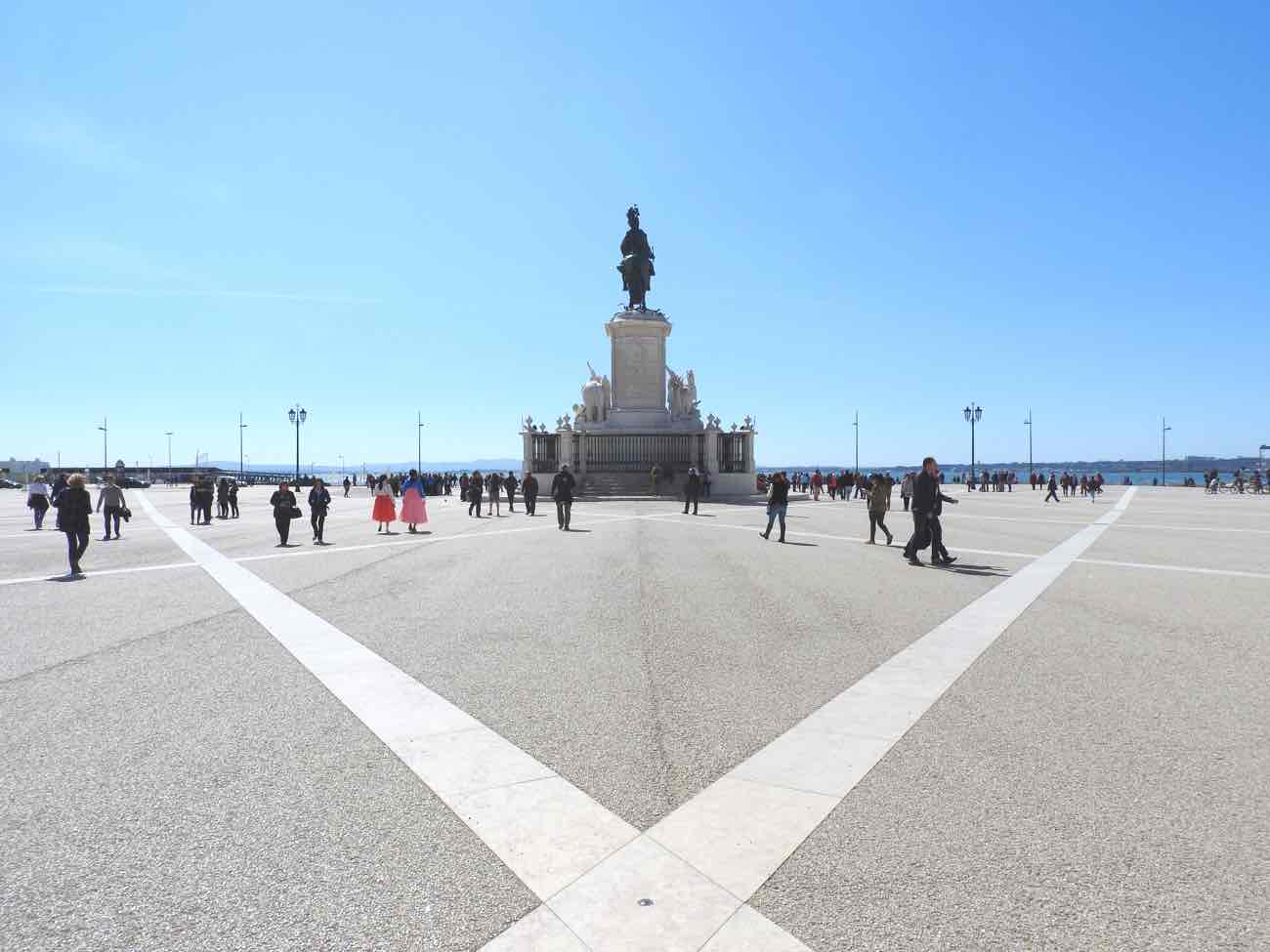
Praça do Comércio is Lisbon’s grandest square, opening directly onto the Tejo. Historically the city’s main port gateway, it’s now a wide, sunlit space surrounded by yellow arcaded buildings. The light here is almost aggressively bright: the marble, the river, and the sky all amplify each other. Sunglasses are not optional.
Worth looking out for: the café Martinho da Arcada, a favourite of Fernando Pessoa; the 14-meter equestrian statue of King José I; and Cais das Colunas, the relaxed stone steps on the southern end that locals use as a perch at all hours.
Ribeira das Naus
Ribeira das Naus is where the great Portuguese explorer ships were built during the 15th and 16th centuries. After decades of abandonment, it was regenerated into a long riverside promenade that immediately became a favourite for locals who come here to read, cycle, and do absolutely nothing productive.
Finish your second day here. There’s a small kiosk with a long happy hour, live music, and sun beds facing the Tejo. If you see someone looking smugly content with a cold beer, it might be me. Come say hi.
Day 3: East Lisbon (Parque das Nações and Alfama)
The final day shows two completely different faces of Lisbon that most visitors never experience side by side: the futuristic waterfront district of Parque das Nações in the morning, and the ancient Moorish quarter of Alfama in the afternoon.
Parque das Nações
Built entirely for the 1998 World Exhibition (Expo’98), Parque das Nações feels like it was designed by someone who wanted to prove that Lisbon could do futurism. The architecture is striking, the streets are wide and ordered, and the whole area has a calmness that central Lisbon doesn’t always offer.
The star of the district is Gare do Oriente, Santiago Calatrava’s spectacular train station, which looks like a skeletal forest of white arches. The riverside boardwalk is worth a slow walk too: the views over the Tejo on one side and the skyline on the other are thoroughly un-Lisbon in the best way.
If you’re travelling with kids (or with someone who loves aquariums), Oceanário de Lisboa is one of Europe’s largest indoor aquariums, with over 15,000 animals including otters and penguins. The otter tanks alone justify the ticket.
Baixa
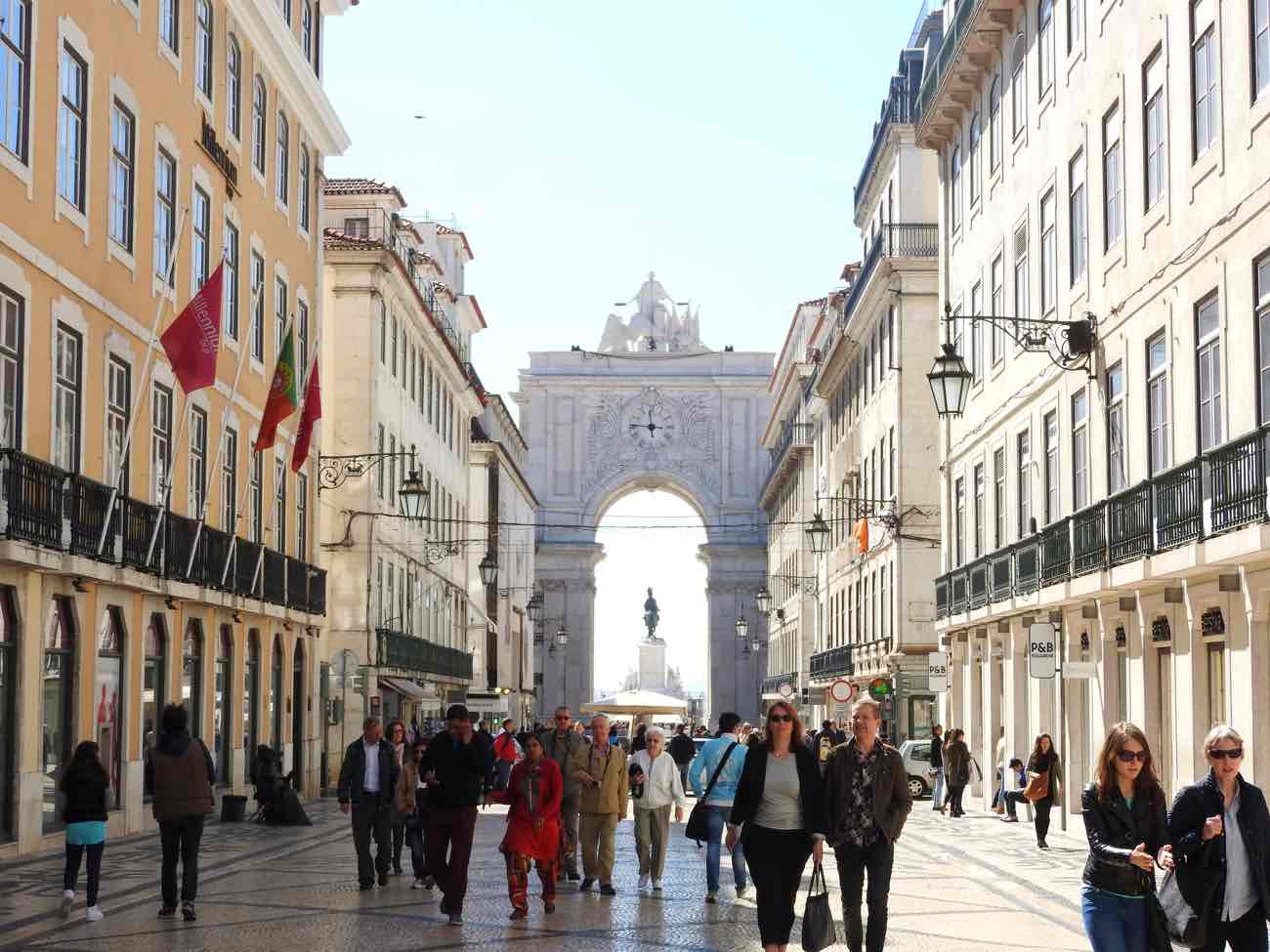
Contrasting with the rest of the city’s organic layout, Baixa Pombalina is orderly by design. Rebuilt from scratch after the 1755 earthquake by Marquês de Pombal, it consists of seven parallel streets, three grand squares, and the Rua Augusta Arch forming a precise, balanced urban plan.
It’s heavily touristy these days: souvenir shops, human statues, and overpriced restaurants crowd the main streets. Enjoy the architecture, skip the restaurants. If you’re approached by anyone offering hashish, a firm “no” and avoiding eye contact is all you need.
Sé Catedral de Lisboa
Built right after King D. Afonso Henriques conquered Lisbon from the Moors in 1147, the Sé de Lisboa is nearly 900 years old. It’s been through fires, earthquakes, and several rounds of architectural rethinking, but it still anchors the Alfama skyline in a way nothing else does.
Tips for Sé de Lisboa
- ⏱ Hours: Open daily 09:00–19:00.
- 💰 Entry fee: The cathedral itself is free. Treasury and cloister: around €4.
- 💡 Pro tip: Walk to the cathedral instead of taking tram 28. Every other tourist in the city takes tram 28. It’s packed with pickpockets and the queue can take over an hour.
Sé Catedral holds the remains of São Vicente, patron saint of Lisbon. Legend says two ravens accompanied his remains to the cathedral, and the raven became the official symbol of the city, still visible on Lisbon’s coat of arms today.
Alfama district
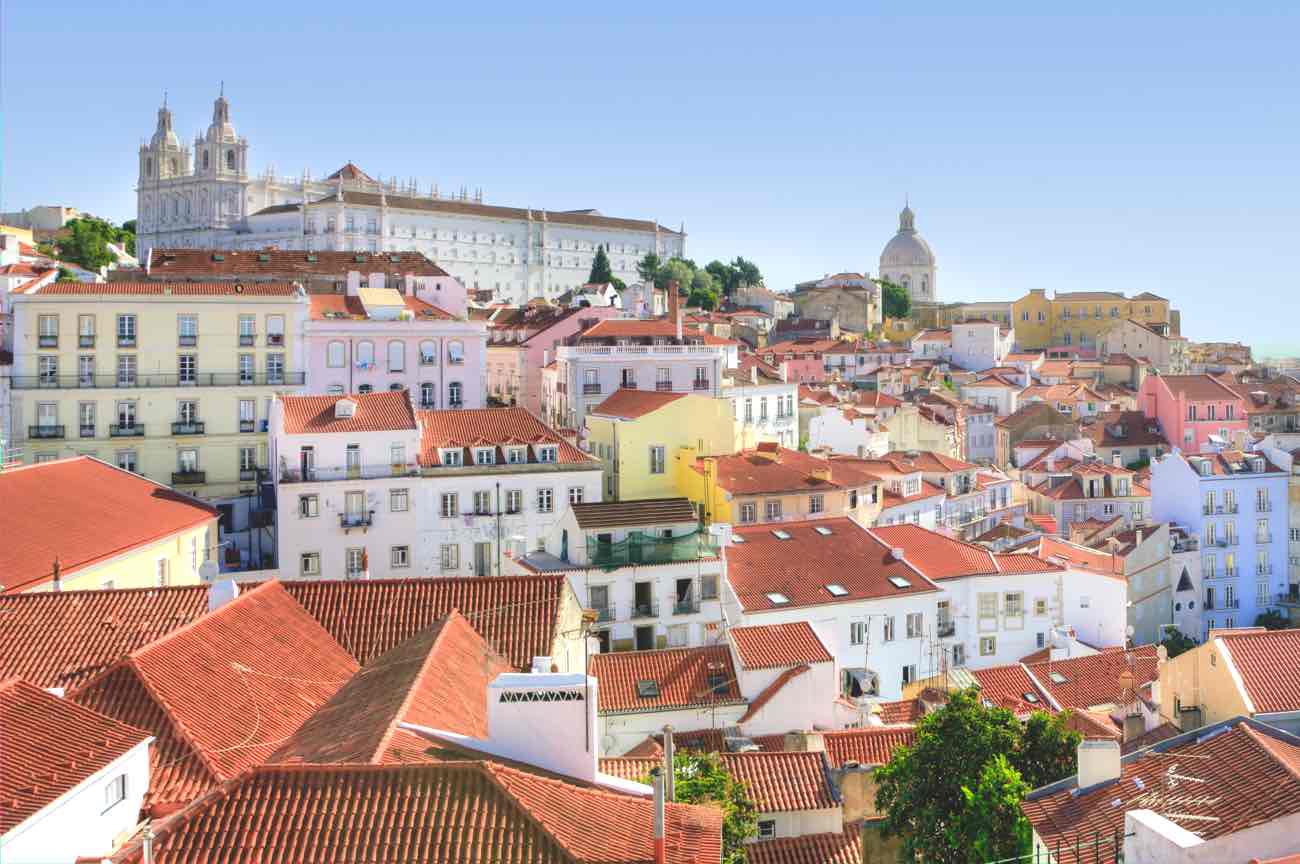
Alfama is the oldest district in Lisbon. Its narrow cobblestone streets and whitewashed houses have been here since Moorish times, when it was the city’s most desirable neighbourhood. Today it’s heavily AirBnB-colonized, but wander far enough off the main tourist routes and you’ll still find kids playing football in alleys, neighbours talking over windowsills, and the occasional backyard you weren’t supposed to find.
For views, don’t miss Miradouro de Santa Luzia or my personal favourite, Miradouro das Portas do Sol. Grab a beer or a glass of wine and sit with the tiled rooftops of Alfama spreading below you and the Tejo in the background.
Key buildings in Alfama worth a detour:
- Panteão Nacional: Where many of Portugal’s most important historical figures are buried, including the footballer Eusébio.
- Sé Catedral: Lisbon’s main cathedral, standing for almost 900 years.
- Castelo de São Jorge: Next on this itinerary.
Every June, Alfama hosts the Santos street parties: outdoor grills serving sardines, tables spilling onto cobblestones, and the whole neighbourhood celebrating. It’s my favourite time of the year in Lisbon. Check Festas de Lisboa for the programme.
Castelo de São Jorge
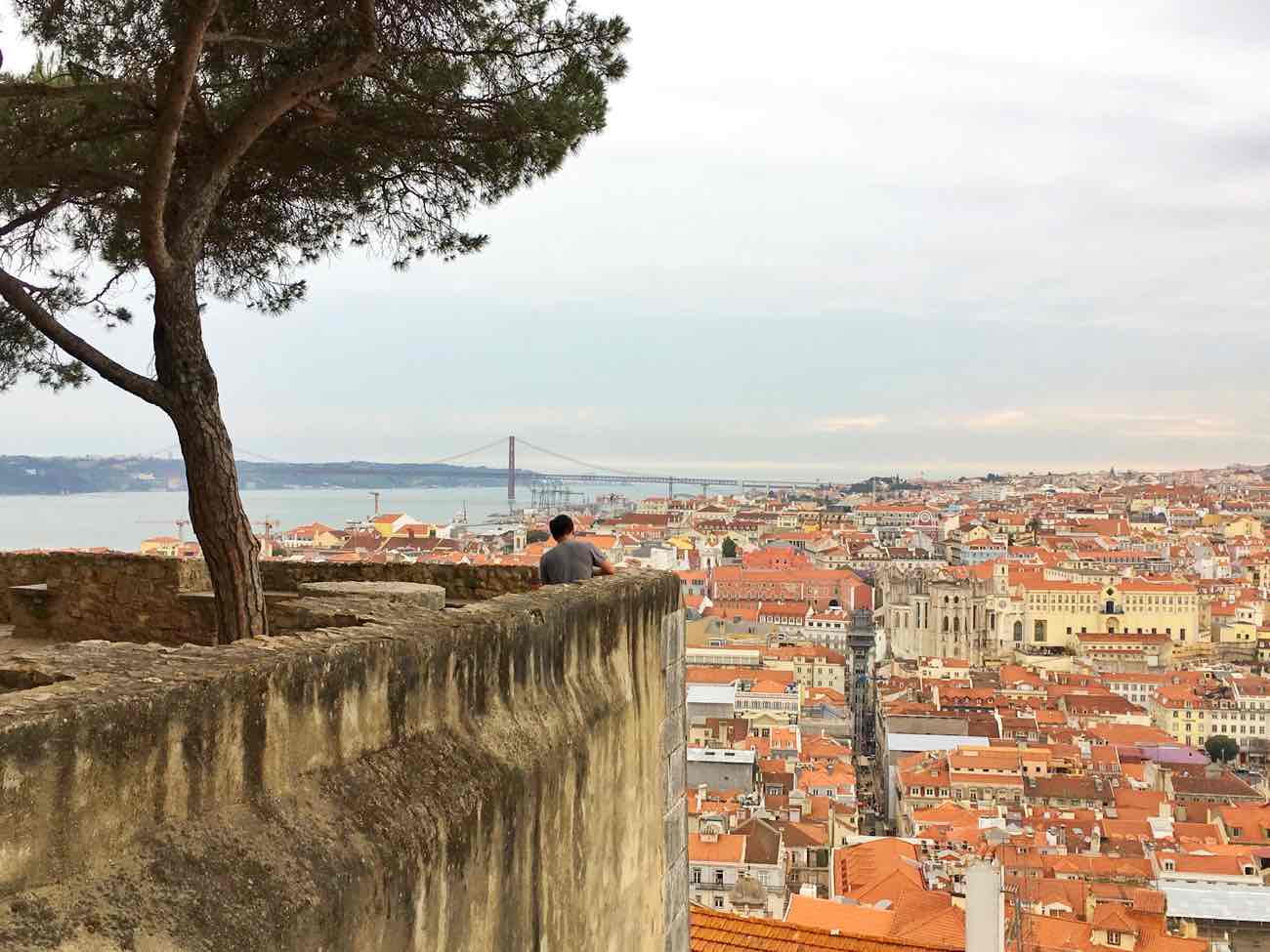
Visible from almost everywhere in the city, Castelo de São Jorge has been a defensive position for Phoenicians, Romans, Visigoths, Moors, and Christians. The Moors rebuilt and strengthened the fortifications in the 10th century. The Christians took it back during the Second Crusade in 1147.
The ruins themselves won’t blow you away, so don’t arrive expecting pristine medieval splendour. Set the right expectations and what you get instead is a powerful sense of time, open panoramic views over Lisbon, and during summer, the best sunset in the city from the castle walls. Open until 21:00 in peak season.
How to get to São Jorge Castle
- Walk: Around 10–15 minutes uphill from Largo das Portas do Sol. Two public lifts near Baixa cut the climbing: one on Rua dos Fanqueiros 176, another near Pingo Doce in Largo Chão do Loureiro.
- Bus: Bus 737 from Praça da Figueira goes directly to the castle entrance.
- Tram 28: Skip it. Long waits, jammed carriages, pickpockets. The bus is faster and far less stressful.
Miradouro da Nossa Senhora do Monte
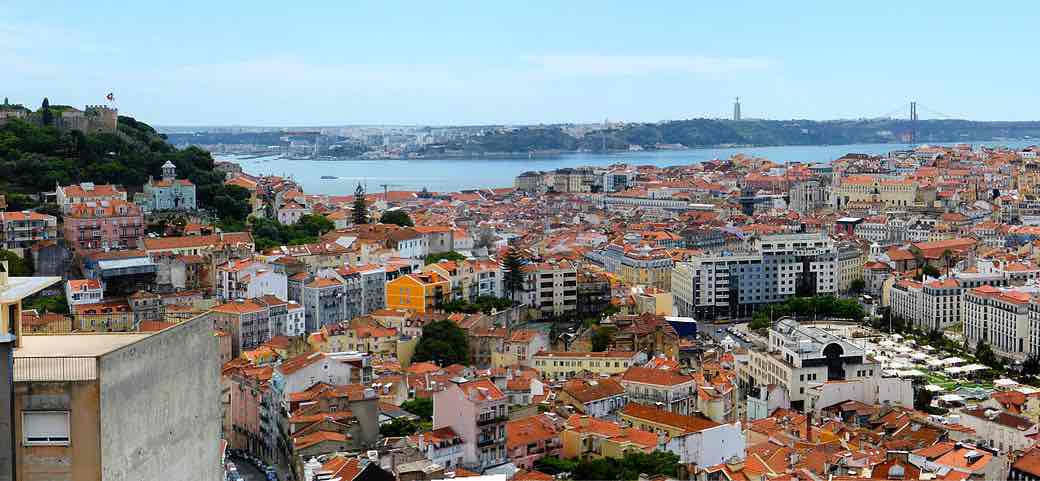
The best panoramic viewpoint in Lisbon. From here you can see São Jorge Castle on the left, the entire Baixa grid below, Chiado in the distance, and the Tejo as a backdrop. It’s about 15–20 minutes from the castle on foot, partly uphill. Worth every step.
If your legs have staged a full revolt after three days of Lisbon hills, Miradouro da Graça (also called Miradouro Sophia de Mello Breyner Andresen) is closer to the castle and also has a beautiful view. Either way, it’s the perfect place to finish the trip.
Extra days and day trips from Lisbon
If you have more than three days, you’re in luck. The area around Lisbon is packed with excellent day trips. Check my full guide to the best day trips from Lisbon for everything within reach, or dig into Lisbon’s lesser-known spots for more of the city itself.
Sintra
My top recommendation for an extra day. Sintra is a UNESCO World Heritage Site about 40 minutes from Rossio by train, and it earns every superlative thrown at it: palaces clinging to forested hillsides, eccentric 19th-century follies, and a fairytale atmosphere that hasn’t fully succumbed to tourism. Give it a full day. You can combine it with Cascais and Cabo da Roca (Europe’s westernmost point) if you’re ambitious.
Tips for Sintra
- ⏱ How long: A full day minimum. Combine with Cascais and Cabo da Roca for a full coastal loop.
- 💡 Pro tip: Take the train from Rossio station directly. No tour needed. The ride takes about 40 minutes.
Costa de Caparica
For a beach day, Lisbon is well placed. The closest beaches at Estoril and Cascais are easy by train. However, for far better sand and more space, head south to Costa da Caparica, Comporta or Meco by bus or car. Long golden Atlantic beaches with proper waves. Full breakdown in my guide to beaches near Lisbon.
Príncipe Real
This is Lisbon’s most stylish neighbourhood: independent bookshops, good wine bars, vegan restaurants, and a Saturday antiques market that’s worth a browse. Slightly overpriced compared to the rest of the city, but the quality is higher too.
Unique museums
Lisbon has several museums that deserve more time than this itinerary allows. My top three: Museu do Azulejo in Santa Apolónia (the definitive collection of Portuguese decorative tiles), Museu Nacional dos Coches in Belém (carriages so ornate they’re almost embarrassing), and Museu Berardo, also in Belém, which holds an outstanding collection of modern and contemporary art and is the go-to cultural fix for Lisboners.
Insider tips for Lisbon
- Never take a taxi straight from the airport. There are far more reliable and cheaper ways to reach the city centre.
- Start each day the Portuguese way: a café and a pastel de nata at any local pastry shop. Repeat after lunch. This is not optional.
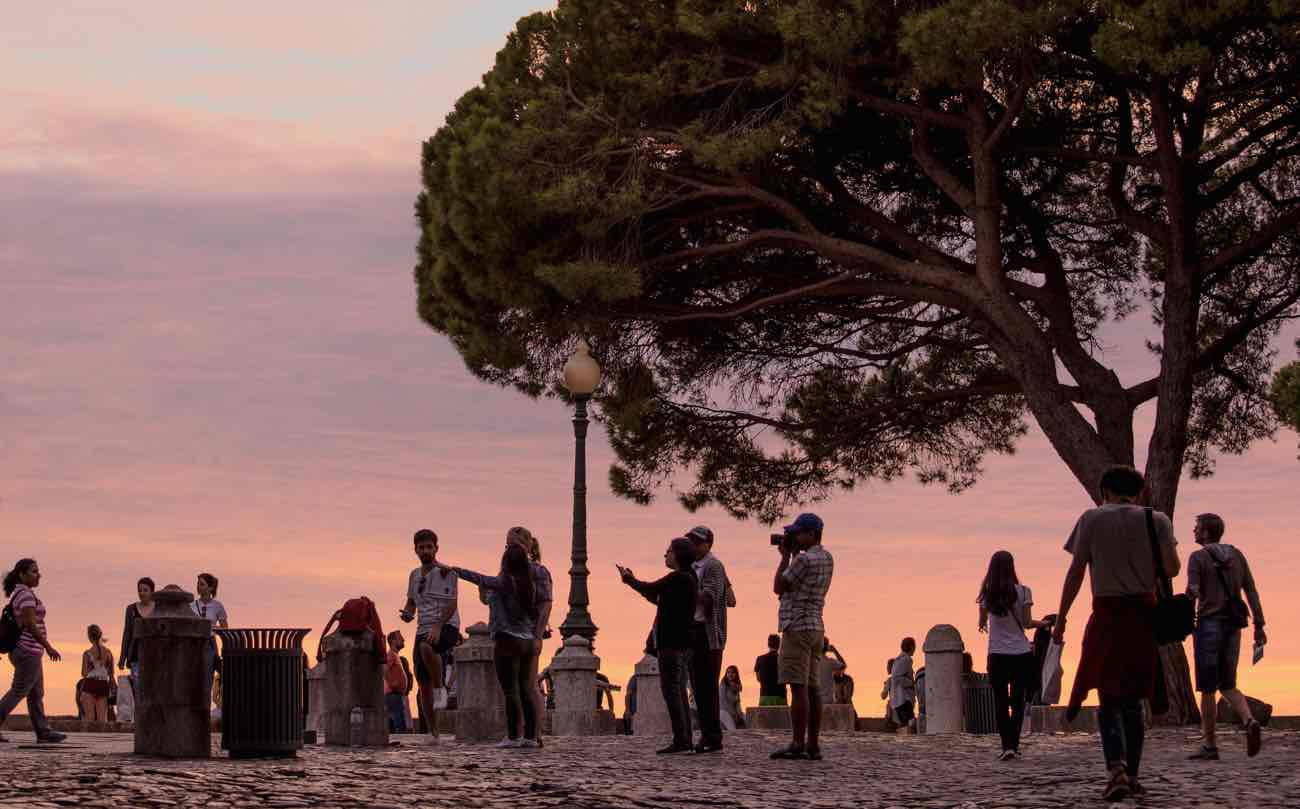
- Whenever you see a sign with the word Miradouro, follow it. Every single time.
- Couvert items in restaurants (olives, cheese, bread) are not free and can be overpriced. Tell the waiter you don’t want them as soon as you sit down.
- Do not eat at any restaurant with someone standing outside actively inviting you in, particularly on Rua das Portas de Santo Antão.
- Tipping is optional. Only do it if the service was exceptional.
- The people offering hashish in Baixa are mostly harmless. Ignore, keep walking.
Is Lisbon worth visiting? Yes, and here’s why.
Lisbon is one of those cities that catches people off guard. The hills are steeper than expected, the food is better than expected, and the light is unlike anywhere else in Europe. Three days starts giving you enough to understand why people keep coming back.
If this itinerary helped you, check out the full guide to things to do in Lisbon for everything that didn’t make the three-day cut. And if you want to explore beyond the city, my Lisbon day trips guide covers the best options within reach. Drop any questions in the comments below.
Frequently asked questions about visiting Lisbon
Is 3 days enough for Lisbon?
Three days in Lisbon is enough to cover the main highlights without feeling rushed. You can comfortably fit Belém, downtown Lisbon, and Alfama into three days, with time for viewpoints, good food, and a leisurely riverside drink. If you want to add a day trip to Sintra or the beaches, extend to four or five days.
What is the best time to visit Lisbon?
The best time to visit Lisbon is April to June or September to October. The weather is warm but not brutally hot, the crowds are manageable, and prices are lower than peak summer. July and August are the busiest months, with queues at every major sight and temperatures that make walking the hills unpleasant. December to February is quiet and mild but some outdoor spots are less lively.
Is Lisbon expensive?
Lisbon is moderately priced by Western European standards. Expect to spend around €50–90 per person per day covering accommodation (budget to mid-range), meals, transport, and entry fees. A pastel de nata costs around €1.20 at most pastry shops. A restaurant lunch in a non-touristy area runs €10–15. The main tourist sights charge entry fees between €3 and €18.
How do I get around Lisbon?
Walking is the best way to explore Lisbon, though the hills can be tiring. For longer distances, the metro is fast and well-connected. Buses cover most of the city. The iconic trams (especially 28) are scenic but overcrowded and slow. Uber is cheap and reliable for late nights or longer trips.
Is Lisbon safe for tourists?
Lisbon is one of the safest capitals in Europe. Violent crime targeting tourists is rare. The main risks are pickpocketing, especially on tram 28 and in crowded areas like Alfama and Baixa. Keep your phone in a front pocket, don't leave bags on the back of chairs, and you'll be fine.
What is Lisbon known for?
Lisbon is known for its seven hills, its cobblestone viewpoints called miradouros, the melancholic music genre called Fado, its pastéis de nata custard tarts, the ornate blue-and-white decorative tiles called azulejos, and its UNESCO-listed monuments in Belém. It's also increasingly known for its food scene, its LGBTQ+ friendliness, and the kind of light that makes photographers stay longer than planned.















Fabulous info. Why can’t I copy and paste any of the info? I had to take screen shots instead but really wanted to copy some minor tidbits at times and this functionality was disabled on this site.
I have disabled the copy paste functionality due to copyright infringements. Sorry!
Hi Bruno, your blog is GREAT! Thank you for the informative travel tips. I am enjoying reading all the pages for my trip to Lisbon in December.
My flight leaves at 5 AM in the morning. I am thinking to leave my hotel near Campo Pequeno for the airport around 2:30 AM. Should a Uber or a taxi be available to get to the airport? I am hoping Uber drivers available in the middle of the night.
Such a comprehensive guide. Thanks a lot; till next time 🙂
Thank you for passing by!
My sister and I are currently in Lisbon, and would like to let you know that your guide has been invaluable! It’s so refreshing to find something on the internet these days that is actually useful and not just slick pictures and pop ups. Obrigada!
Thank you, I really appreciate that.
I’m not into spammy content at all 🙂
Wow what an article
Thank you!
This is a good guide indeed. However, I must say Lisbon suffers from overtourism and became a bit expensive and stressful lately. Portugal has so much to see that I’d rather go to Braga/Porto/Coimbra/Aveiro, Sesimbra/Comporta, Nazaré/Óbios or Algarve/Costa Vicentina. I hate to say this but Lisbon lost a bit of its magic and it is no longer that authenthic. If you go to Lisbon, try to pay a visit to Sintra, Guincho, Cascais/Estoril and Évora.
Thanks for your input Pedro, I can feel you and I agree with you.
Lisbon is suffering from the same overcrowding and gentrification syndrome that has infected many cities around Europe, sadly. Thanks for your tips too, I have visited all of those places except Aveiro and they are solid choices for who is looking for something more local.
Awesome guide! Looking forward to making my way through it when I am in Lisbon in December 🙂
Let me know how it went Sonia!
I got some great hash in Baixa at a very fair price. Why not do as the locals and try it out? 😉
Each to its own.
It’s not hash that those street dealers are selling, but if you liked it then good for you 🙂
My wife and myself will be visiting Lisbon in October.
We would like to visit Fatima .
What would you advise?
Regards & thanks
Planéo viajar a Lisboa en Marzo 2019 y tus recomendaciones me parecen una estupenda guía!!! Les cuento al regreso
So you really don’t recommend 2 days in Sintra? We will be arriving in Lisbon from Morocco After Nov 10… saying for 7 days. I was told to visit Sintra for sure! Do you think just one day is good? Other then Sintra any other recommendations? Looks like there is lots to see and do in lisbon! Looking forward to this trip 🙂 Thanks for the great advice
Coming to Lisbon via cruise ship with a short (2pm-10pm) layover in late April. Thinking about a Segway tour thru the Alfama district for 2hours. Do you think this will be money well spent to see as much as we can? Great website and tourist info by the way thanks for your insights!
Definitely not. With 8 hours you won’t see even 1% of Lisbon, but I suppose you can have a walk around Alfama and Baixa.
With 8 hours you are able to visit Baixa/Chiado and Alfama, and you’ll get 50% of Lisbon (only really missing the Belem district in my opinion)
Thank you so much for such a detailed info. Could you please give us some recommendation for restaurants and food that we shouldn’t be missed 🙂
thanks in advance 🙂
There is going to be a group of coming to Lisbon. Do you think it’s ok to skip day 3 and put Sintra in its place? Could you also tell me what the weather going to be the first part of April? We will be coming in 2020. Should we expect a large Tourist crowd at this time?
Thank You for your tips.
Michael
There is going to be a group of coming to Lisbon. Do you think it’s ok to skip day 3 and put Sintra in its place? Could you also tell me what the weather going to be the first part of April? We will be coming in 2020. Should we expect a large Tourist crowd at this time?
Thank You for your tips.
Michael
Please Reply
Wow, thank you so much for putting together such a thoughtful and comprehensive guide! This is brilliant!!! Can’t wait to visit in September
Thanks Yani, I’m glad it was useful. Have a happy trip!
I will be traveling with a friend to Lisbon in late July. We will be there for 7 nights. Do you recommend an overnight in Sintra. Is Porto to far to travel to?
I suggest going to Sintra, maybe not worth spending a night though.
Porto is a 3 hours away by train or 3h30 by bus.
Try to pay a visit to Cascais/Estoril/Guincho and Évora. Also, Comporta is only 1 hour away from Lisbon and has some of the most amazing beaches in Portugal (apart from the Algarve of course)
Just wanted to thank you for this. I had 3 days in the city, and your breakdown has pretty much been perfect. Terrific blend of major historic sites & hidden gems. Great random tips as well. Wish every city had something this. Thanks again!
Yay that’s very very good to hear. 🙂
Thank you for passing by!
Thank you so much for sharing all this. Helped us a lot to discover all the gems in this beatiful city.
Awesome, happy it was useful!
Hi, I just wanted to tell you how very grateful I am for yout Lisbon entries. We spent 11 days in Portugal, out of which 4 were spent in Lisbon and one in Sintra, and boy, did we get a very good use of this entry! every day there were at least three or four occasions where we felt immenly garteful for having come prepared: not getting on the Santa Justa, finding the little hidden parks, eating the best pastel de belém and so on… I am aware that some of your tips might get outdated with time, especially the hidden gem ones: they will simply get really popular too, but we had the chance to visit in time. I would like to make some suggestions, though: having come prepared we still found it really frustrating how there wasn’t adequate info on when the restaurants are open, and on one occasion, even if the info was clear, we still found the place closed for no apparent reason. Also, reasonable prices might mean something different for any traveller, it depends on where they come from: Portugese prices are still pretty high if you’re travelling on a Hungarian budget. Finally: sadly the mirror on Rossio is gone.
Anyway, thank you again for your fantastic job on these entries, and I hope you’ll have something up about my next destination too!
Thank you, for sure there will have to be some updating in the future, but for now they’re still valid.
Thank you a lot for your feedback, it’s with suggestions like yours that I can improve and make a post that better serves everyone.
PS: Noooo they removed the mirror! 🙁
Really the best blog on Lisbon. Thank you!!!
Yay, thank you!
Thank you! So much better info than the trite ’36 hours in’ that most travel sites give. Your guide had been perfect!
Awesome to know that, bloggers know better 🙂
I just found your site. I have three days in Lisbon next week. I was feeling overwhelmed as to where to go first, but I’m feeling a lot better about it after having found this page. Thanks for all the tips!
You welcome! Let me know how it goes!
just returned from portugal followed ur three day lisbon itinerary which was pretty much spot on only difference was on the seconf day in the afternoon hotel told of two other lifts that bring u up to the sao jorge castle instead of waiting on line for the lift in san justo so started there walked down to the alfami district, saw the lisbon cathedral and ended up at the praco de commercio thx
Sounds like you had a great time 🙂
Really useful and insightful site, all the other sites I’ve been to state the same old touristy stuff, which we find anywhere. What I was wanting was alternatives, ideas, off the beaten track stuff and advice. We are in Lisbon in October for the second time running the marathon, looking forward to it. Thanks for the tips. Barry
That was my intention, not the conventional touristy stuff, you can go to TripAdvisor for that 🙂
Wonderful page, love the tourist trap mentionings!
Looking forward to coming next month!
Hope I’m still up-to-date, those guys move fast with new ways to scam. :p
Have a great trip!
Rapaz, que trabalho sensacional o teu!
Estou começando o planejar uma road trip portuguesa com a familia e me deparei com teu blog. Uau!
As informações, dicas, idéias, criticas, pensamento…tudo muito esclarecedor e no ponto.
Obrigada!
Muito obrigado, fico muito contente que o trabalho que faço é útil para alguém! 🙂
Enjoyed reading. Coming to Lisbon in September 2017. Any hints for Gluten Free?
Sorry, I’m really not an expert in gluten-free restaurants. All I know is that Lisbon have some great vegan and vegetarian buffets!
Visiting Lisbon for 6 days I n September and can’t wait to follow your recommendations! Thank you
Hope you have a great time!
Hey man, just wanted to give a big thank you for all your Lisbon resources. I’m sure they would of taken ages to put together. Absolute legend for writing them up. Good luck with it all.
You welcome, glad they were useful! 🙂
This is amazing! I came across your article quite literally two days before heading to Lisbon, and it changed my plans completely. I’m here now, following this article and it is nothing short of spectacular. Thank you for taking the time to put it together and saving the rest of us time, money, and headaches. Obrigado y bom día!
Very glad to hear, I hope you have a great time and eat a nata for me!
All of your Lisbon Posts have been so helpful! Happen to be staying in Alfama this coming Weekend and am wondering if you have any tips for a Website describing the Santos festivities. The site you included confimred it will still be going on, but not much else. THANKS!!
Glad to know I could be helpful!
Sadly and as far as I know the festivities have been suspended until June 20th 2017 due to the massive forest fires in Pedrogão Grande this last weekend.
This website – Festas de Lisboa – is the official one and contains all the events happening this month. Can you clarify what do you seek exactly?
We just booked our flights, I’m so excited! My husband and I and our 3 & 6 year olds are going to Portugal in October!Thanks for all your tips I’ve been glued to your website! Do you have restaurant recommendations for each area of Lisbon as well as for on the way and in the Algarve? Thanks!
Woo-hoo, congrats! Hopefully in October you can all still enjoy some of warm Portuguese weather.
Wow, that’s a lot of restaurants… I don’t know your budget and type of food you seek, but in general food in Lisbon (and in Portugal for that matter) is VERY good. Avoid menus with pictures and the main touristy places and you’ll be fine. Some of my favourites are Toma Lá Dá Cá in Bica and Stasha in Bairro Alto.
Thanks for this article! Looking forward to my trip to Lisbon now!
Glad you enjoyed it, let me know how it goes!