
Introduction
Thailand’s islands are what most people come for. And it’s easy to see why: white sand beaches, warm water, cheap food, and a laid-back energy that makes it genuinely hard to leave. But with hundreds of islands spread across two coastlines with opposite weather patterns, knowing which islands to visit — and when — makes the difference between a dream trip and a frustrating one. I’ve done Thailand island hopping on both coasts. I’ve had Koh Lipe feel like an actual dream. I’ve also had Phi Phi feel like a diesel-soaked tourist conveyor belt. This guide is the honest version: what each island is actually like, how to get there, and how to build an itinerary that doesn’t leave you spending half your trip on speedboats. This guide covers 9 main islands across both coasts, seasonal weather patterns, transport options, and practical tips for first-timers. If you’re also planning time in the north, see my guide to chaotic beauty of Bangkok and spiritual Chiang Mai.Quick tips for Thailand 🇹🇭
- 🏨 Usually the best hotel rates can be found in Agoda or Booking
- 🛵 A scooter or tuk-tuk is typically the best way to get around; for longer distances pre-book with 12Go Asia
- 🔒 Southeast Asia travel means unexpected surprises. Get insured — I use Heymondo
- ✅ Book cooking classes and elephant sanctuaries in advance with Klook
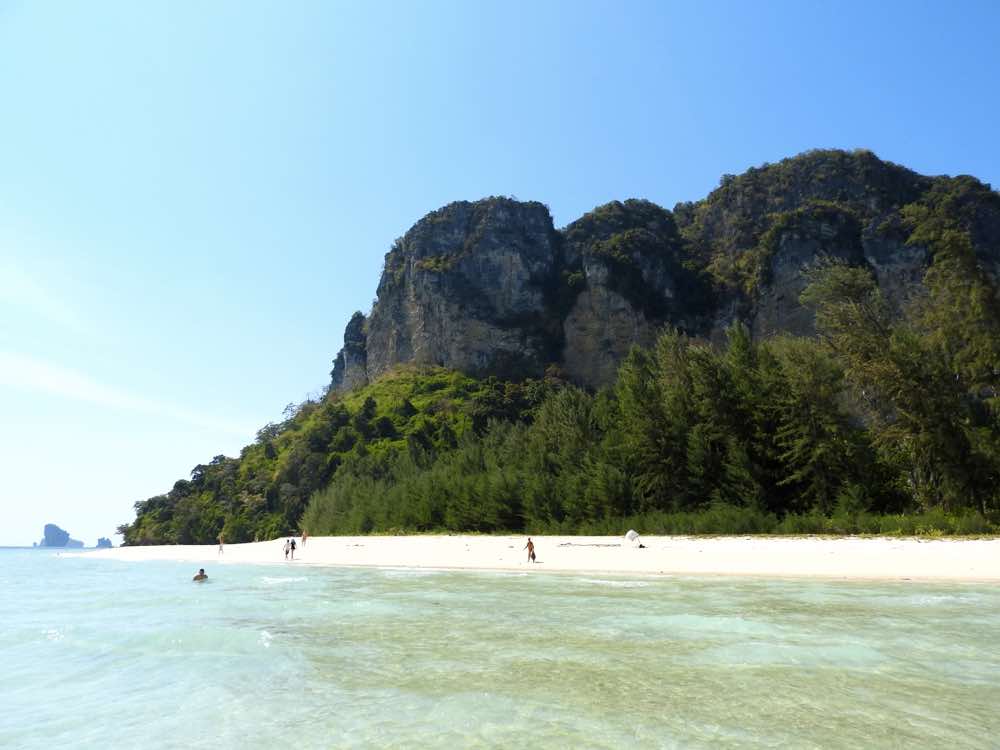
Thailand Island Hopping – A First Timer’s Guide
Thailand Island Hopping 🇹🇭
Andaman Sea vs Gulf of Thailand: Which Side Should You Choose?
The most important decision for Thailand island hopping is which coast to base yourself on. The Andaman Sea (west coast) and the Gulf of Thailand (east coast) have different islands, different transport networks, and almost opposite rainy seasons. Visiting both on a single trip is possible but adds significant travel time and costs.- Choose the Andaman Sea if: you want dramatic limestone karst scenery, world-class snorkeling and diving, or a more remote and varied island experience. Best visited December to April.
- Choose the Gulf of Thailand if: you want a tight island-hopping triangle (Samui, Phangan, Tao), an easier party scene, or you’re traveling between October and January when the Andaman is in monsoon season.
| Andaman Sea | Gulf of Thailand | |
|---|---|---|
| Main islands/spots | Phuket, Krabi, Koh Phi Phi | Koh Samui, Koh Tao |
| Hot/Dry Season | December – April | February – September |
| Rainy Season | May – November | October – January |
| Peak Crowds | Christmas & New Year | Christmas & New Year July & August |
| Worst weather | September | November |
Weather & Seasons in Thailand Islands
There are no guarantees regarding (tropical) weather. Anything can happen at any time of the year. However, it’s generally said that Thailand has three seasons – cool, hot, and rainy. In the islands, the climate has different rules and can get specific from island to island. In particular, the east side of the islands (Gulf of Thailand) follows a different weather pattern.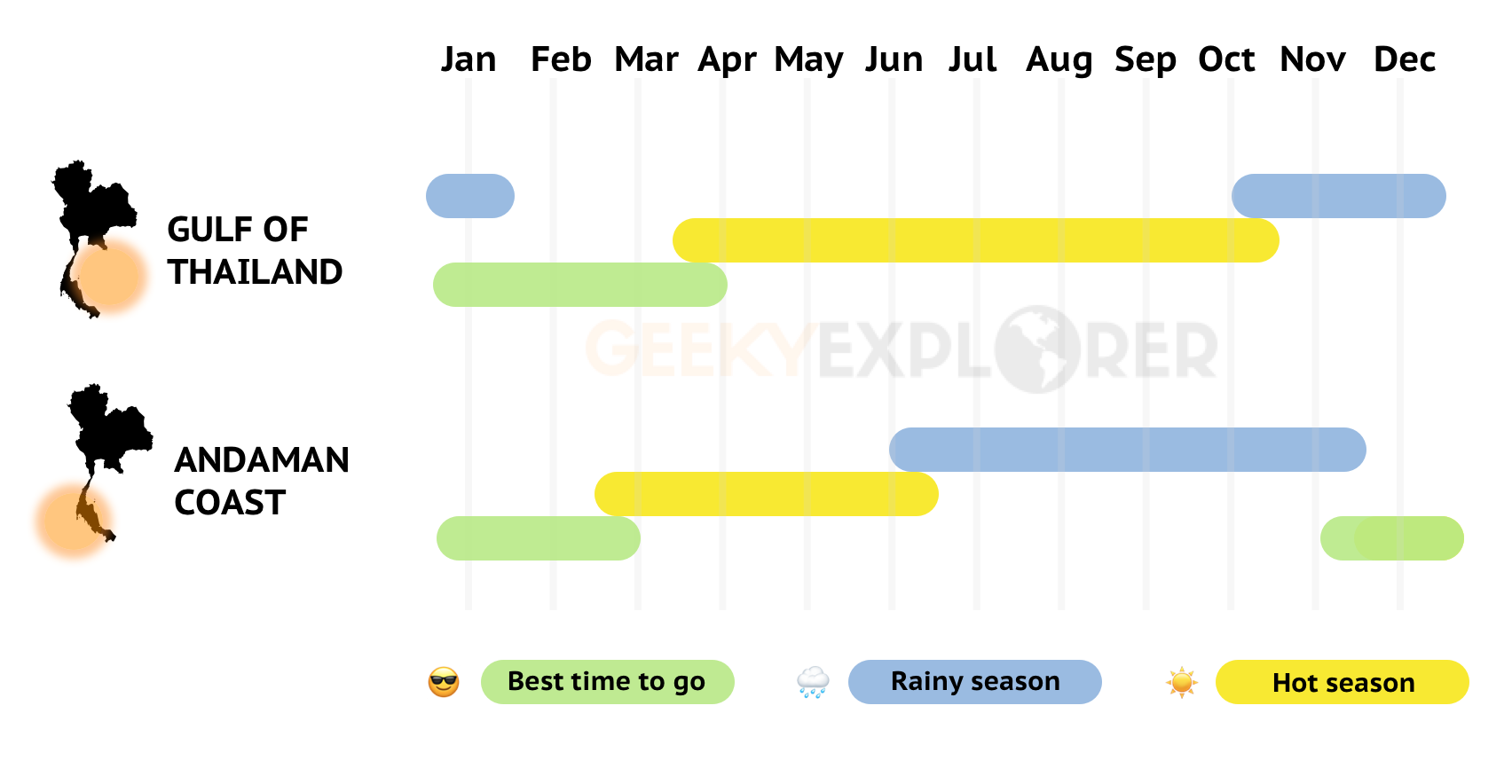
Best time to go to Gulf of Thailand islands
The Samui archipelago tends to follow almost opposite rules as the rest of Thailand. This area is affected by the south-west monsoon which can lead to heavy rainfall in November and the beginning of December. Seas can be rough and visibility poor during this time. The dry season takes place from January to April and is the best time to come if you’re looking for the best chances of good weather and little (if any) rain. There is more wind too during this period, which can be good news if you’re looking to do water sports. From March to November, temperatures will start to rise, usually reaching peak levels in April and May. Rainfall also starts to gradually rise, but usually in the form of an hour-long afternoon downpour. The only notable exceptions are the islands of Koh Chang and Koh Kood, which follow similar weather patterns to the beaches along the Andaman Sea coast.Best time to go to the islands in the Andaman Coast
Usually, the best time to hit the west coast beaches is between December and March. High temperatures hit about 28C in December and rise to 30C in March. Naturally, this is also peak season so expect more crowds and higher prices. That said, the Andaman coast has had many more rainstorms through the high season months than the normal in the past few years. During April, May and June, weather can get extremely hot as the cool winds depart. Expect temperatures up to 35°C. The high humidity brings storms and heavy showers, even though they usually don’t last for long. Can be a good time to visit, since crowds will be almost all gone. The rainy or monsoon season is between July and November. Prices are the lowest of the year – up to 50% less! – and crowds are minimal, but the weather can be rough and transportation choices (speedboats, longtails, and ferries) are more limited. It is, however, a good time to visit Khao Sok National Park, when it is more lush and green. Now let’s go into more detail about the islands on both sides of Thailand.
The Andaman Sea
The Andaman Sea coast is the southwest side of Thailand. It stretches for about 450 kilometers, and most of the area belongs to the Krabi province. Even though the Andaman Sea is extremely popular with tourists – think Phuket or Phi Phi Islands – the islands here are scattered throughout a much larger ocean area, which makes each one feel more isolated and private.The islands of Andaman Sea on a map
To make things more visual, I’ve put all the islands and places of the Andaman Sea on a map, divided into two groups:- Main islands in yellow: to stay over at least for a few nights
- Other more off the beate track islands in red: if you seek more remote and less crowded places or to visit as a daytrip
The islands in the Andaman Coast
Continue reading on my full guide to the islands in the Andaman Sea.
Phi Phi Islands
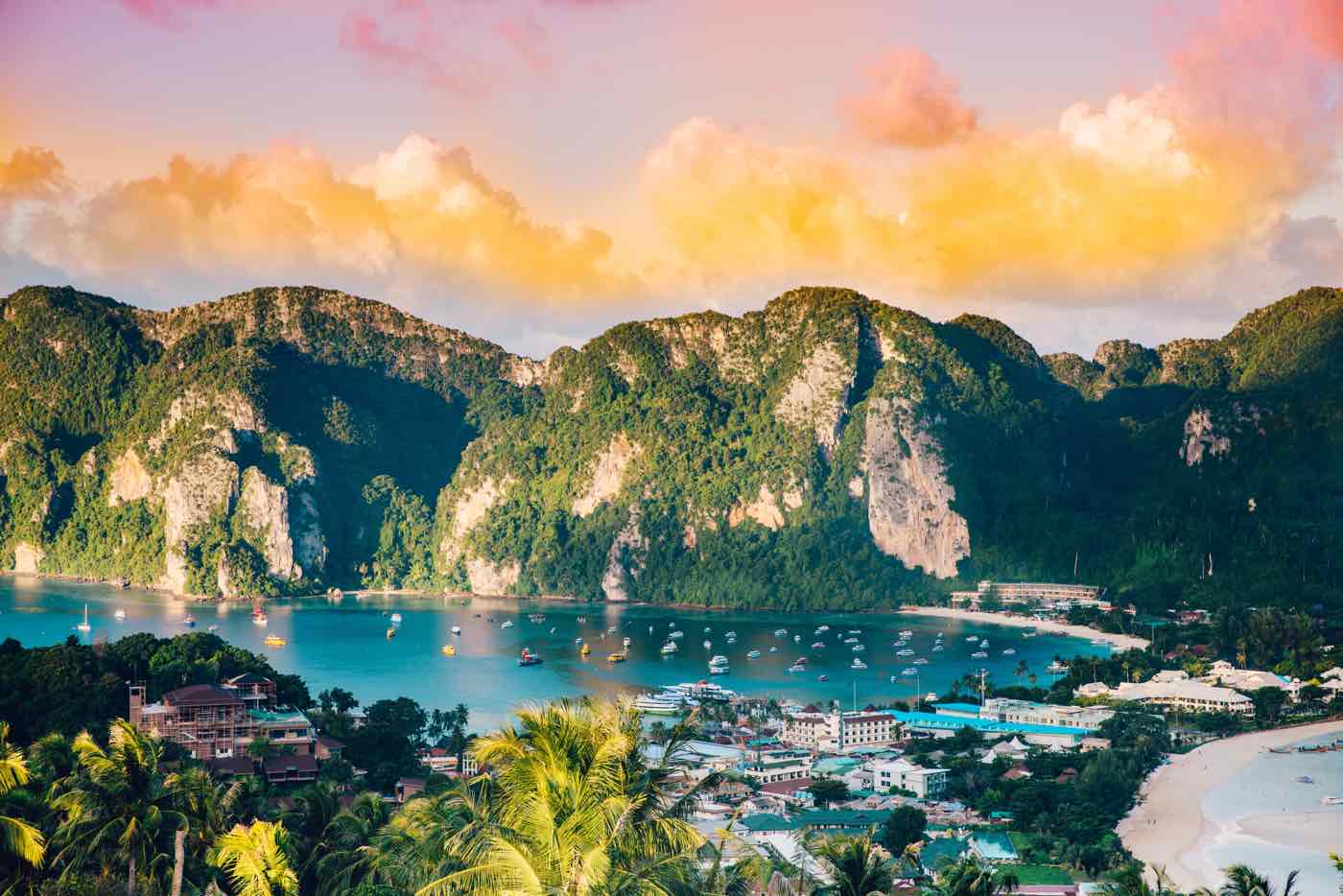
🛥️ How to get to Phi Phi Islands
Regular ferries run from Ao Nang, Phuket, and Krabi Town to Tonsai pier. Overnight tours operated by Maya Bay Toursare also available and include bioluminescent plankton swimming.🏨 Where to stay in Phi Phi Islands
Accommodation is widely available but it’s considerably more expensive than other places in Thailand. If you’re set on staying on Phi Phi, check this selection of the best resorts. Booking.comKoh Lanta
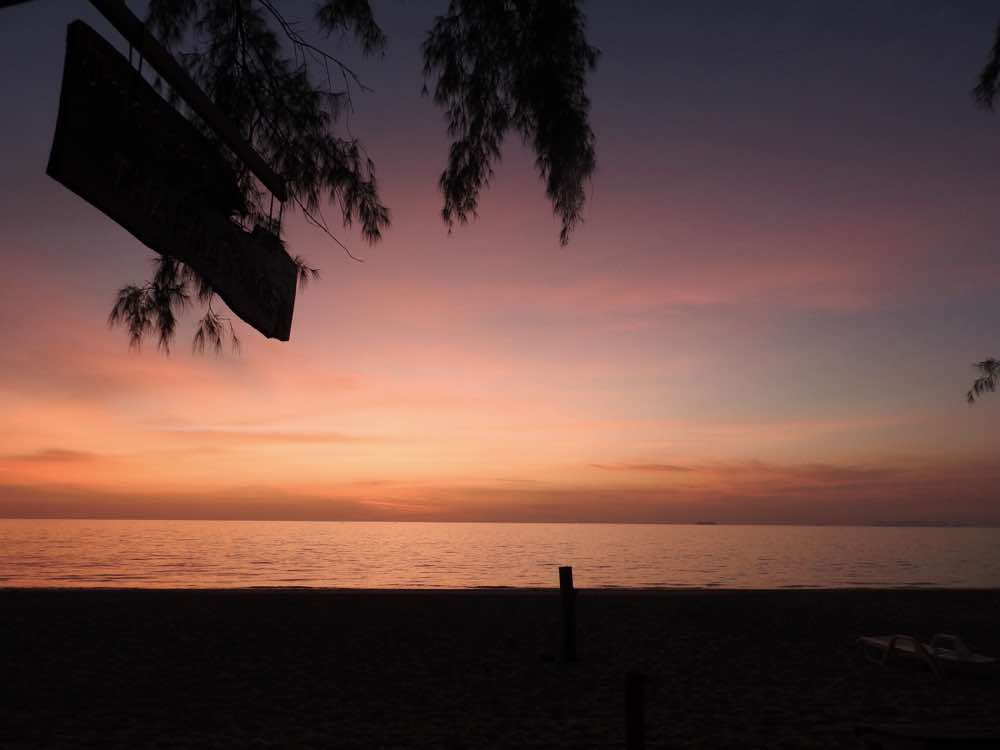
🛥️ How to get to Koh Lanta
Koh Lanta is easily accessible by ferry from Ao Nang/Railay, Phuket, Krabi Town and Ko Phi Phi. Note however this service is available during November to March only. From Ao Nang the journey takes about 2:30 hours.🏨 Where to stay in Koh Lanta
I stayed 4 days in the beautiful place below and could easily stay a few more.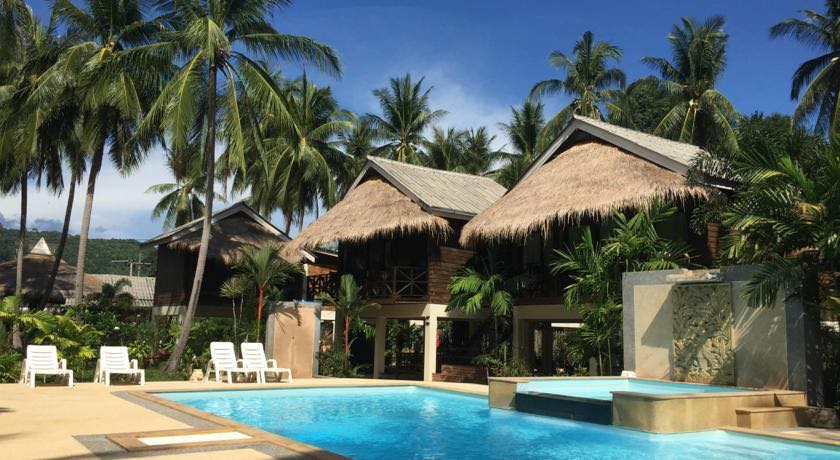
Long Beach Chalet
High-quality comfortable Thai-style bungalows a mere 5-min walk from the best beach in Lanta.

Things to do in Koh Lanta
Read on to know more Koh Lanta on my complete island island guide.
Railay

🛥️ How to get to Railay
Railay is NOT accessible by land. There are numerous longtails connecting Railay peninsula to Krabi Town and to Ao Nang. Ferries coming from Phi Phi and Koh Lanta also make a stop here (they’ll make you switch to a longtail to arrive land, as big boats aren’t allowed). Hotels here may arrange all-inclusive transfers for you to and from the airport for instance. Unless it’s already included for free, I recommend booking all transfers on a spot as they’re cheaper.🏨 Where to stay in Railay Beach
Railay peninsula is small and everything is at walking distance. It can get a bit boring after 2-3 days (wasn’t my case). This is where I stayed: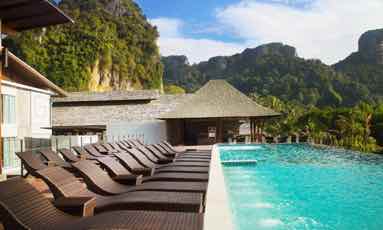
Railay Princess Resort & Spa
Quiet location, has 2 amazing swimming pools and a memorable breakfast. GREAT value. Make sure you keep the windows closed, as monkeys can steal your stuff!
Koh Lipe
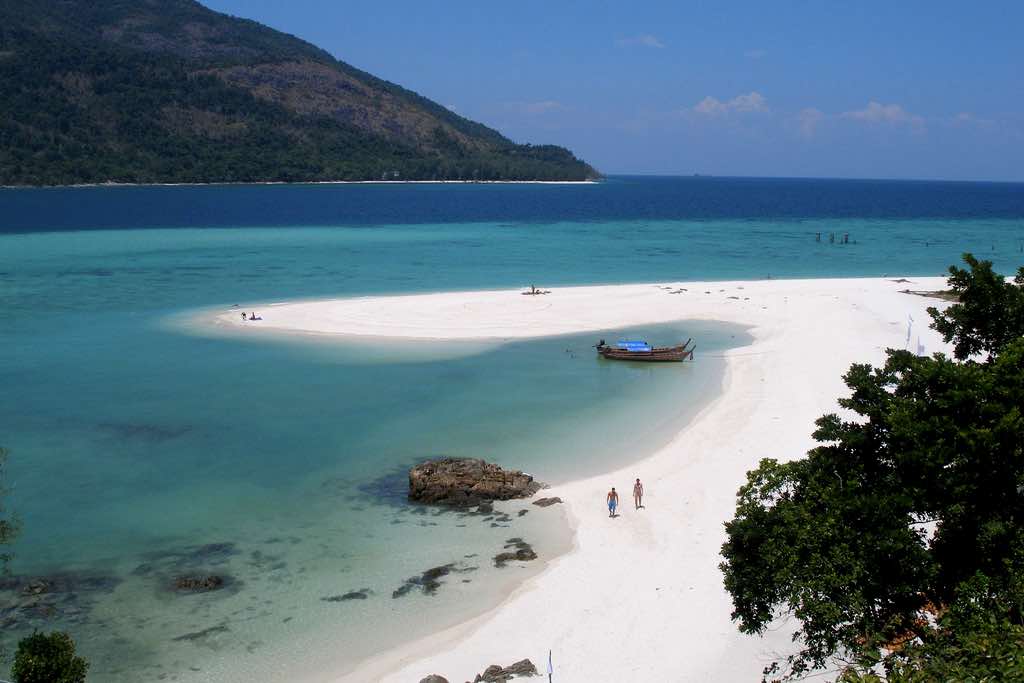 The best way to describe Koh Lipe was that I felt I was in a dream the whole time. I had high expectations and I still got amazed. The white soft sand beaches, the turquoise waters, the smile of the people and the amazing food. Not to mention the super cheap massage places!
There are plenty of things to do, from top-notch diving to snorkeling day trips within the Tarutao Marine Park or even sea kayaking. Or it’s also a perfect place to unwind and live the tropical life for a few days.
Have a read at my Koh Lipe travel guide, with everything you need to know to plan your trip.
The best way to describe Koh Lipe was that I felt I was in a dream the whole time. I had high expectations and I still got amazed. The white soft sand beaches, the turquoise waters, the smile of the people and the amazing food. Not to mention the super cheap massage places!
There are plenty of things to do, from top-notch diving to snorkeling day trips within the Tarutao Marine Park or even sea kayaking. Or it’s also a perfect place to unwind and live the tropical life for a few days.
Have a read at my Koh Lipe travel guide, with everything you need to know to plan your trip.
🛥️ How to get to Koh Lipe
It’s not easy. Located about 60km from mainland, Koh Lipe is the southern-most island in the Adang archipelago and in the whole Thailand. In low season, the only way to get there is by ferry from Pak Bara pier. During the high season, there are connections from other places in Thailand and from Langkawi in Malaysia. Since it’s not easy to get to, I’d say to stay a minimum of 3 full days to make your journey worth it.🏨 Where to stay in Koh Lipe
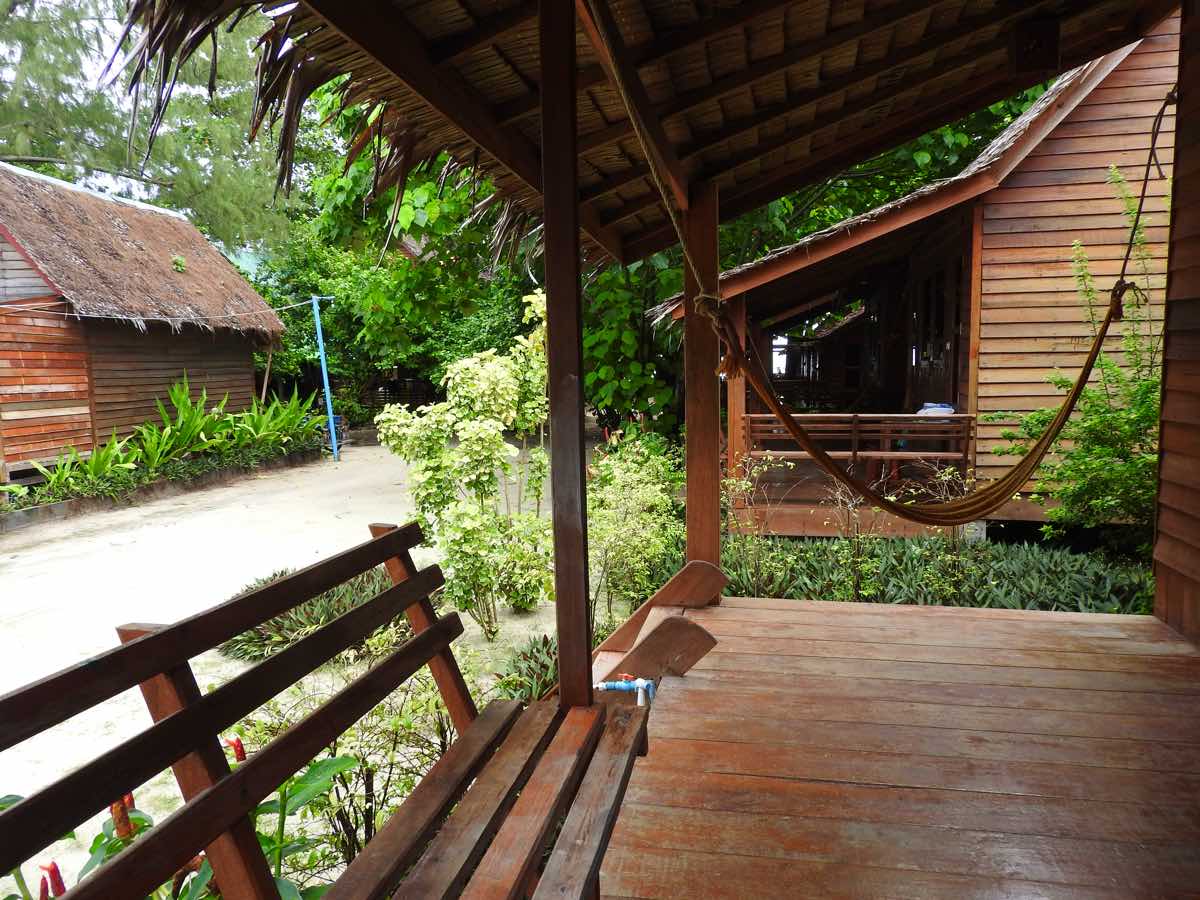
The Ultimate Guide to Koh Lipe island
Continue reading on my full Koh Lipe guide.
Phuket
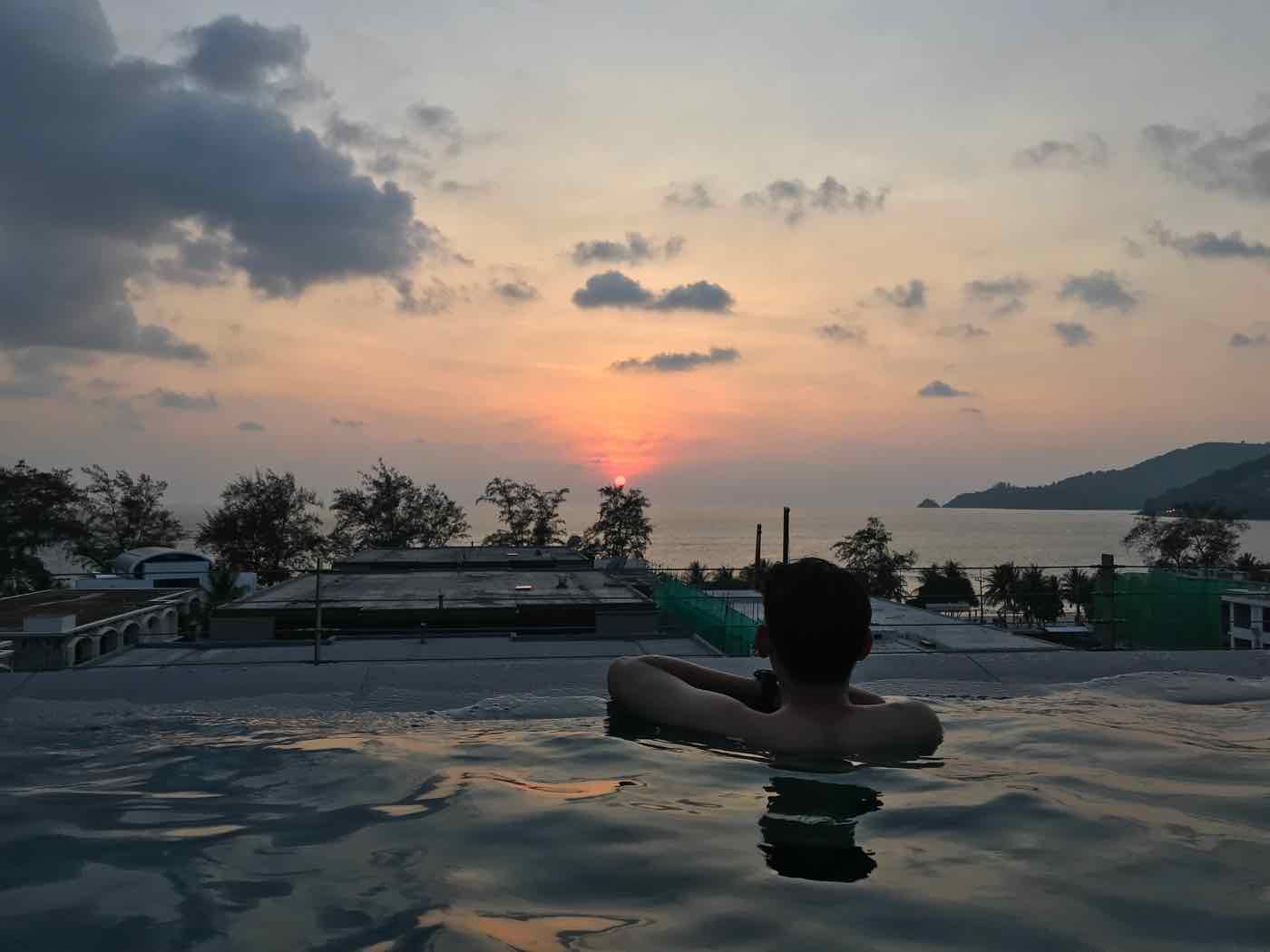 Phuket is the largest island in Thailand and the busiest. It’s not somewhere I’d go to relax, but it’s genuinely useful as a transport hub. Flights connect Phuket to Bangkok, Chiang Mai, Kuala Lumpur, Hong Kong, and dozens of other international cities. Tours and ferry connections to virtually every other Andaman island depart from here.
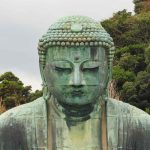
The Big Buddha statue in Chalong is worth a visit. The beaches closest to the main tourist areas are crowded. In my opinon, the proximity to quieter islands like the Hong or Similan Islands and the Hong Islands is the biggest draw.
Phuket is the largest island in Thailand and the busiest. It’s not somewhere I’d go to relax, but it’s genuinely useful as a transport hub. Flights connect Phuket to Bangkok, Chiang Mai, Kuala Lumpur, Hong Kong, and dozens of other international cities. Tours and ferry connections to virtually every other Andaman island depart from here.
The Big Buddha statue in Chalong is worth a visit. The beaches closest to the main tourist areas are crowded. In my opinon, the proximity to quieter islands like the Hong or Similan Islands and the Hong Islands is the biggest draw.
How to get to Phuket from Bangkok?

Having trouble figuring out what to pack for your trip?
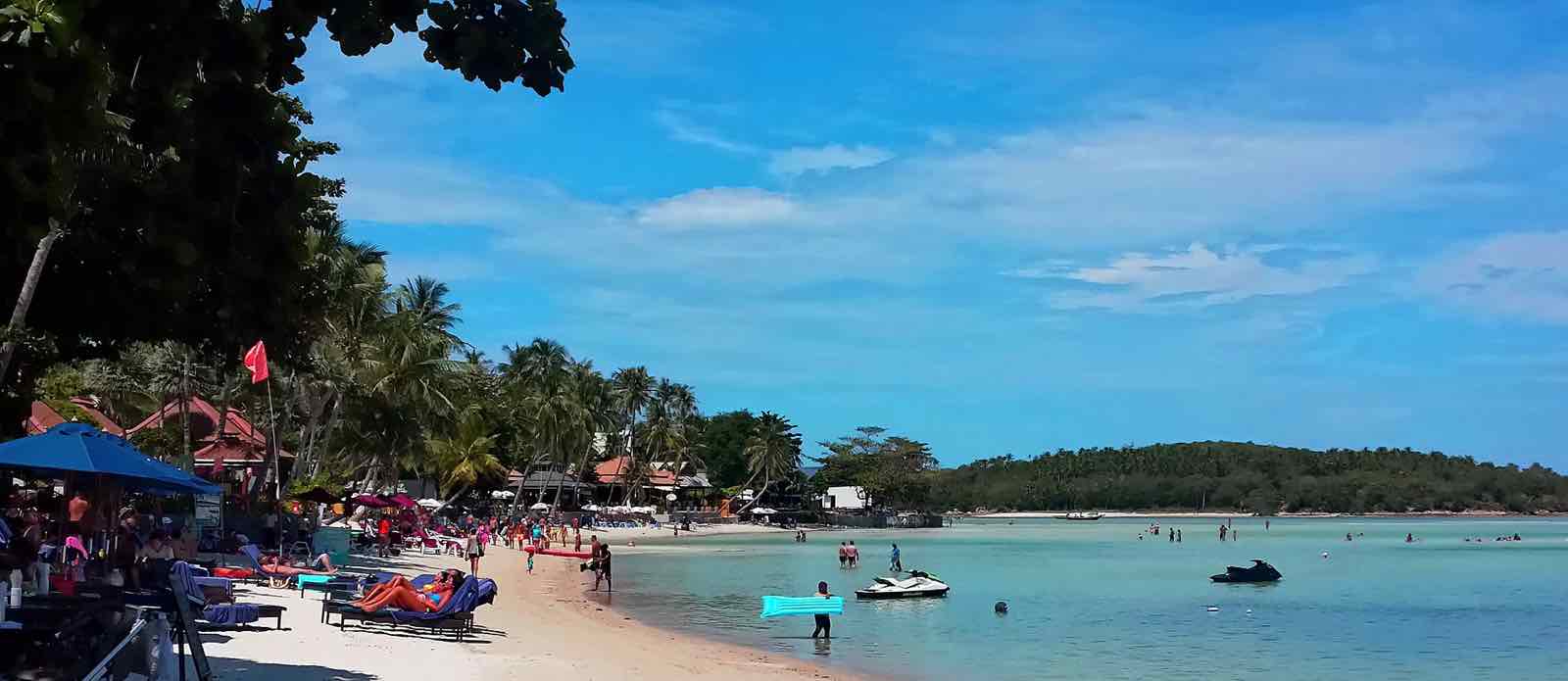
The Gulf of Thailand
The Gulf of Thailand sits on Thailand’s east coast. The water here is slightly greener and less transparent than the Andaman side, because Thailand’s main rivers empty into this part of the ocean. The main draw is the Samui archipelago: three islands (Samui, Phangan, Tao) as well as the Angthong Marine Park that form a natural island-hopping triangle, well-connected by frequent ferries.The islands of Gulf of Thailand on a map
I’ve put all the islands and places of the Andaman Sea on a map, divided into two groups:- Main islands in yellow: to stay over at least for a few nights
- Other more off the beate track islands in red: if you seek more remote and less crowded places or to visit as a daytrip
Koh Samui
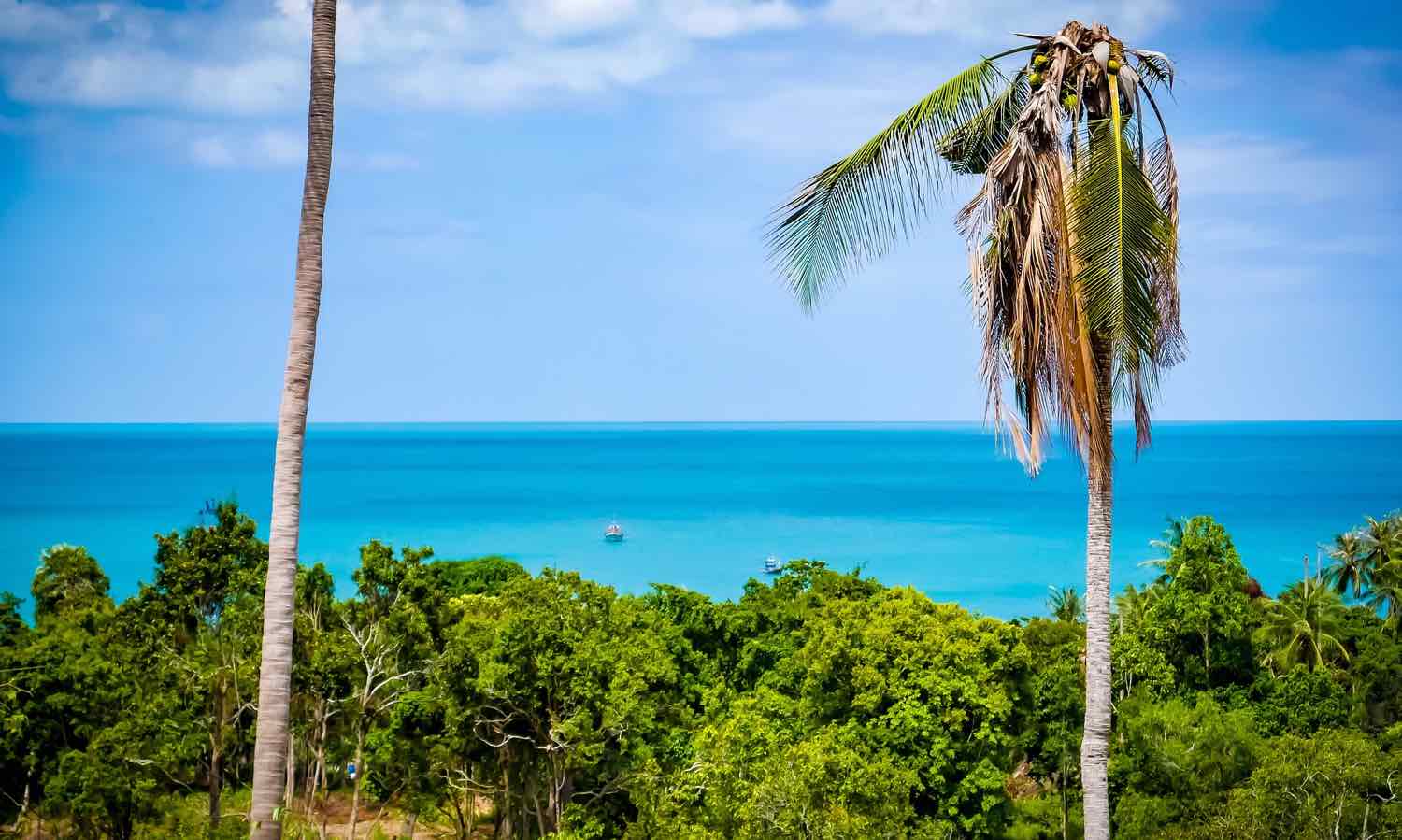 Koh Samui is the most developed island in the Gulf and the most suitable for families and couples who want a higher level of comfort and infrastructure. The second-largest island in Thailand boasts five-star resorts, luxury spas, and a reliable food scene make it easy to spend a week here without feeling like you’re roughing it.
The best beaches are on the north and northeast coasts. Chaweng is the main hub with the most restaurants and nightlife. Bophut (Fisherman’s Village) is quieter and more charming.
The best time to visit Koh Samui is between late December and April. February and March are the driest months.
Koh Samui is the most developed island in the Gulf and the most suitable for families and couples who want a higher level of comfort and infrastructure. The second-largest island in Thailand boasts five-star resorts, luxury spas, and a reliable food scene make it easy to spend a week here without feeling like you’re roughing it.
The best beaches are on the north and northeast coasts. Chaweng is the main hub with the most restaurants and nightlife. Bophut (Fisherman’s Village) is quieter and more charming.
The best time to visit Koh Samui is between late December and April. February and March are the driest months.
🛥️ How to get to Koh Samui
There are combined ticket options to get to Koh Samui (train + ferry or bus + ferry via Surat Thani), but the best way to get to Koh Samui is by direct flight from Bangkok. There are also direct flights to Koh Samui from Pattaya, Phuket, Krabi, Chiang Mai, Singapore, Hong Kong, and Kuala Lumpur. Book early as prices can get expensive.Koh Phangan
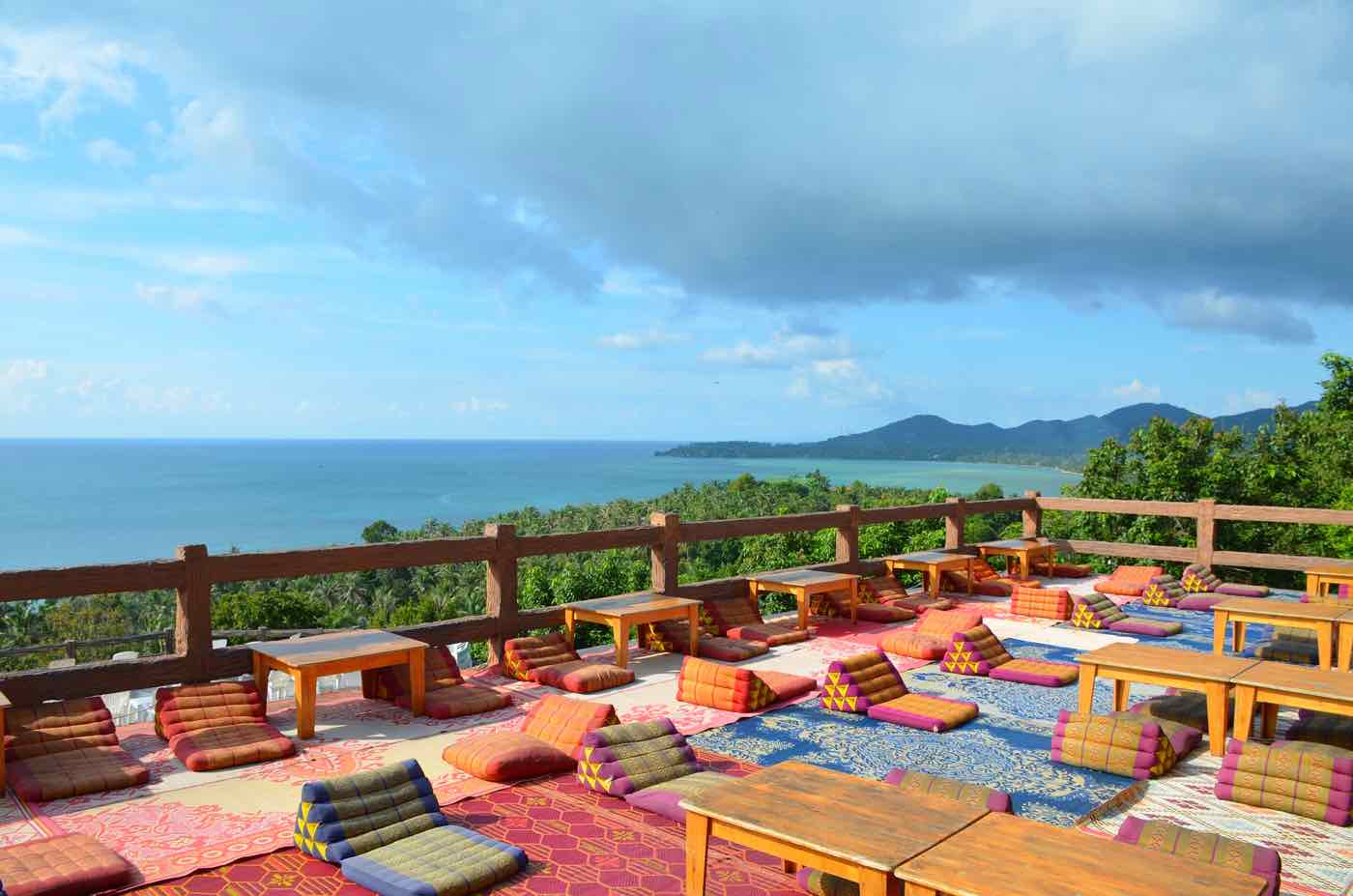 Koh Phangan built its reputation on the Full Moon Party at Hat Rin, which draws tens of thousands of people every month for a beach rave that lasts through the night. If that sounds appealing, Koh Phangan delivers on it completely.
If it doesn’t, there’s still a reason to come. Venture away from Hat Rin and you’ll find waterfalls, semi-hidden coves, temples, and hiking trails through the interior forest. The Thong Sala Night Market is genuinely excellent and worth an evening regardless of your interest in the party scene.
Koh Phangan built its reputation on the Full Moon Party at Hat Rin, which draws tens of thousands of people every month for a beach rave that lasts through the night. If that sounds appealing, Koh Phangan delivers on it completely.
If it doesn’t, there’s still a reason to come. Venture away from Hat Rin and you’ll find waterfalls, semi-hidden coves, temples, and hiking trails through the interior forest. The Thong Sala Night Market is genuinely excellent and worth an evening regardless of your interest in the party scene.
🛥️ How to get to Koh Phangan
The easiest connection is from Koh Samui, with at least 3 ferries a day from Big Buddha pier. You can also reach it by bus/train from Bangkok via Surat Thani, or by the Lomprayah catamaran from Koh Tao.Koh Tao
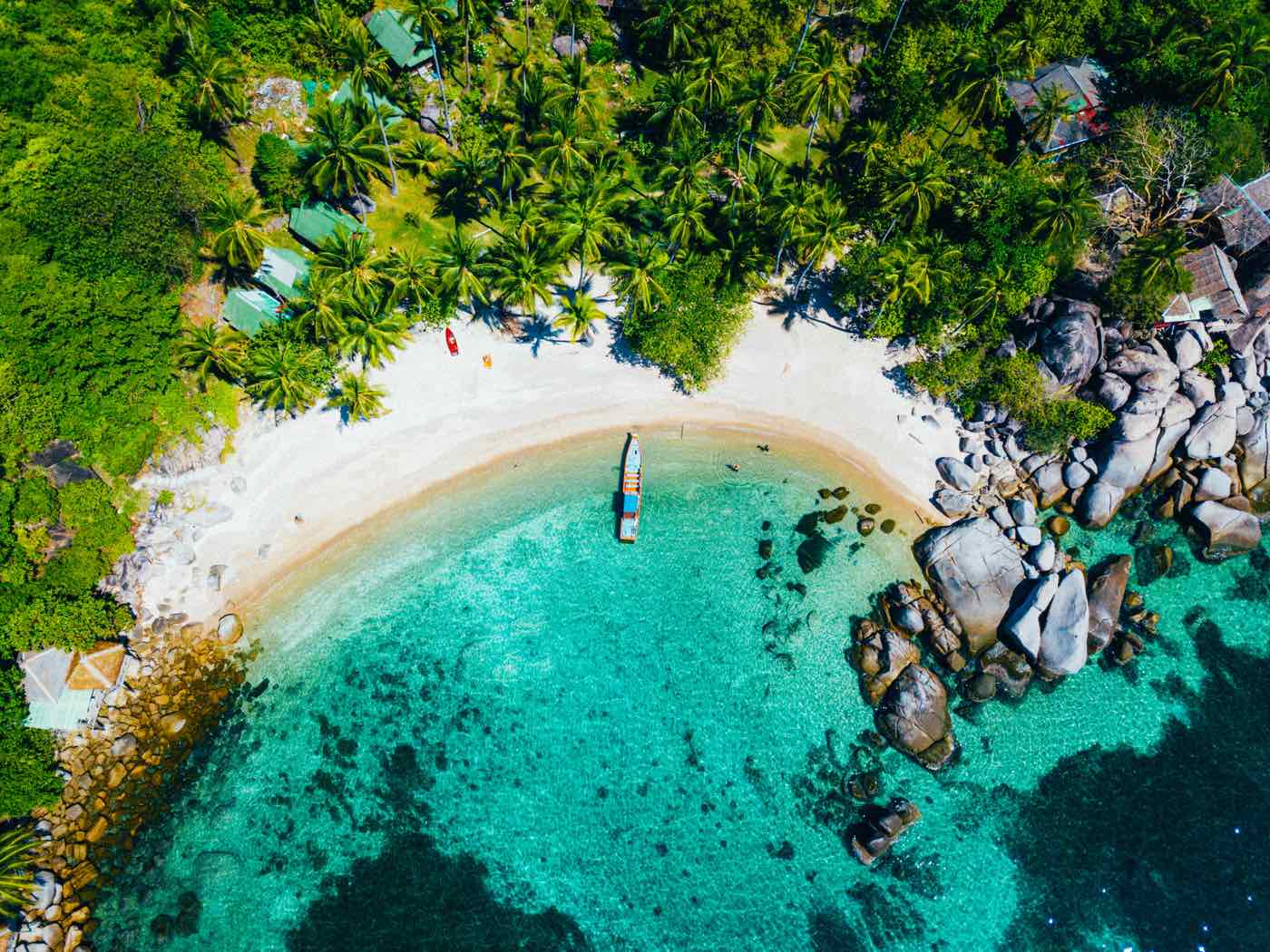
Is Koh Tao a good place to learn to dive?
Koh Tao is one of the best and cheapest places in the world to get a PADI Open Water certification. The island has warm, shallow waters with good visibility, a huge number of dive schools competing on price, and a relaxed atmosphere between dives. A full PADI Open Water course typically costs around 9,000–11,000 Thai Baht, significantly less than equivalent courses in Europe or Australia. Beyond diving, Koh Tao is more well-rounded than its reputation suggests. There’s decent snorkeling, yoga, hiking, and a nightlife scene that’s active without being as intense as Koh Phangan next door.🛥️ How to get to Koh Tao
The closest mainland connections are from Chumphon pier. Alternatively, take a bus or train to Suratthani and connect to Don Sak pier for the ferry to Koh Tao. The high-speed Lomprayah catamaran also connects Koh Tao directly to Koh Samui and Koh Phangan.⚠Is Koh Tao safe?
In general, Thailand is an extremely safe and inviting country for visitors. But the odds seem to be against Koh Tao as there have been reports of people missing throughout the years in the island.
Some say these simply backpackers involved with heavy drinking or drugs; others link these cases to very influential families, and to Thai Mafia that allegedly “rule” the island. Whatever the truth, the fact is that the vast majority of travelers that head to Koh Tao have no problems at all. Koh Chang
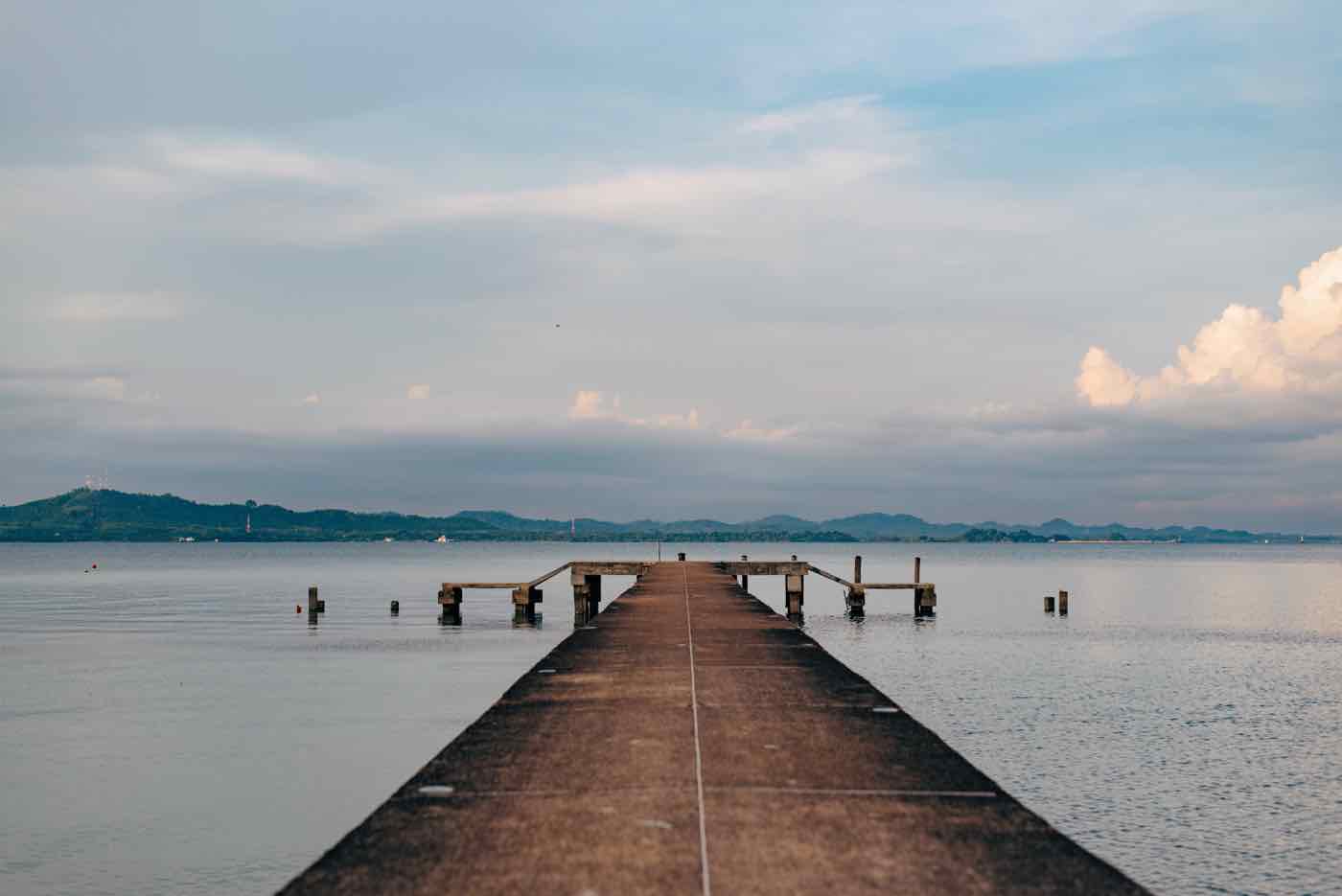 Koh Chang is Thailand’s third-largest island and doesn’t get nearly the attention it deserves. It sits near the Cambodian border, is significantly quieter than the Samui archipelago, and offers a very different kind of island experience: dense jungle, waterfalls, mountains, and a slower pace of life.
White Sand Beach (Ban Hat Sai Khao) is the most popular and lively stretch. But there are many other beaches worth finding, and the interior hiking is genuinely rewarding.
Koh Chang follows similar weather patterns to the Andaman coast rather than the Gulf, so it’s best visited between November and May.
Koh Chang is Thailand’s third-largest island and doesn’t get nearly the attention it deserves. It sits near the Cambodian border, is significantly quieter than the Samui archipelago, and offers a very different kind of island experience: dense jungle, waterfalls, mountains, and a slower pace of life.
White Sand Beach (Ban Hat Sai Khao) is the most popular and lively stretch. But there are many other beaches worth finding, and the interior hiking is genuinely rewarding.
Koh Chang follows similar weather patterns to the Andaman coast rather than the Gulf, so it’s best visited between November and May.
🛥️ How to get to Koh Chang
No airport. Take a ferry from Trat, about 30 km from the main town. Bus, train, and flight combinations from Bangkok all connect to Trat.Where to stay in Thailand’s Islands
I usually use Booking.com or Agoda to find accommodations. Booking.comHow to get to Thailand Islands
By plane
Flying is the fastest way to reach either coast. For the Andaman side, Phuket and Krabi airports have the most connections from Bangkok and other Asian hubs like Dubai and Hong Kong. Hat Yai Airport is useful for southern islands like Koh Lipe and Koh Lanta. For the Gulf side, Koh Samui has its own airport with direct Bangkok and regional connections like for instance Singapore. Other possibly useful airports are in Surat Thani and Pattaya (for Koh Chang).By bus or train
Bus and train connections from Bangkok to the main island gateways (Phuket, Krabi, Suratthani, Trat) are cheap, around $15–25, but journey times are long, roughly 10–14 hours. Good overnight options exist, making it bearable. 12Go.Asia is the most reliable platform for booking transport in Thailand in advance, including combined bus and ferry tickets. I used them to book some of my tickets.Combined tickets
Some airlines offer combined tickets that include a flight to the nearest airport plus a bus transfer and ferry to the island. Nok Air offers this for Koh Lipe via Trang Airport, for example. Worth comparing against booking each leg separately. An interesting feature some airlines offer are combined tickets. Example: you can buy a Fly’n’Ferry ticket with Nok Air from Bangkok to Koh Lipe. The island has no airport, so the ticket includes flying to the nearby Trang airport, bus to the near pier and then a passenger ferry to the final destination.Thailand Island Hopping Tips
- 1. Don’t try to squeeze in as many islands as possible. It’s easy to fall in the mental trap of trying to justify a rather expensive flight with as many places as possible. I know people who visited the Thailand islands and didn’t stay for more than 1 night in the same place.
- 2. Always be on the move has a toll. You’ll end up seeing just bits and bobs and spending most of the time going around on buses, planes, and longtail boats with your backpack or luggage.
- 3. It’s wise to pick a hub island. Pick a place well-connected, with lots of tours, ferries, and day trips opportunities such as Phuket, Railay. My pick in the Andaman Coast was Ao Nang. From there it’s easier to visit other islands. If possible book a hotel close to the main pier.
- 4. Pick a room with AC and mosquito netting. Don’t underestimate the impact of tropical humid weather.















What a great article! We’re currently dreaming of going to Thailand again – we’ve been there before and we love, love love it! Here’s to hoping for a better 2021 with loads of travel plans and new experiences!
– Cecilie // RejsRejsRejs
If you want even more tips for your trip to Thailand, you’re welcome to read our article on Thailand
Please put me on mailing list?
In a very fit and active 72year old and my 20year old grandson is treating us to a month in THailand. Only downside is he can only make May or June. How will this affect where we should go and what we can do.
Hi,
Im travelling to Thailand for a month for a surprise for my husbands birthday in Decemeber with my 10 year old. Im flying into Bangkok and want to spend a couple of days there then fly to Chiang Mai, Chiang Rai then down to islands for a couple of weeks, interested islands are Krabi, Koh lanta, Khao sok, Koh lipe, Koh phangan maybe Koh phi phi. We then fly out of Bangkok how would you suggest travelling to and around the islands, and where would be best to fly out of to get back to Bangkok.
Thanks
Hi!
Hi! Great post! My and my husband are going on our honeymoon trip in December (2 weeks). We are crazy about sports, especially hiking and trekking and so crazy for parties :). Do you think Thai Islands are the best place to experience that ? If so, which ones would you recommend for trekking ? Or maybe it’s best to hit North, Chiang mai? Thanks!
We are an older couple wanting to go to Phuket in January 2020. We want to stay in Patong but would we stand out like a sore thumb being a lot of younger people go.
Well. Even if you do, does it matter? If you want to go there, why not?
Hi, great post. You have persuaded my wife and I that Koh Lipe is a must visit on our trip in late November. We were thinking about a few days in Bangkok, then down to Koh Lipe for 5-7 nights and then up to Ao Nang/Railay for another 5-7 days. Do you have any advice about the best and quickest ways to travel between the areas? Thanks
The journey to Koh Lipe can be a bit long. I suggest traveling by boat from Ao Nang and not through Hat Yai which is considered an unsafe destination by many governments.
What an amazing post! We are planning a trip with my gf from the 12th till the 25th of January. Already made the “mistake” and booked 6 nights at Phuket since our flights arrive and depart from there and we are meeting her brother for a week. Will probably go for a couple same day island tours from Phuket to Phi Phi James Bond Island etc… We were thinking of doing some island hopping from the 18th till the 25th (our departure flight is 21:00) so i was hoping to visit koh lanta koh lipe and koh tarutao during that time. What would be ur advice on time to spend on each island and the easiest ferry route from and back to phuket so as to be at the airport at least 3 hours before departure?
Change ticket back for early morning 2am on the 27 so that gives us one more day! So 8 days total for 3 islands is that not enough?
A full week for those islands is more than enough I think, I’d leave Koh Lanta for last to make the trip back less exhausting.
Wow,what a great review. I am sitting here in the airport of Ho Chi Mihn heading to Seim Reap then to Bangkok then to Bali to meet friends for a couple of weeks. After that I my flight takes me back into Bangkok. From there o have another 15 days to make it back to Seoul and head home to US. I thought I might hit the beaches in Thailand for a 5-6 days then head out to Nagoya Japan for the last week. You really put me on track about the Thai islands and how to move through. I’m thinking maybe hitting a couple of locations each for a few days and exploring the smaller Islands around. It sounds like it’s going to be hard to pull the toes out of the sands to have to leave. Thankfully for me I am traveling alone and can move pretty quick and easy, not waiting on someone else to get there stuff together so we can make our day trips. It’s easy to roll like this because there are friendly people pl le everywhere and you can get so.e good self tome as well. Kind of like breaking out of the world and diving into a good read. I still have a couple of weeks before I have to have decisions made, so your view helps alot. Unfortunately I am traveling in October and goi g to have to chance the weather, but it sounds like the prices will be right. And also what the hell, I’m there for the beaches and to get away from the crowds, probably good timing. Not just roll the dice on the afternoon rains. If you have any updates tips since original review, I would love to hear them. You have my mail, feel free to shout out anytime if you want to. Again, thanks for all the tips.
Craig, sounds like you have plenty of time and flexibility, so I’d encourage you to island hop a lot and explore some of the more off the beaten track islands. I’m sure you could get used to Thai life 🙂
Hey! This is an AMAZINGLY helpful post! I’m trying to plan my trip in March and feeling so overwhelmed. Does it seem like a good idea to have my base island as Koh Lanta for 4 or 5 nights and do days trips to other islands and days in between to just relax and explore Koh Lanta? Or is Koh Lanta a bad choice as a base island? I’m not at all interested in Phuket, so I don’t care about being close to it.
I don’t think Koh Lanta is a bad choice at all. There’s Koh Muk and Koh Kradan nearby which have amazing pristine beaches.
You’ll be missing some of the “action” around Phuket and Krabi, but don’t let FOMO stop you!
Thanks for this amazing site! I’ve never felt so overwhelmed in the past 8 years of booking vacations as I am with this one. As far as sating in Phi Phi Don, do you recommend it or suggest just doing a day trip? Also what are your top 3 favorite islands to stay if you had to pick? Mainly relaxing but also a town for little nightlife? Thanks in advance!
At this point, I recommend skipping it and going somewhere else. But that’s just my two cents, of course.
From what I know my top 3 is Koh Lipe, Koh Lanta, and Koh Poda.
Great post. Really helpful info. We’re planning a trip in Dec. and you’re right – figuring out which islands to go to is a challenge. This provides just the right amount of info for the first time Thailand adventure. Thanks!
Thanks Tracie, glad I could provide some clarity. 🙂
Let me know which islands you did go for in the end!
Good advise, i ´m going to miss a lot. I´m 47 women travel to Thailand ( not a backpaker anymore)for the first time in Asia, with a 19 year girl; so we book a guied tour. The tour begin with Bangkok (3 days), then Ayutthaia, Lampang, Chiang Mai (3 days), Shukotai and finally Phuket Karon (3 days)…i never wanted Phuket, but was in the tour….i like quiet; but i hope to do a tour to Phi phi (maybe a 6 islands tour) but the problem is that has lots of people…but private boats are so expensive…cant see it all, dont have the time. Can you give me some advices?
Sure, but what would you like some advice on? If you have a guided tour, there’s not much you can do, right?
Super article. Thanks for all the tips. I am planning a 9 day trip to Krabi and the nearby islands. Thinking about doing 3 nights in Krabi, then 1 night in Phi Phi Island, after 2 nights in Koh Lanta and go far to Koh Lipe for a 2-night stay, then back to krabi … any thoughts?
That’s definitely doable although a bit too busy perhaps? Depends on how relaxing you want your trip to be I guess!
I would shave off a night or two in Krabi add more time in Lipe. Krabi is nice, but the swimming there is not great and you can see it all in an afternoon really….
Incredible blog! So thorough and detailed. This has helped me immensely in planning my trip. You are amazing!
That’s what I like to hear. Enjoy!
This was so helpful! Been reading all your posts about Thailand, doing a solo trip and these posts are kinda my official guide at the moment. Thank you
That’s awesome to know Jessica. Hope you have a great trip!
Just the info I was looking for, great thanks.
Brilliant! 😉
One of the best Thailand posts I’ve read so far!
Yay, thank you!
Great post. Just what I was looking for. Claire.
Glad to know 🙂
awesome. thanks for all the tips. currently looking at a time frame of 6 days for phuket and islands. thinking about doing one night in phuket or 2, then the rest islands. koh lanta seems to be the option for a 3 night stay, then island hopping during the day… thoughts ?
Sounds like a good plan!
I agree with your useful guides. Thanks a lot for your information’s!
Great help! Thank you very much!!
Great to hear!
Just commenting to say thanks for this very useful post. I’m heading to Thailand in November and this has really helped me plan out my itinerary!
Happy to hear!!
This is an AMAZING and comprehensive post! I found myself banging my head against the wall trying to figure out the best islands. Thank you so much for this great guide!!
Thanks Sebrin! Hope you have a great time. Where did you decide to go?