
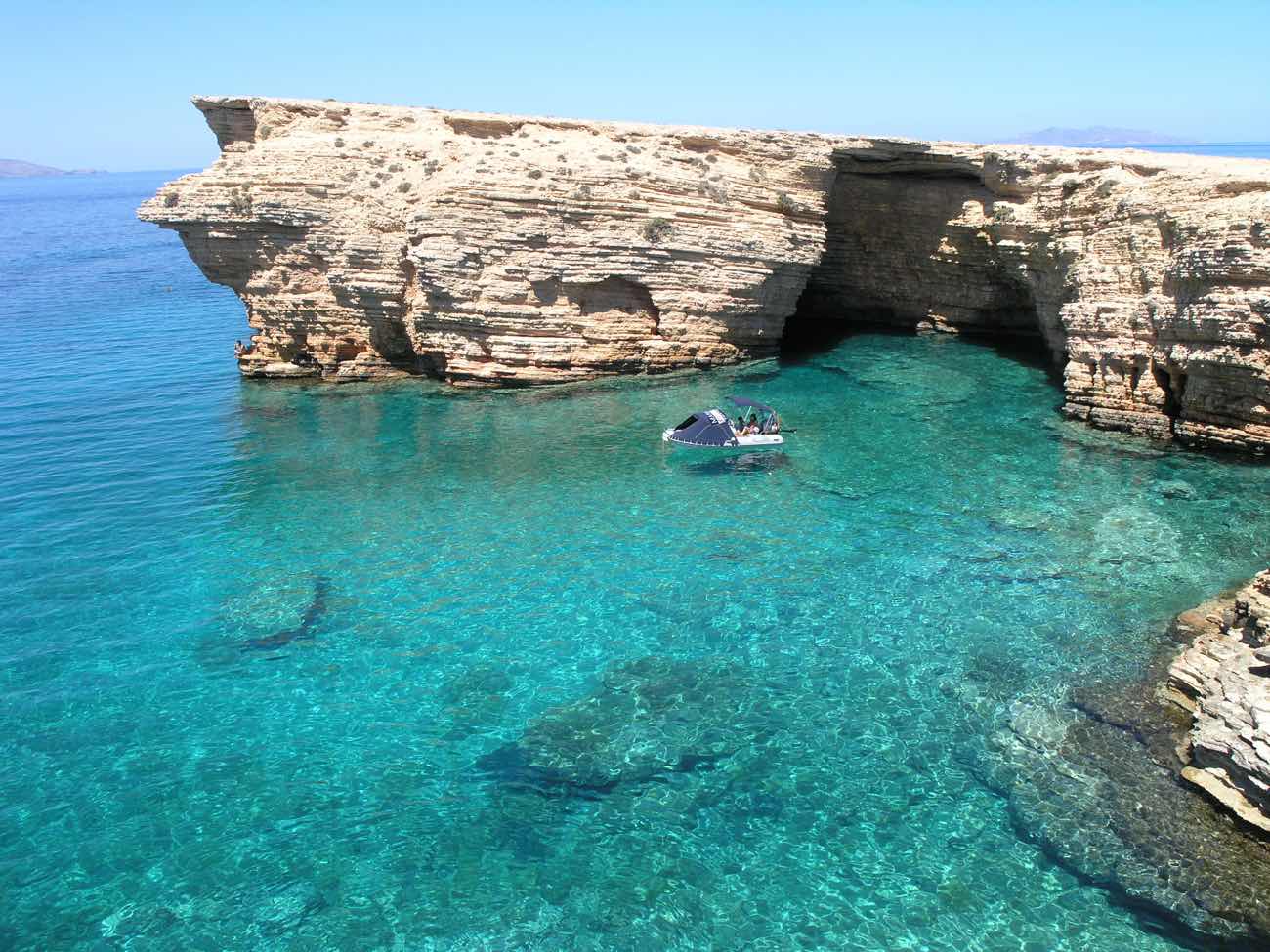
One of the gems of the Cyclades, Koufonisia is a tiny remote island with some of the best beaches and swimming spots in Europe. This full Koufonisia travel guide covers everything you need to plan your trip: how to get there, what to do, where to stay, and what to eat.
Tucked away between the heavyweight tourist magnets of Mykonos and Santorini, Koufonisia is a tiny and remote island with beaches that earn their reputation. Crystal-clear water, soft sand, no sunbed charges, and about 400 permanent residents who have very little interest in turning the place into something it isn’t.
I’ve visited Koufonisia as part of a 2-week Greece itinerary and have updated this guide with the most current and reliable information for your trip.
Yasou Koufonisia!
Quick tips for Koufonisia 🇬🇷
- 🛳️ The only way to get to Koufonisia is by ferry. Book tickets in advance through Ferryscanner or Ferryhopper. In summer, routes fill up.
- 🏨 Book accommodation early. There are fewer than 25 options on the island. In July and August they sell out completely, so find your place asap.
- 🚲 Getting around is easy: the island is tiny. Rent a bike (€5-10/day) or walk. No buses, no need for a car.
- 🏖️ Bring a beach umbrella. Beaches here are unorganized (which is a good thing), meaning no sunbeds to rent and no shade unless you bring your own.
- 🔒 Travel insurance is always worth it. I use Heymondo.
- ⚠️ Watch out for boats near Ammos Beach. Ferries and fishing boats passing close to shore create real wave surges on the beach.
- 📲 Get an eSIM easily with Airalo – get up to $5 off with the code BRUNO4311.
Koufonisia overview
First things first. Koufonisia is NOT a single island. It refers to 3 different islands at the eastern end of the Cyclades:
- Pano Koufonissi: the inhabited one, with tourist facilities and the ferry port
- Kato Koufonissi: almost uninhabited, visited on a day trip from Pano Koufonissi
- Keros: uninhabited
Everyone uses the term Koufonisia to mean Pano Koufonissi, and I’ll do the same throughout this guide.
The island has managed to stay quiet while sitting in the shadow of Mykonos, Naxos, and Santorini. That’s not an accident: Koufonisia has about 400 permanent residents, nearly all with a fishing background. Locals say the island has the largest fishing fleet in Greece per capita, which tells you something about the pace of life here.
Here’s my Koufonisia map with the main beaches, sights, and restaurants:
What to expect from Koufonisia
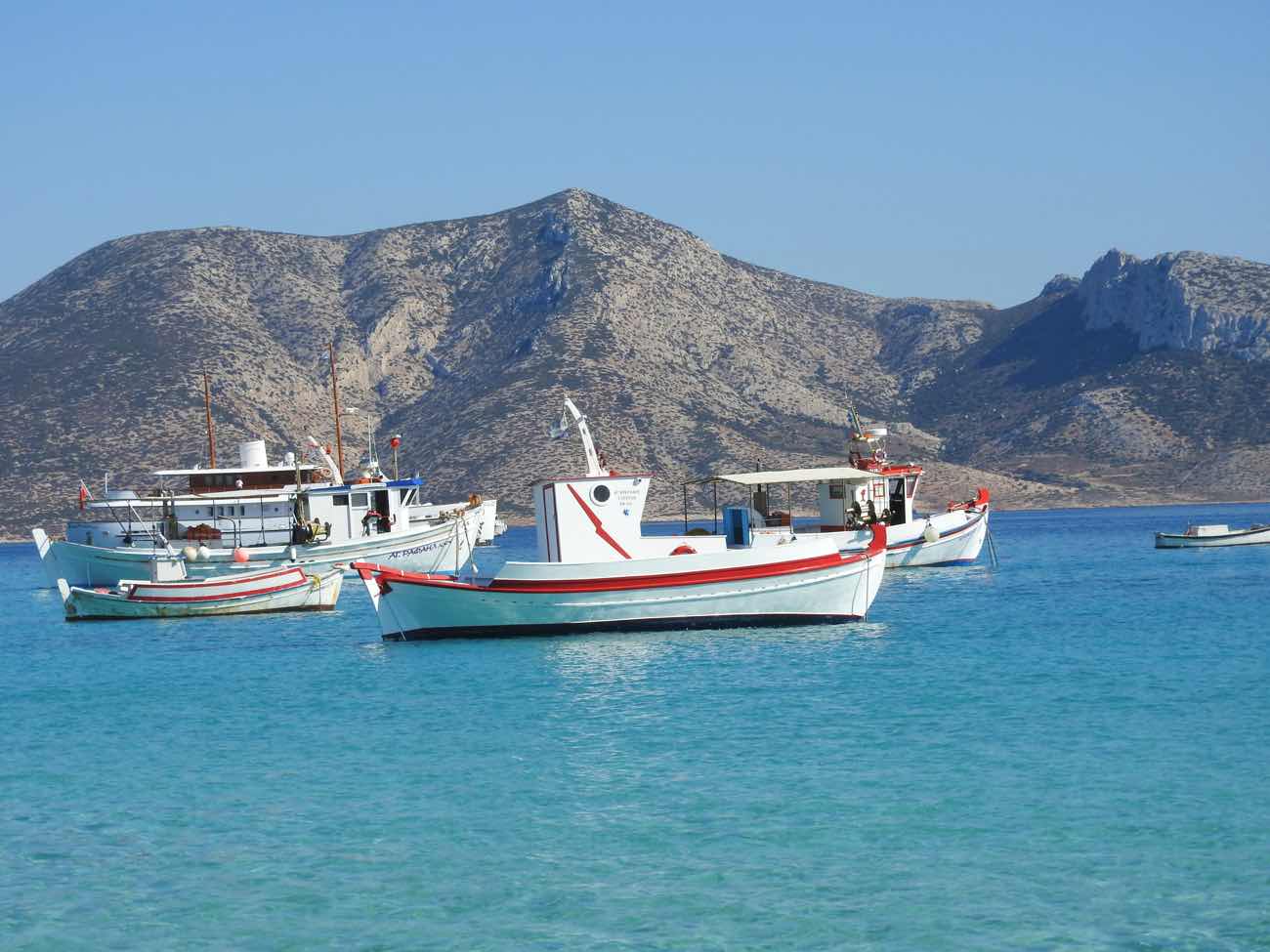
Koufonisia runs at a different pace. It takes a day to adjust, and then you realize that’s the whole point. There are no clubs, no international restaurant chains, no fashion boutiques targeting Instagram influencers in neon dresses. Just beaches, fishing boats, frappé, and whitewashed lanes.
The land is arid and rocky around most of the island. Along the coast, rocky inlets and sandy coves offer calm, sheltered spots for swimming. The few beach bars do exactly what they need to: shade, cold drinks, basic Greek food, and the best frappé you’ll have in a long time.
This is a perfect destination for couples wanting to unplug, or anyone who has just come from Santorini and needs to breathe.
How to get to Koufonisia
The island has no airport. The nearest one is on Naxos, which serves mostly domestic flights. So the only way to reach Koufonisia is by ferry, and that’s fine because the journey is part of the experience.
There are connections from several Cyclades islands: Santorini, Naxos, Amorgos, and Mykonos. You can also board a high-speed ferry from Piraeus port in Athens, which is the main route for those coming directly from the mainland.
Ferries in Greece work well. Don’t expect luxury, but hit the outdoor deck and watch the islands go by.
Ferries run to Koufonisia year-round, which is relatively unusual for a small island. That said, some high-speed connections are seasonal and most year-round departures leave from Piraeus. Check schedules carefully if visiting outside May-October.
My experience getting to Koufonisia
I bought tickets online a couple of weeks ahead. I arrived on a SeaJets ferry from Santorini, with a stop at Amorgos along the way. The views at Amorgos made me want to disembark and stay. I resisted.
SeaJets gets mixed reviews online for delays and service. My experience was decent: seats were comfortable and it arrived on time.
For the onward leg from Koufonisia to Naxos, we took the Express Skopelitis, the small conventional ferry operated by Small Cyclades Lines that has been serving these islands since 1956. It’s still running daily, year-round, and is one of the nicest ways to travel between the Small Cyclades: slow, close to the water, and full of locals. Worth taking at least once.
Best time to visit Koufonisia
Anywhere between May and October is a good time to visit, with average temperatures of 20°C and above. For proper beach weather, June is when the seawater begins to warm up.
Peak summer (July and August) brings more visitors. With a permanent population of 400, even a modest tourist influx can make the island feel busy, particularly around the main beaches. Late June (for the Fishermen’s Festival) and September are the sweet spots: warm, calmer, and with more rooms available.
My weather experience in Koufonisia
I visited in early September. Temperatures were 30°C+ during the day with a light breeze at night. In the five days I was there I barely saw a cloud.
The island didn’t feel crowded, though that may have been partly because we had just come from a packed Santorini. The more organized beaches near bars and restaurants had people. The quieter coves were almost empty.
Getting around Koufonisia
Koufonisia is small enough to walk across in an afternoon, though the midday heat makes that inadvisable. Most hotels in Chora are a short walk from the port. You don’t need a car.
Your main options:
- Bike. The easiest and most popular way to explore. Rentals cost around €5-10/day. Some of the hills on the western side are steep: get a decent bike, not the first rusty one you find.
- Motorbike or quad. Harder to find in Koufonisia than on bigger Cyclades islands. Expect to pay €25-35/day when available.
- Boat taxi. A daily boat service connects the main port to strategic beach stops around the island, including Pori Beach. Convenient for the more remote beaches.
- Walking. Perfectly viable for most of the beaches near Chora.
Beaches in Koufonisia 🏖️
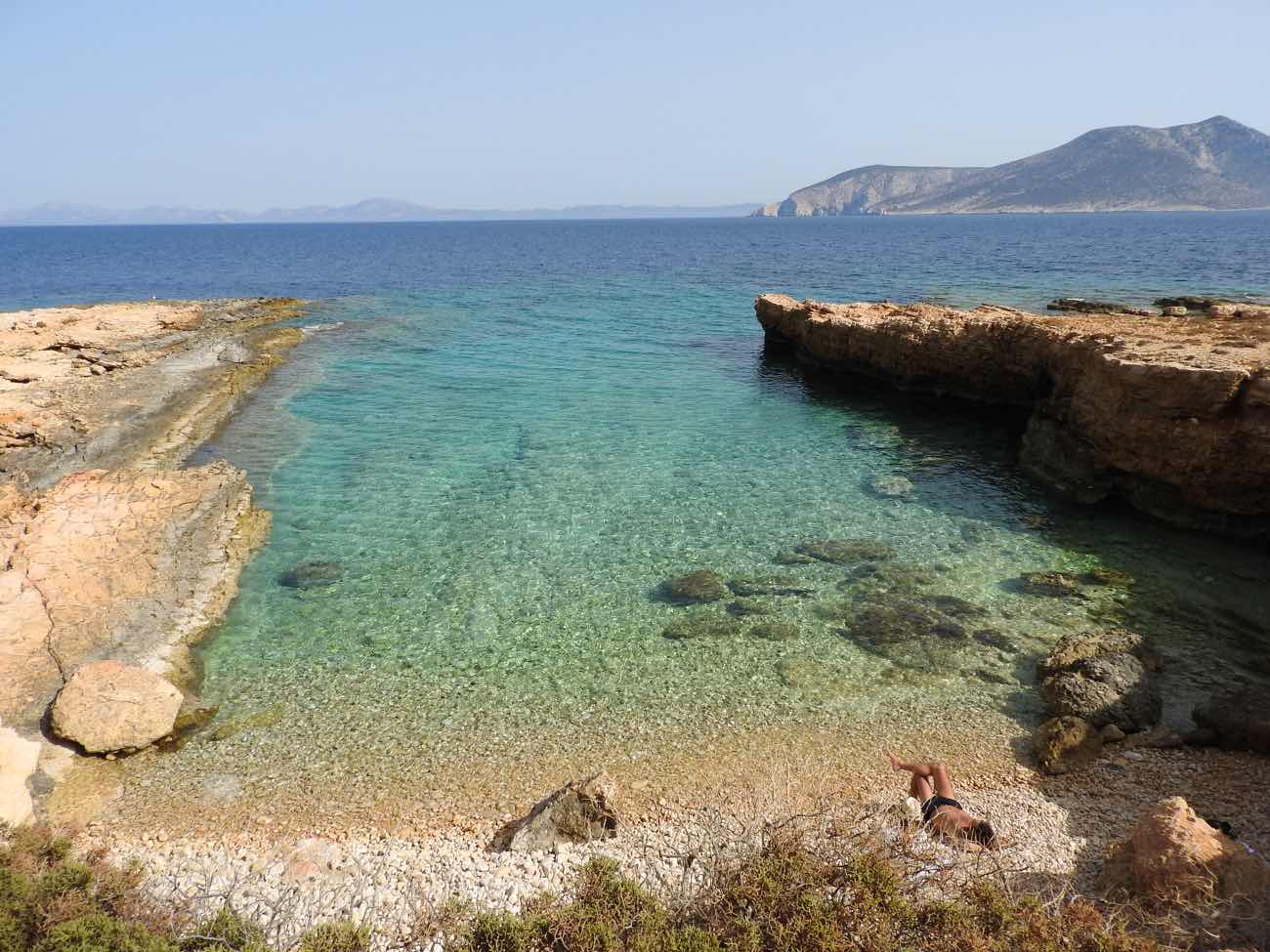
The beaches are the main reason to come. They aren’t large (the island is tiny), but the water quality and the overall setting put them among the best in the Cyclades. Crucially, they are unorganized: no mandatory sunbed hire, no velvet rope, just bring your umbrella and pick a spot.
Ammos Beach
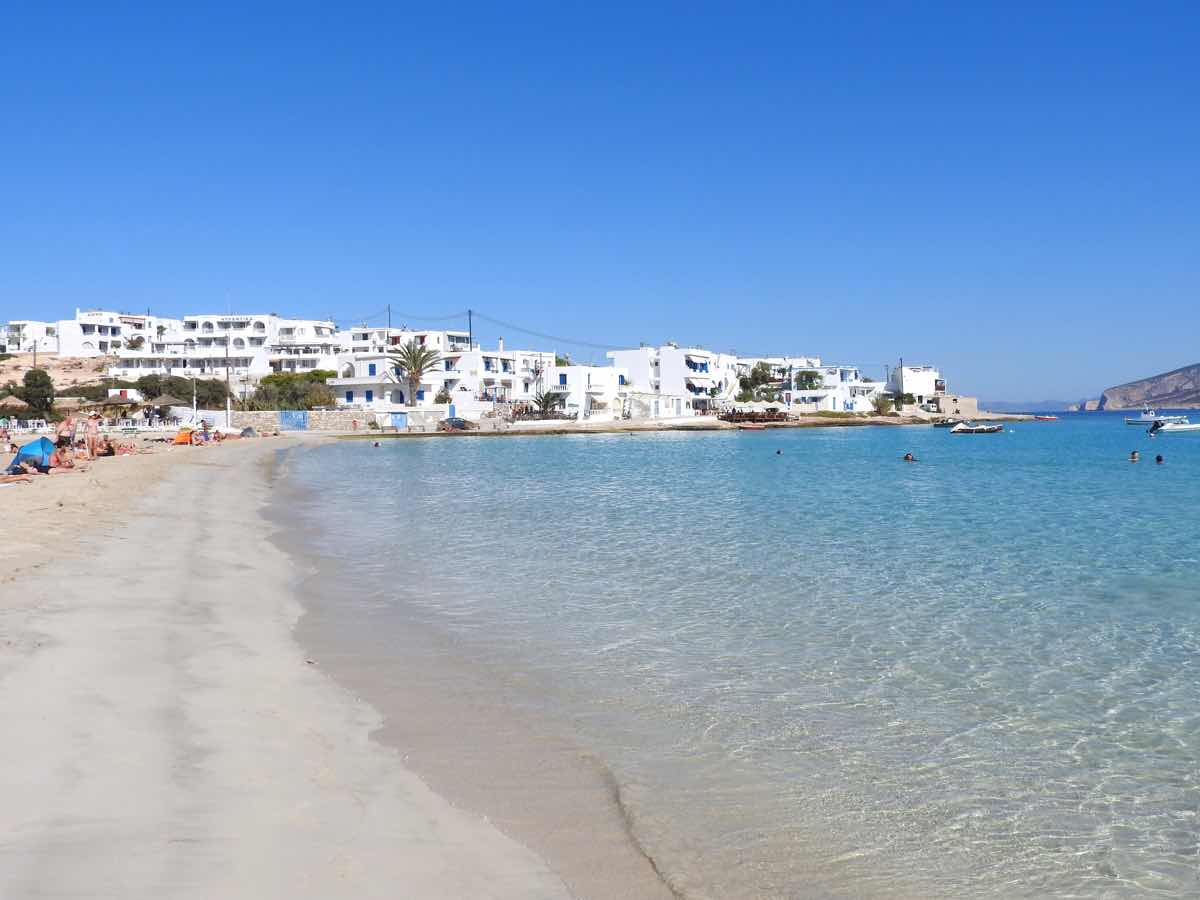
Right next to the port, usually the first beach you see. The turquoise water against the white-and-blue houses and the fishing boats is postcard material. That said, this is actually the least spectacular of Koufonisia’s beaches. It only gets better from here.
Pori Beach
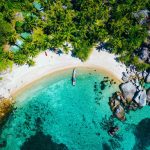
About 3.5km northeast of Chora, this is one of the best beaches on the island. Shallow, crystal-clear water and a curved strip of soft sand. A safe bet for a full beach day.
Fanos Beach
A small sandy beach about 1.5km east of Chora with a great restaurant and beach bar nearby. Several rocky coves sit alongside it for exploring, and from here you get a good view across to Kato Koufonissi.
Finikas Beach
Also called Charokopou, this long sandy beach sits close to Fanos and is still walkable from Chora. The water is clear in a way that makes the word “clear” feel inadequate.
Platia Pounda Beach
The most frequented beach on the island, with both sandy and rocky sections. Also known as Italida Beach. The water here is as good as everywhere else.
Other beaches and swimming spots 🏊♂️
- Nero Beach, on Kato Koufonissi: the best beach on the neighbouring island, reached by boat from Chora.
- Gala Beach: a tiny pebbled cove enclosed by cliffs. The name means “milk” in Greek, referring to the white foam of waves breaking on the rocks.
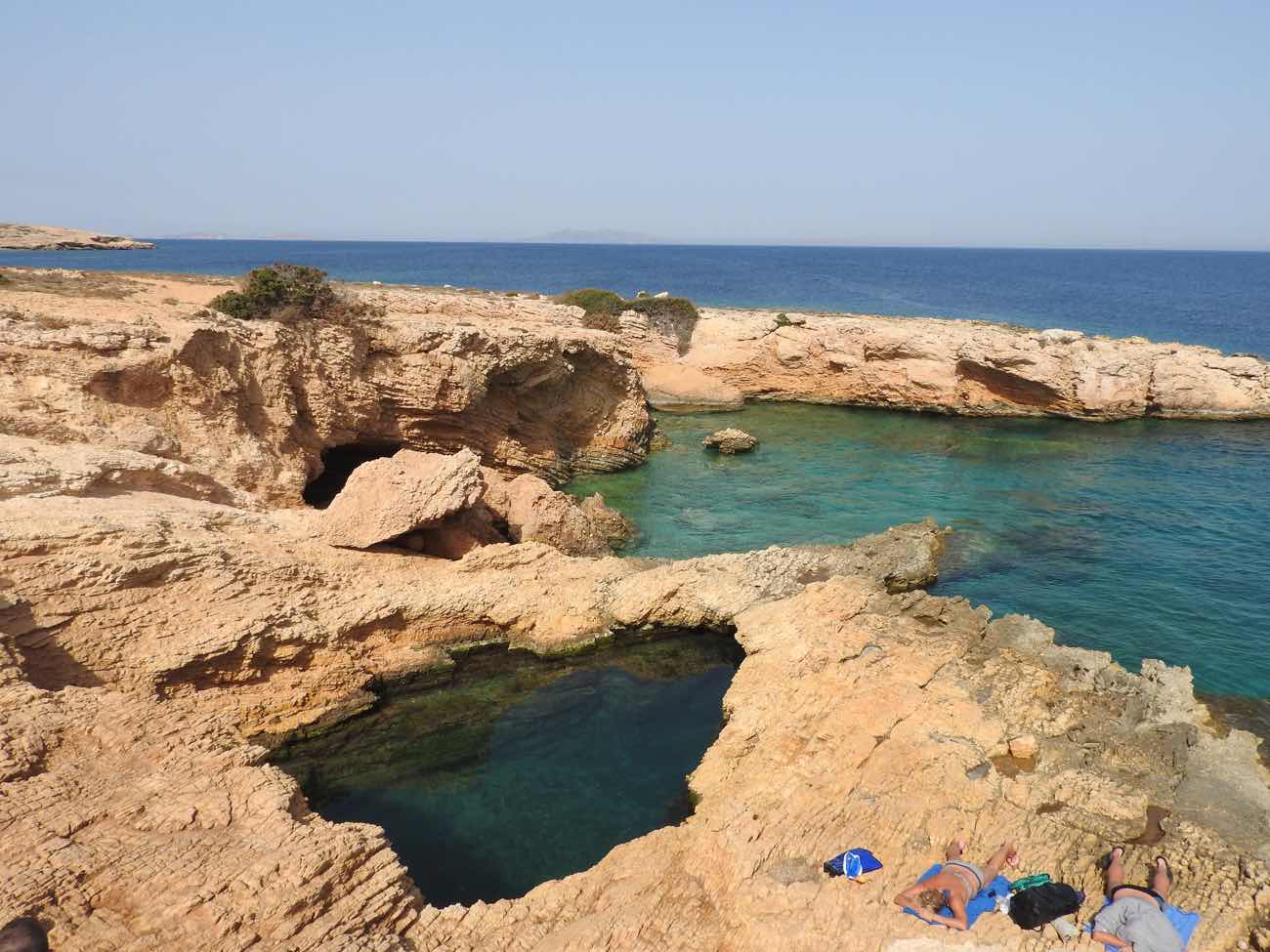
- Pisina area (before Pori): narrow rocky gulfs with small openings to the sea. People jump from the rocks into startlingly clear water. Very popular and worth a stop on the way to Pori.
Things to do in Koufonisia
There are no museums, no major archaeological sites, and no headline attractions beyond the beaches and the sea. That is entirely by design. The dolce far niente is one of the best things Koufonisia offers.
That said, here are a few things worth doing when you’re not horizontal on a beach.
Walk the streets of Chora
The main town is compact and beautiful in the way that only Cycladic villages manage: whitewashed houses with blue windows and doors, cobblestone lanes, flowered courtyards, and the occasional dome. There are few shops and almost no souvenir traps, which makes it feel like a real place rather than a stage set. Walk it during the day and again at night, when the island lights up and the restaurants fill with locals.
Windmills
Two windmills remain from the era when cereal production was central to island life. One sits right next to the port and is a good spot for sunset views. The other is in the Loutro area near the shipyard on the western side of the island.
Outdoor activities
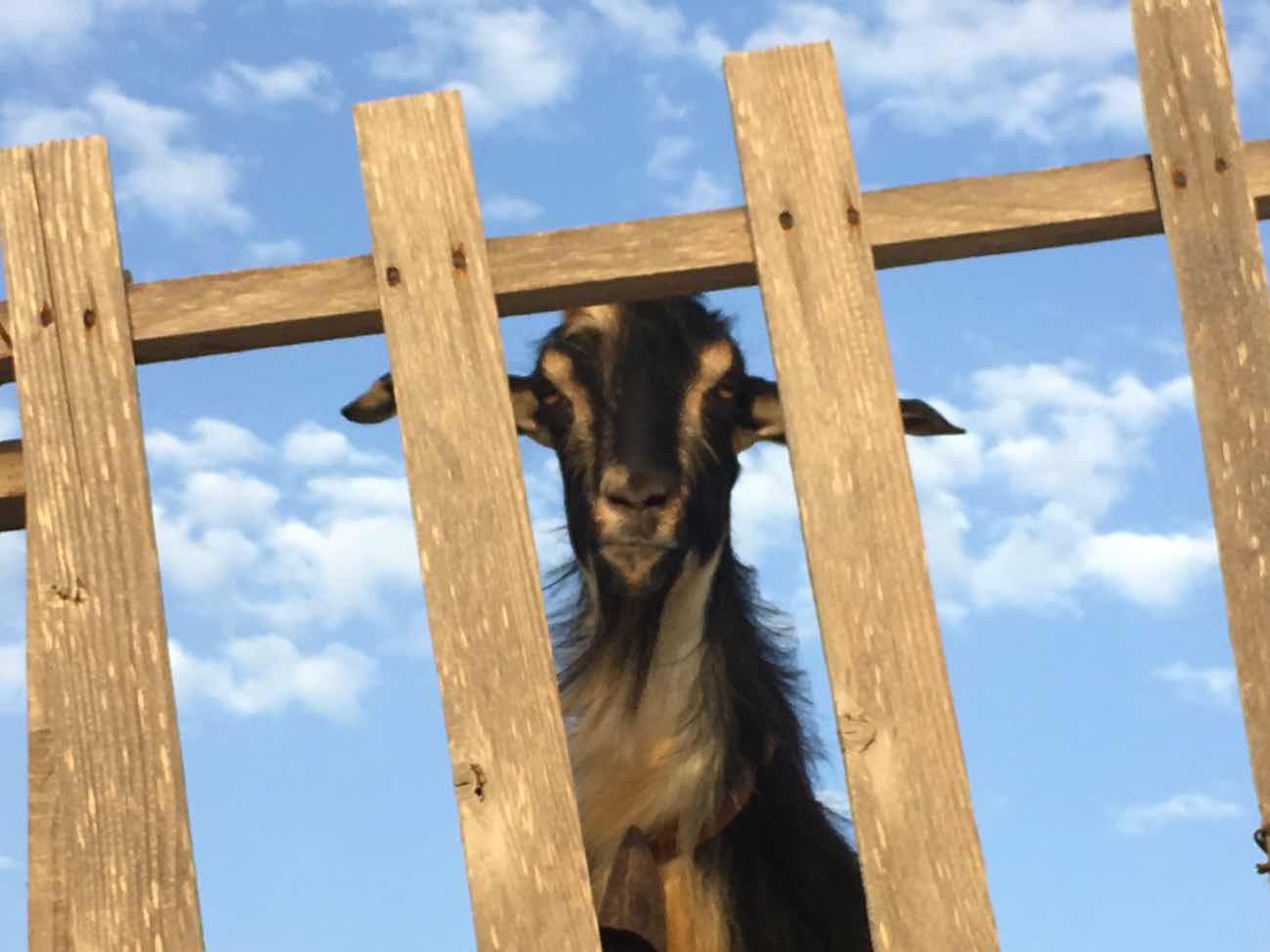
Bike or hike across to the other side of the island for a broader feel of the place. Pori Bay has conditions for windsurfing. Snorkeling around rocky cliffs and pebbled coves is rewarding: the visibility is very good. When swimming, don’t neglect what’s underwater.
Day trip to Kato Koufonissi
Boat services connect the main port to Kato Koufonissi throughout the day in summer, from early morning until around 11pm. Take the boat to Nero Beach, the best on the island, and explore the quieter beaches of Detis and Laki. Before heading back, have lunch at Venetsanos tavern, one of the best food experiences in the Small Cyclades.
Where to stay in Koufonisia
Accommodation in Koufonisia is limited. Around 20-25 properties exist on the whole island, almost all in Chora. There is no 4 or 5-star accommodation. Supply is tight, which means prices run higher than you might expect for the quality on offer, and in peak summer (late June to late August) the island sells out. Book as far ahead as possible.
There are about 20 accommodation options in Koufonisia with strong ratings on Booking. Only a couple are outside Chora.
The place I stayed and can recommend:
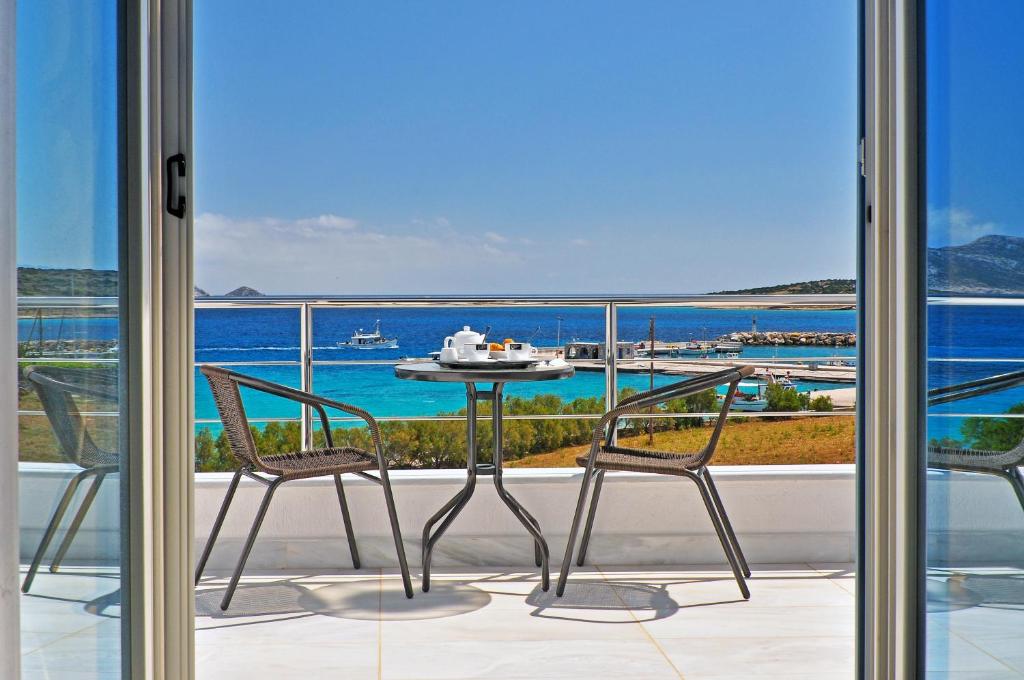
Myrto Hotel
Right in the heart of Chora and a short walk from the port. Spacious rooms with patios and good views. Helpful staff, good breakfast, and they even have their own app.
Book now >>
Where to eat in Koufonisia
There are around 20-30 restaurants on the island. Not many, but the quality is consistently good: Greek taverna style, with fresh fish coming directly from the 30+ boats that go out daily. You’re not going to eat badly here.
Karnagio 🐟
My favourite eating spot on the island. Small restaurant with tables along a paved path right at the edge of the sea. At night, you’re eating under the stars with the water a metre away. There are cheaper options on the island, but this setting makes the difference.
Mixalios Grill House 🥩
A bit off the main drag, set up like a small farm. Come for the meat: lamb and goat from Keros island, and cheese specialties from Amorgos. Locally sourced, generously portioned, reasonably priced. Sit outside.
Souvlaki Sti Strofi 🥙
A window in a wall serving the best souvlaki on the island. Order a pita with gyros or souvlaki and eat at one of the small tables on the street. Simple, fast, cheap, and exactly what it should be.
Other solid options: Capetan Nikolas for seafood, Kalofeggo at Pori Beach for a lunch with a view, and Fanos Beach Bar for the best frappé on the island (I stand by this claim).
All of these are marked on my Koufonisia island map.
What to eat and drink 🐟🍗🍹
Food in Koufonisia is built on local ingredients, and it shows. Fresh seafood is everywhere. Beyond that, the standard Greek staples (souvlaki, tzatziki, grilled meats) are done well. The wild goat from Keros is particularly good here, as is xerotigana (pork on the spit) and pasteli, a sesame-and-honey pastry.
For drinks: try rakomelo, a sweet warm spirit made with cinnamon, honey, and raki. And of course an iced frappé, ideally consumed while watching fishing boats come in.
Cost of things in Koufonisia
Koufonisia surprised me. I expected a remote island to be expensive, and outside of accommodation it mostly wasn’t. Food and transport are affordable. Rooms are the exception.
Koufonisia budget and costs 💸
- Ferries: Budget roughly €70-90/person for the ferry legs if you’re doing a Santorini-Koufonisia-Naxos-Mykonos route, depending on ferry type and season.
- Bike rental: €5-10/day. Motorbikes and quads (when available): €25-35/day.
- Food: A taverna lunch runs €12-18. Dinner at a decent restaurant is €15-25. Street souvlaki is €4-6. Frappé at a beach bar is €3-4.
- Water: A 1.5L bottle is around €0.80-1.00. Drink a lot of it.
- Accommodation: Expect €90-160/night for a decent double room in mid-season, and €120-200+ in peak July-August. Budget options exist but are limited. Book early.
Traveling as a couple, a comfortable daily budget (accommodation, food, drinks, a bike) is around €100-150/person/day in mid-season, less if you’re careful with restaurant choices.
Koufonisia travel tips
- Book your accommodation immediately. The island is so small that hotels fill up fast. If you arrive in summer without a booking, you will either overpay significantly or sleep on the ferry.
- Don’t underestimate the sun. There is very little shade on Koufonisia, and the heat in July and August is serious. Hydrate constantly and apply sunscreen more often than you think you need to.
- Watch out for boats near Ammos Beach. Ferries and fishing boats passing close to shore create real wave surges. Don’t leave your things near the waterline, and be aware when swimming near the port area.
- Try to come for the Fishermen’s Festival. It takes place on the last weekend of June and includes fish mezedes, free wine, and local music. Locals say it’s the best time to visit the island, and I believe them.
Koufonisia: the verdict
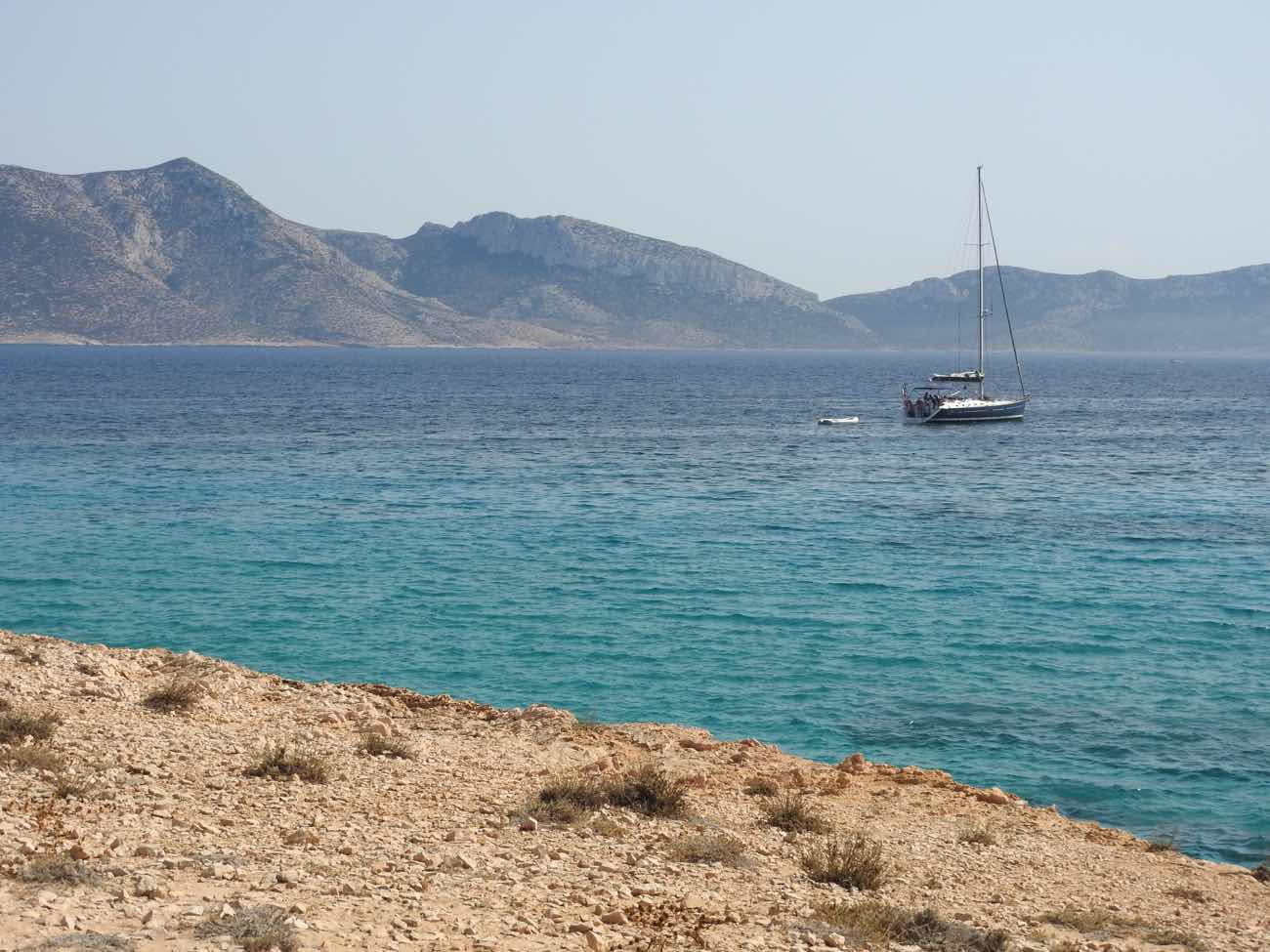
Koufonisia was my favourite Greek island. It’s not pretentious like Mykonos or overwhelming like Santorini, and it has none of the tourist infrastructure of Naxos or Paros. After visiting all of those, Koufonisia felt like going back to the actual thing.
People who come here are looking for three things the island is very good at: sun, sea, and remoteness. It reminded me of certain parts of Brac in Croatia, and in many ways I think of it as the Koh Lipe of Europe.
It lacks in attractions and sights. It doesn’t lack in anything that actually matters for a few days of proper rest. I hope it stays exactly like this.
Booking.com
2-week Greece itinerary
The full travel itinerary to plan a memorable 2-week trip across mainland Greece and the islands.
Plan my big fat Greek trip >>
Koufonisia FAQ
How do you get to Koufonisia?
The only way to reach Koufonisia is by ferry. There are connections from Piraeus (Athens), Santorini, Naxos, Mykonos, and Amorgos. High-speed ferries run seasonally; the Express Skopelitis (Small Cyclades Lines) runs year-round and serves the Small Cyclades daily. Book tickets in advance through Ferryscanner or Ferryhopper, especially for summer travel.
How many days should I spend in Koufonisia?
Two to three days is the sweet spot for most visitors. That gives you time to explore the main beaches, take a day trip to Kato Koufonissi, walk the streets of Chora, and settle into the pace of the island. If you want to fully decompress after busier islands like Santorini or Mykonos, four or five days is not too long.
Is Koufonisia expensive?
Accommodation is the main cost, running €90-200+ per night depending on season, which is high relative to what you get. Food and activities are affordable: a taverna meal is €12-18, street souvlaki is €4-6, and bike rental is €5-10/day. Ferries add €70-90 per person for a typical Cyclades route including Koufonisia.
When is the best time to visit Koufonisia?
May to June and September to October offer the best combination of warm weather, open beaches, and manageable crowds. July and August are peak season: the water is warmest but the island fills up and accommodation is harder to find. The last weekend of June hosts the Fishermen's Festival, which locals say is the best time to visit.
Are the beaches in Koufonisia good?
Yes, they are among the best in the Cyclades. Pori, Fanos, and Finikas are the standouts: sandy, shallow, and with exceptionally clear water. None of the beaches are organized with paid sunbeds, so bring your own umbrella. The rocky swimming spots near Pisina, before Pori, are also worth visiting.
Is the Express Skopelitis still running?
Yes. The Express Skopelitis, operated by Small Cyclades Lines, still runs daily between Naxos, the Small Cyclades (Iraklia, Schinoussa, Koufonisia, Donoussa), and Amorgos. It operates year-round and is a lifeline for locals on these islands. You can book tickets through the Small Cyclades Lines website or at the port.







If you’re not Greek or European looking, be prepared for the staring and feeling out of place. Customer service is quite bad. Naxos was so much better.
Having said that, island is beautiful.
Sorry you had a bad experience. I entirely disagree with the customer service though, lovely friendly people!
Nice article . Only three comments
1. The Express skopelitis is still running daily from Katapola to Naxos and back and stops at Koufinissia
2. You cannot rent motorbikes in the island and it’s not necessary to come with car. You can walk or go to the beaches with the tipical boats for 5 Euros per day.
Bike is not a good option for going to the beaches as the path is very narrow and sandy.
3. My favourite hotel is Aeolos. A family run hotel really nice
Thank you very much for your information, it’ll very helpful to plan my vacation this year.
I’ve been to Koufonisia twice in July and August in 2015 and 2016 and was met by the hoteliers off the boats. There was plenty of accommodation from
Rooms to studios . I paid between 30 and 40 euros for a studio
I would never book in advance unless I had a very young family with me. I like being able to choose to stay longer if it suits me and not book in advance . If the worst cake to the worst, there is always a boat to another island like Amorgos or Naxos which for sure would have accomodation.
Thanks for sharing Alice.
I like to be able to fully enjoy 100% my time off and not be worried about where I’m staying. Different styles of traveling I suppose.
That said, from what I’ve heard, Koufonisia got a lot more touristy since 2015 and hence I always advise to book early to get the best deals. Safe travels!
I’m sold. Thanks Bruno, an excellent write up. We will see you next year but don’t tell anyone else about it, it will be our secret.
haha deal, this article will self-destroy in a years’ time!
Wonderfull blog, it has all what I need to know how to plan my trip, very much appreciated. I have to agree that Koufonisia is getting more expensive now, I just book a decent accommodation for 2 for 120€ per night. Thanks for sharing.
Law of supply vs demand I guess!
Lovely. Thanks so much for this information. It will be most helpful.
You welcome Sharron, hope you have a great trip!
This seems quite an interesting island to visit, thank you!
It most definitely is 🙂
Thanks for sharing this post this is really very nice and amazing. This guided post will gonna help travelers and this will tell them that how they can make their travelling much more sustainable.
Thank you.