
TL;DR
This 14-day Japan itinerary is built for first-timers who want a real mix of city energy, mountain calm, and cultural depth. It covers Tokyo (4 nights), Kanazawa (1 night), Takayama (2 nights), Kyoto (4 nights), Hiroshima (1 night), and Osaka (3 nights), with day trips to Kamakura, Shirakawa-go, Miyajima, and Nara. Budget roughly ¥263,000 (~$1,750 USD) for two weeks, excluding flights.
I’ve been to Japan twice. Both trips hit differently, and both times I came back feeling like I’d lived three lives in two weeks.
The food is absurdly good. The culture makes you feel like you’ve stepped into a parallel universe. The mountains, the temples, the neon-drenched streets at midnight, it’s a lot.
If it’s your first time, the planning alone can feel like prepping for a moon landing. So here’s my tried-and-tested Japan two-week itinerary. It’s not trying to squeeze in everything. It IS trying to give you the best of everything: big cities, quiet villages, ancient shrines, and enough time to breathe between it all.
Quick tips for Japan 🇯🇵
- 🏨 Stay local in one of the amazing ryokans in the country
- 🚗 Public transportation is exceptionally good, you won’t need a car. It’s recommended to book shinkansen tickets ahead – I did with the SmartEx app
- 🔒 While a very safe destination, travel insurance is recommended. I use Heymondo
- ✅ From amusement parks to cooking experiences, there’s a ton of things to experience in Japan – use Klook to book it all
- ✅ If you are on the market for an eSIM, I found MobiMatter to have the best price per GB – get up to $5 off with the code BRUNO29545.
Japan itinerary overview (2 weeks)
- Tokyo (4 nights)
- Kanazawa (1 night)
- Takayama (2 nights)
- Kyoto (4 nights)
- Hiroshima (1 night)
- Osaka (3 nights)
- Day trips
Day trips included: Kamakura (from Tokyo), Shirakawa-go (from Kanazawa/Takayama), Miyajima (from Hiroshima) and Nara (from Osaka or Kyoto).
I arrived in Tokyo via Narita (NRT) and flew home from Osaka’s Kansai airport (KIX). That routing made the whole trip feel logical and avoided any doubling back.
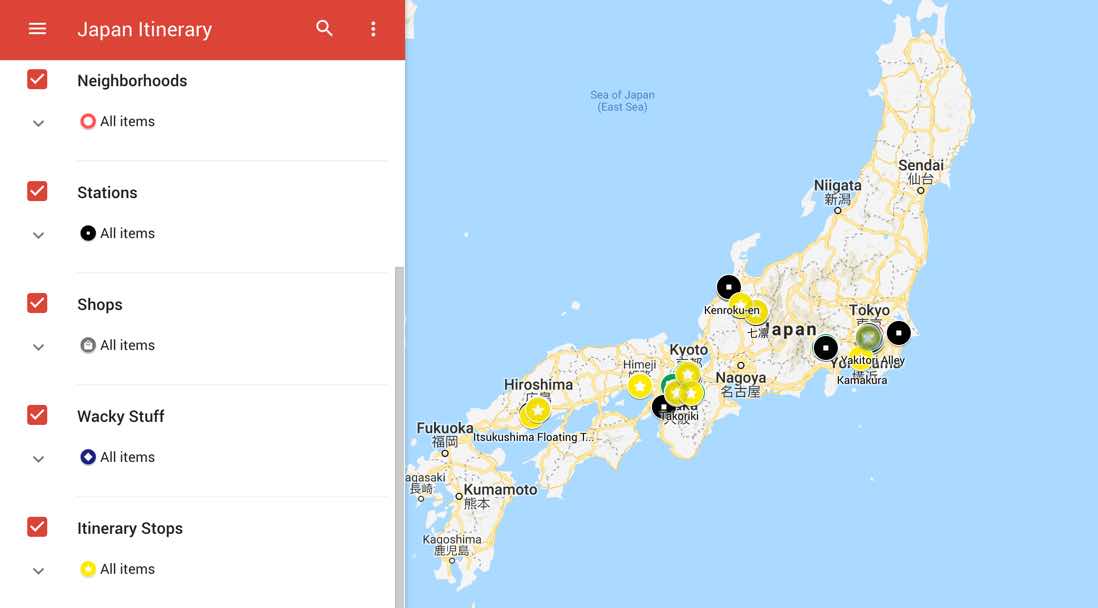
Japan Itinerary on a map
To make navigation easier, I’ve put all these places (plus restaurants, sights, and a few wacky shops) on a custom Google Map I used during the trip:
Is two weeks in Japan enough?
Two weeks in Japan is enough to see the country’s highlights without rushing, if you plan it right. The sweet spot is 5 to 6 destinations over 14 days, which gives you enough time to go deep in each place instead of just ticking boxes from a moving train. For first-timers, this itinerary covers the Golden Route (Tokyo, Kyoto, Osaka) plus meaningful detours to places like Takayama and Miyajima that most people skip.
Two weeks won’t cover everything though. Hokkaido, Okinawa, the Izu Peninsula, all of those will need a return trip. And trust me, you’ll want one.
The top-rated places to stay in Japan
Booking.comTokyo
First stop: crazy and energetic Tokyo!
No matter what other big cities you’ve visited – London, Dubai or even New York City – nothing can really prepare you for Tokyo. A suburban area of 35 million people, with the largest train stations in the world. Let’s just say I felt tiny. Extremely tiny.
The good news: it’s absurdly efficient to get around. Once you start going with the same flow of locals, it’s very easy to go from the massive electronic department stores of Akihabara to the vibrant neon district in Shinjuku. Plan at least 3 to 4 full days to see different sides of Tokyo.
What to visit in Tokyo
You could spend a month in Tokyo without getting bored. Or you could spiral into urban anxiety and want to leave after two days. Japanese cities are intense. That’s not a warning, it’s a briefing.
Start at Senso-ji Temple in Asakusa. Temples get more impressive as you move through Japan, but Asakusa makes for a brilliant warm-up. The neighborhood around it became one of my favorite spots in the whole city.
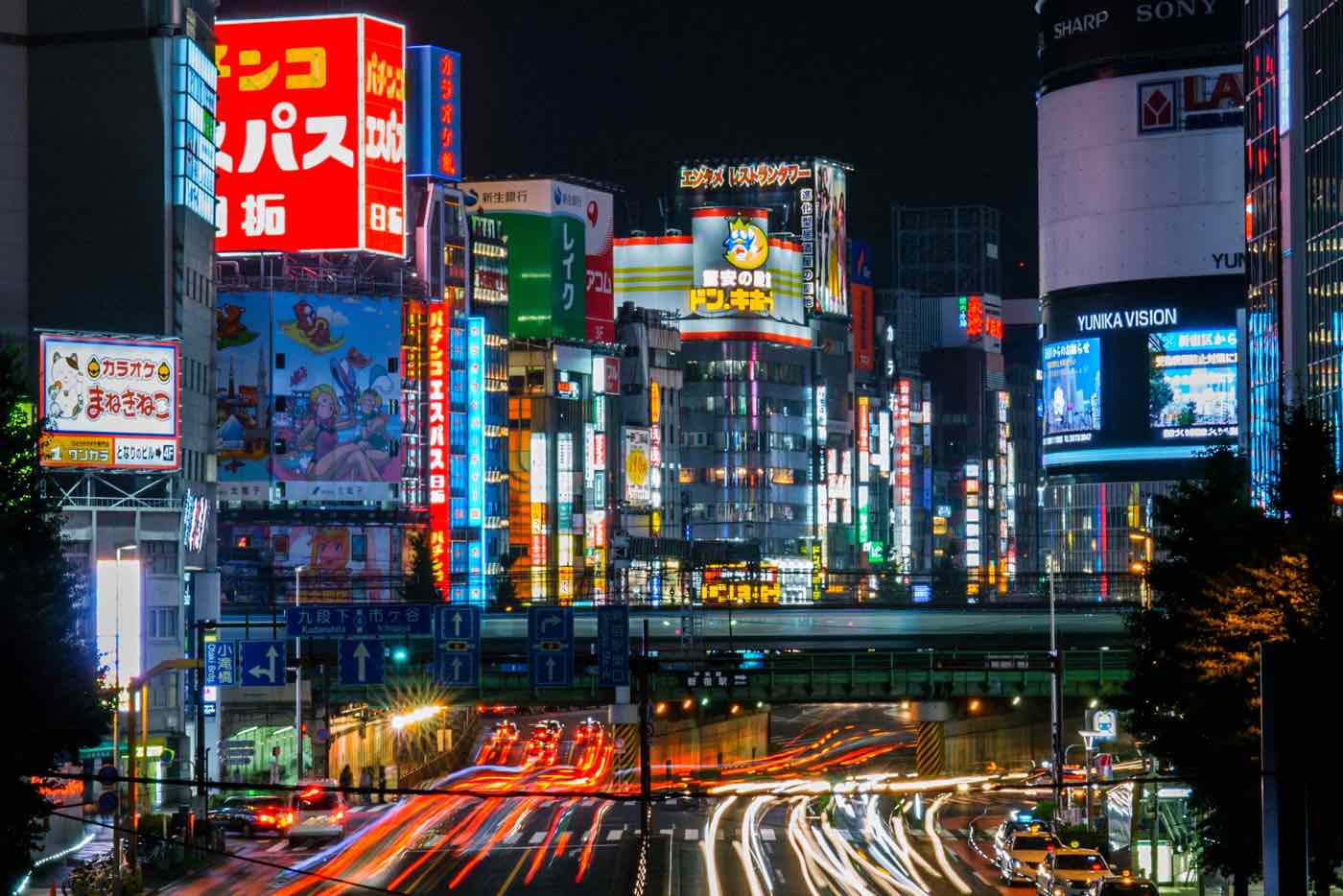
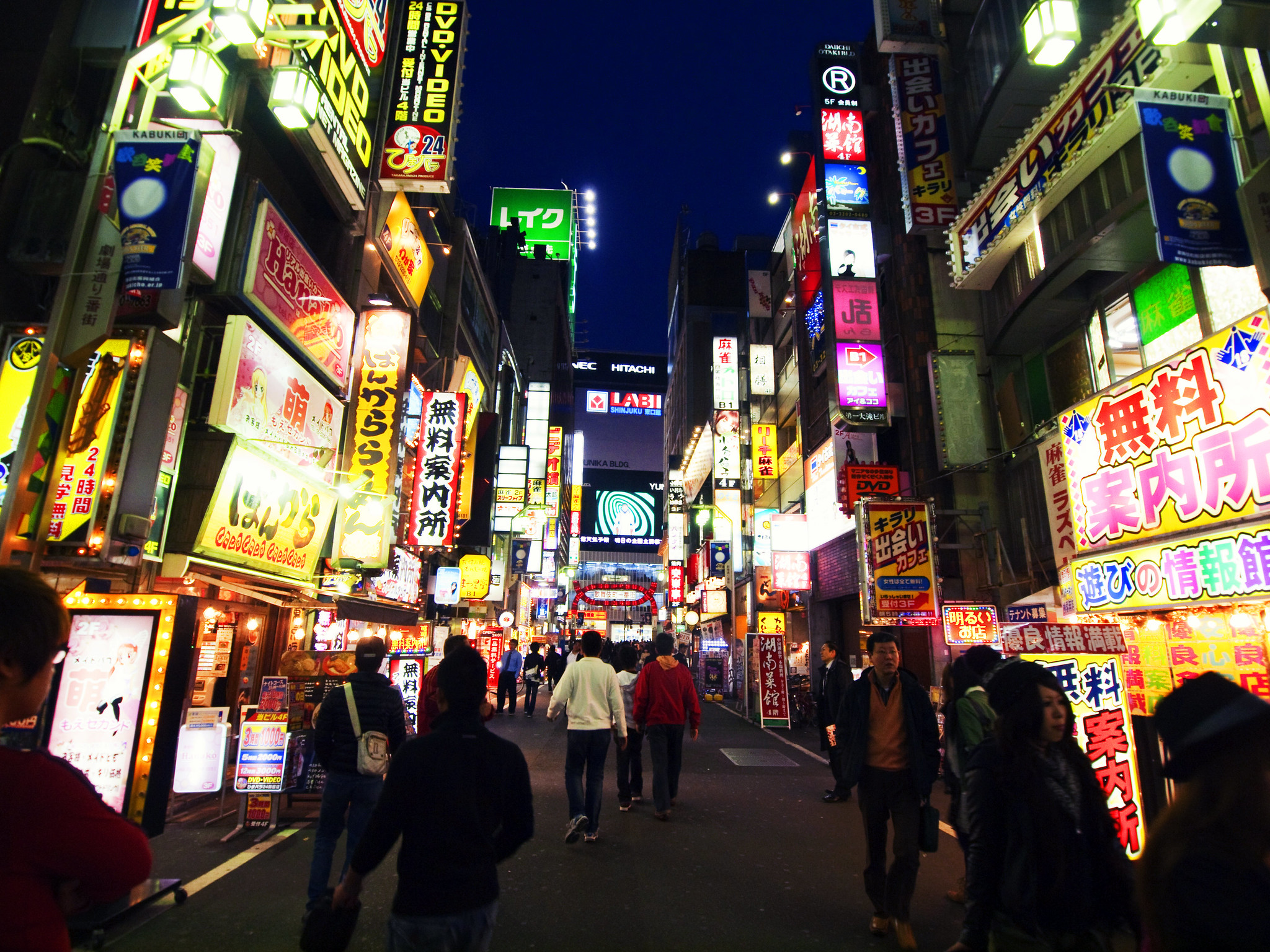
Shibuya crossing is iconic, but honestly a bit underwhelming in person. Head to the Starbucks nearby for an elevated view (ordering something random). Shinjuku, on the other hand, blew my mind. My first night there with ramen, cartoons everywhere, neon lights of every color, music deafening in the best way, I realized how easily you can fall into the vortex of this city.
Top sights in Tokyo 🇯🇵
- Senso-ji Temple — Draw your omikuji fortune and let Asakusa pull you in for a few hours.
- Shibuya Crossing — Go for the photo, stay for the people-watching.
- Akihabara — A paradise for gamers, retro collectors, and curious minds. Hunt down Super Potato for vintage gaming gold.
- Omoide Yokocho — Tiny yakitori alleyways near Shinjuku station. Say osusume and let the chef choose for you.
- Shinjuku — The beating heart of Tokyo. Give yourself a full evening here.
- Meiji Jingu Shrine — A stunning forest shrine tucked between Shibuya and Shinjuku.
- Tokyo Government Building — Free views from the 45th floor. Skip the Tokyo Skytree queue.
- Harajuku — The epicenter of kawaii culture. (Go easy on the animal cafes — there are strong reasons to skip them.)
- TeamLab — Whether you go to Borderless or Planets (or both!), you’re bounded to one the most extraordinary modern art experiences. Digital exhibits on a scale you have to see to believe. Book entrances asap.
Best areas to stay in Tokyo
Anywhere close to the circular JR Yamanote Line is a reliable bet. It connects every major area of the city cleanly.
Shinjuku and Shibuya are the most popular bases with lots to do, eat, and see, but prices match. Ginza and Tokyo Station are great for logistics and shopping but lack personality at night.
If you’re planning any day trips, I’d recommend somewhere close to Shinjuku or Tokyo Station for efficient transportation. If you’re look somewhere central but slightly calmer – for Tokyo standards anyway – I’d look into Ueno or Shin-Okubo Learn more about which Tokyo neighborhood suits you best.
Where to stay in Shinjuku, Tokyo, Japan
Check out this pre-filtered list of the highest-rated places to stay in Shinjuku area in Tokyo.
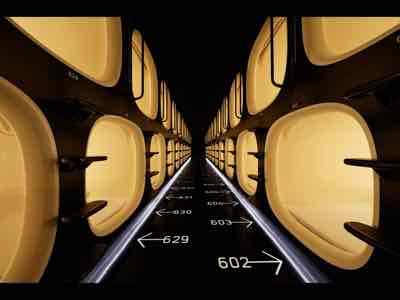
Nine Hours Capsule Hotel, Tokyo
Looking for an experience straight out of a sci-fi movie. This is it.
I have stayed in Ginza and Shin-Okubo areas, and honestly prefer the latter. Just one stop north from Shinjuku on the JR Yamamote Line, close enough to everything.
In this area, I recommend staying in the neo-futuristic capsule hotel Nine Hours or the charming Oyado Cocochi.
The best food experiences in Tokyo
Tokyo has more Michelin-starred restaurants than any other city in the world — but some of my best meals cost almost nothing.
Looking back, my best food experiences in Tokyo were:
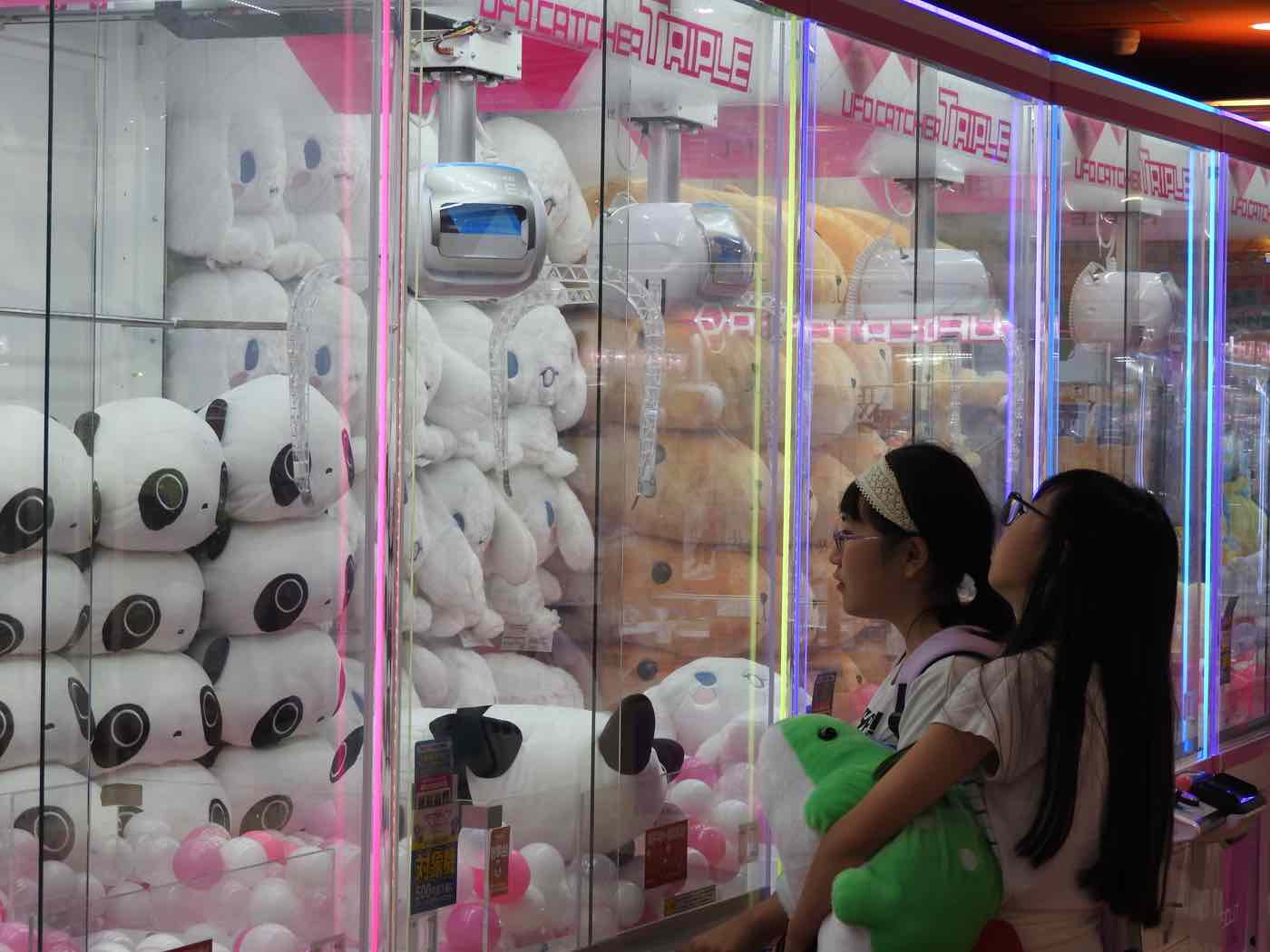
- Uobei Shibuya – Sushi delivered to your seat in cute little bullet trains. Ridiculously cheap.
- Standing Sushi Bar – order your sushi pieces directly to the chefs. Incredible experience and a cheaper alternative to Jiro’s restaurant, the most expensive in the world.
- Coco Ichibanya – recommended to me by a local. Definitely a delicious and unique curry, but gotta say y tummy wasn’t a big fan.
- Ichiran – Order from a ticketing machine, get served on booths without seeing the chef or waiters. Slightly disturbing experience, but hey, they nailed on what it matters the most: delicious hakata ramen.
- Tsunahachi – Great place to try tempura in Tokyo.
- 7/11, FamilyMart or Lawson – Sounds weird but egg salad sandwiches and/or pancakes with maple syrup/butter inside these convenience stores are surprisingly amazing value.
34 Essential things to know before visiting Japan
These tips are bound to give you extra peace of mind on your travels. 34 tips to help you make the best out of your Japan trip!
Kanazawa
The Shinkansen from Tokyo to Kanazawa takes about 2h30. Grab a bento box at the station before you board. Don’t get late though – these trains leave BY THE SECOND and don’t wait for anyone.
I’ll be honest: I used Kanazawa mainly as a logistics stop between Tokyo and the mountains. That’s a perfectly valid strategy. But if you have time to explore, Kenroku-en is one of Japan’s three great gardens, and the Nagamachi Samurai district is worth a few hours. That said, most people who’ve done both say Takayama’s old town edges it.
Takayama
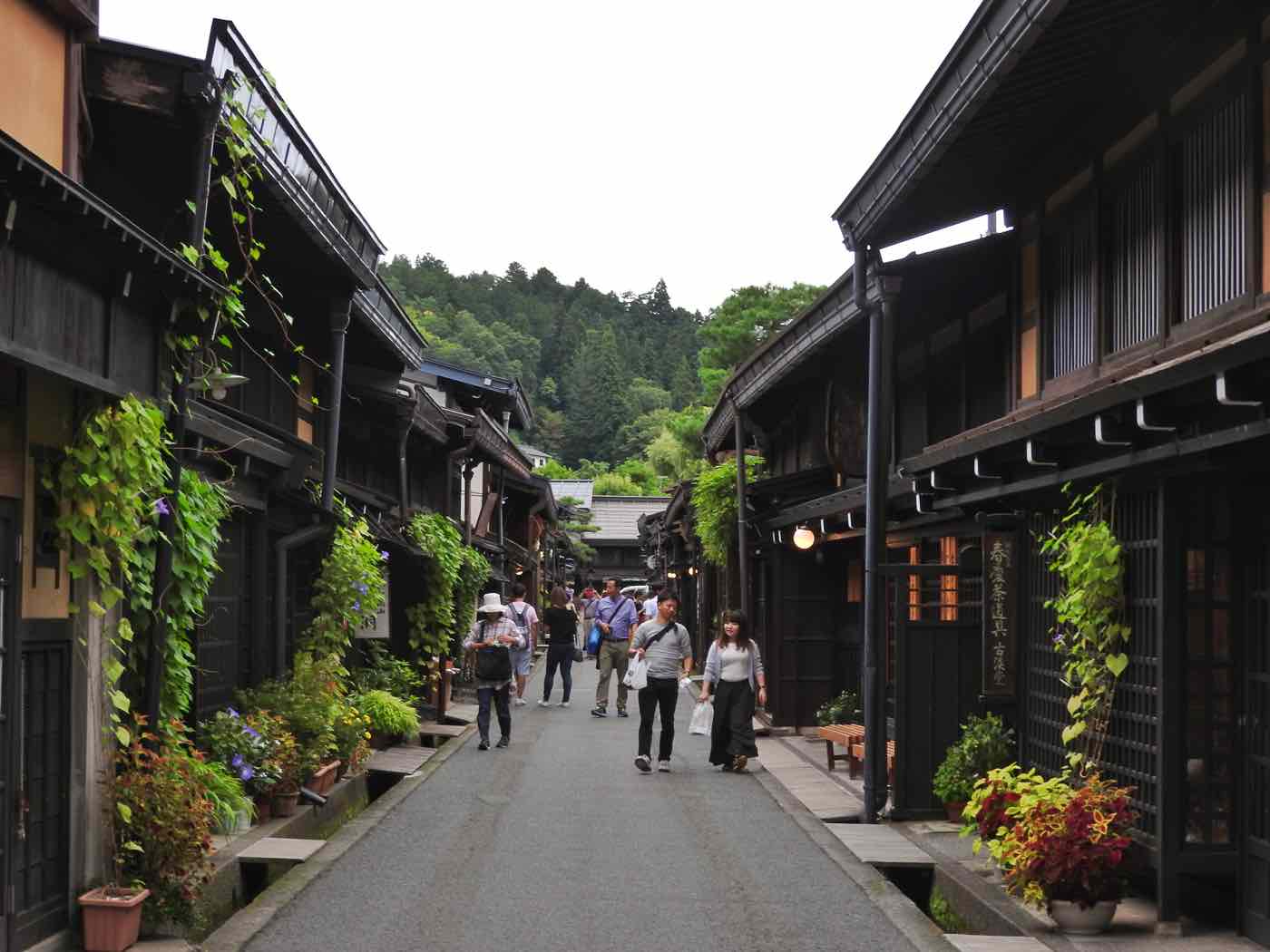
Takayama sits in the heart of Gifu’s mountain region, and it’s one of the few places in Japan where the past feels genuinely preserved rather than staged.
The black wooden merchant houses in the old town date back to the Edo Period, when Japan was completely cut off from the outside world. Walking those streets feels like a different century, and a different Japan entirely. This is a perfect opportunity to stay in a traditional ryokan.
What to do in Takayama
The old town is the main draw: a series of 17th-century streets lined with dark timber buildings now housing shops and restaurants. A fully black wooden street is a sight you won’t see anywhere else.
Rent a bike and head to the Hida Folk Village, an open-air museum filled with traditional wooden houses and huts brought down from the surrounding mountain region. It smells like cedar and forest, and it feels genuinely remote. It’s a museum. It just doesn’t feel like one.
The Morning Street Market runs daily along the riverbank until noon, with local foods, crafts, and snacks worth grazing through. And before you leave, try the local Hida beef. I had it at Kyoya (beef with mountain vegetables in a miso sauce) and it remains one of the best meals of either Japan trip.
Where to stay in Takayama
Ryokans, authentic Japanese guesthouses, can be very expensive, but they are a must-do in Japan. And if you have to pick a place on this itinerary to do it, go for Takayama.
Family-owned Sumiyoshi Ryokan was by far one of the most memorable places I’ve stayed in Japan. We were treated like true family members.
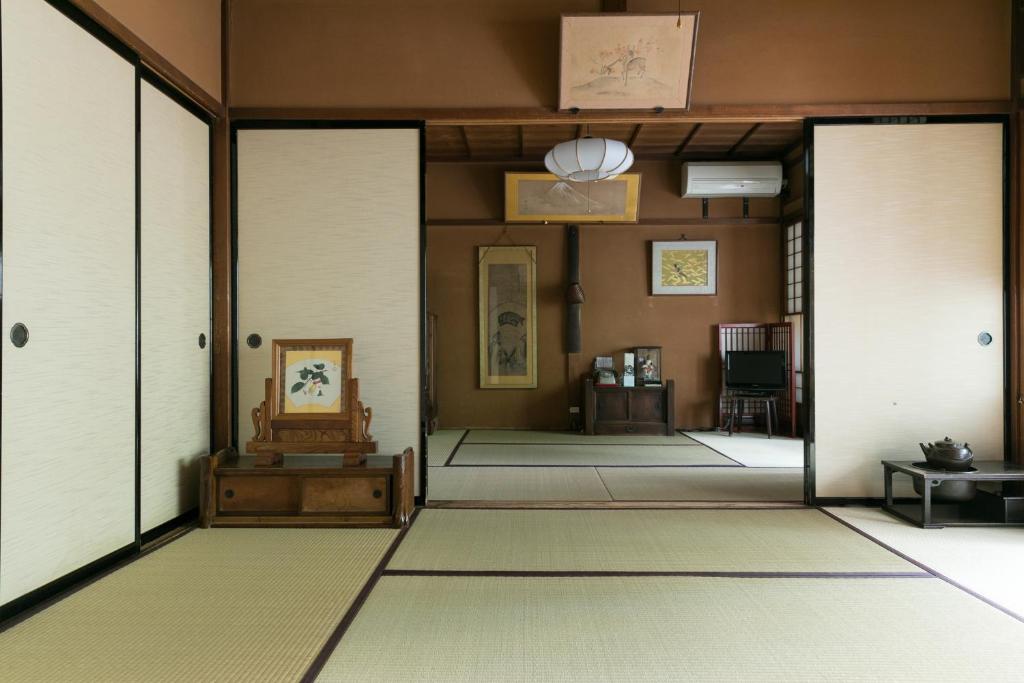
Sumiyoshi Ryokan, Takayama, Japan
They’ll dress you in a traditional kimono, give you dinner and breakfast inside your room. There’s also free access to a private onsen that is a great idea after a day of walking.
Just a 2-min walk from Takayama’s sunday street market and the old town area.
Kyoto
Kyoto is the cultural capital of Japan and, for first-time visitors, the closest thing to a required stop. Former imperial capital, home to over 1,600 Buddhist temples and 400 Shinto shrines, and the city where traditional Japan makes its strongest case. I expected a quaint, compact city. I found a full metropolis with a soul.
Plan at least 3 full days and study the transport map before you arrive, because getting around Kyoto is more work than any other city in this itinerary.
What not to miss in Kyoto
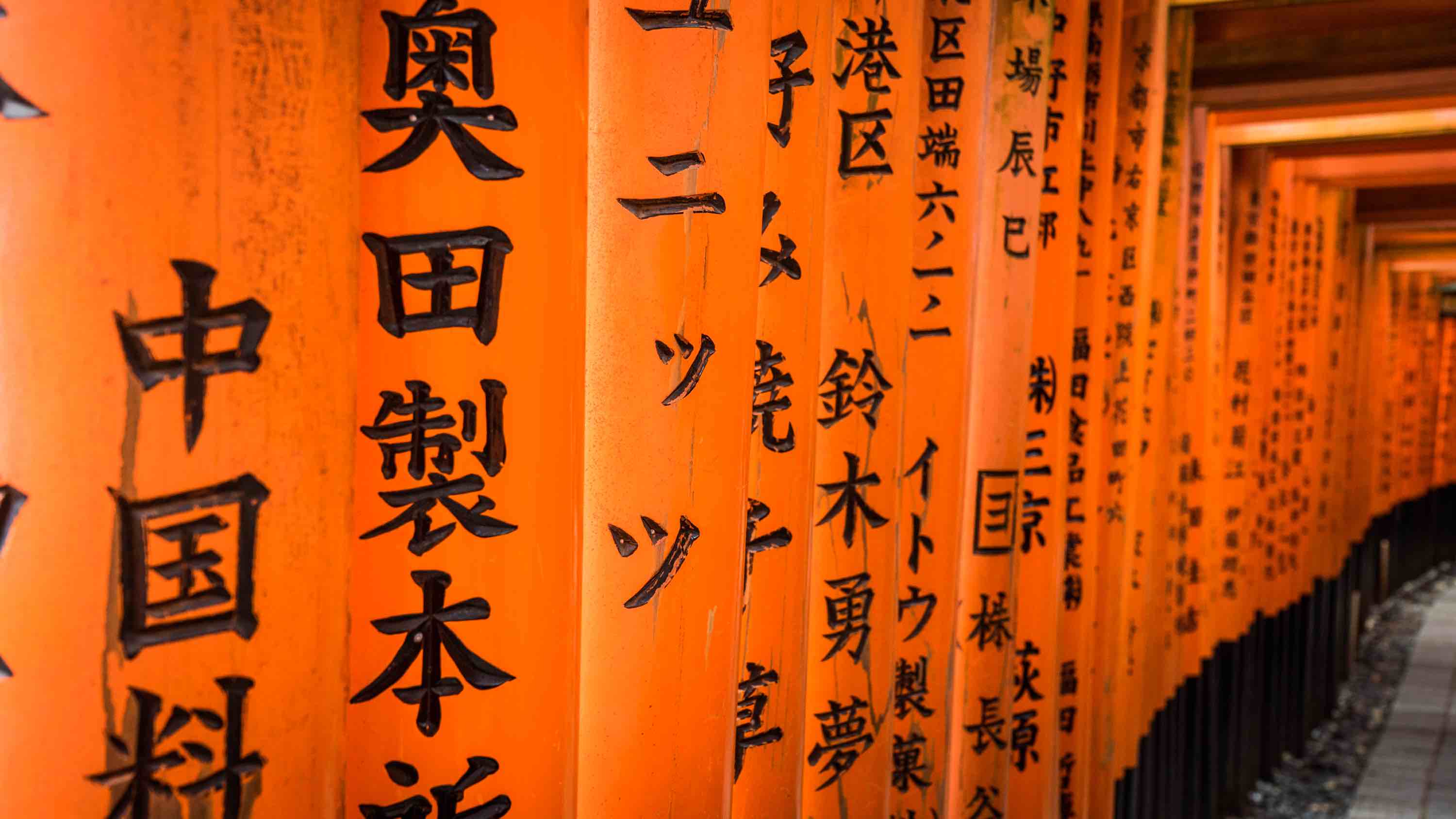
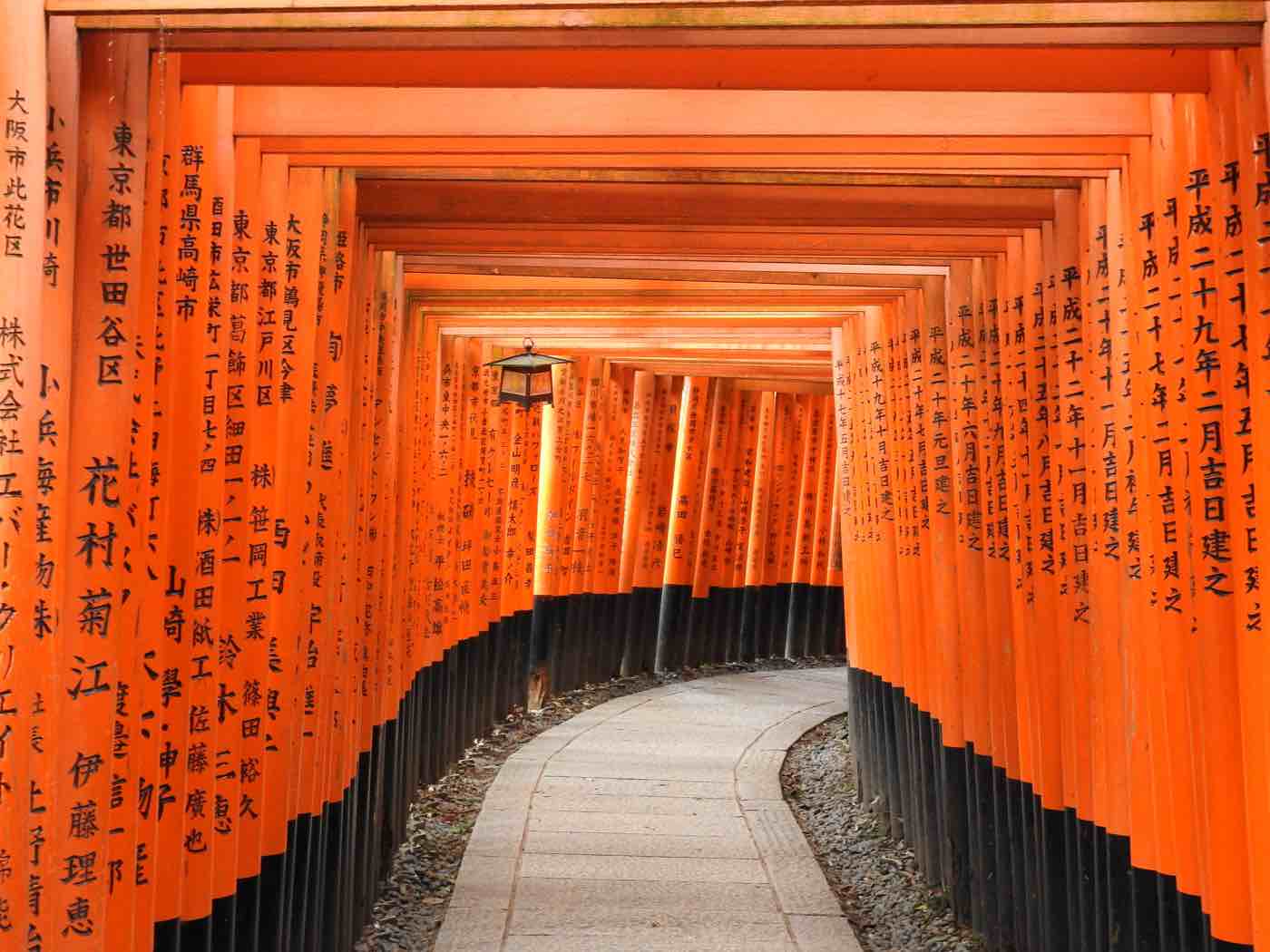
My favorite single experience was Fushimi Inari: over 10,000 Shinto torii gates winding up a sacred mountain. The higher you climb, the fewer people you’ll share it with. It’s a special place beaming a special kind of energy in the air so I recommend getting there before 9am; after that the path becomes shoulder-to-shoulder.
Same logic applies to the Arashiyama Bamboo Grove. The pathways that go through this natural bamboo forest are incredibly scenic and camera-friendly but herds of tourists in front of you can quickly take away the beauty of the place. Come early or at dawn.
For a comprehensive deep-dive into the city’s attractions, Tmy Kyoto things-to-do guide covers 19 experiences with practical tips for each.
Other highlights in Kyoto include (LOTS OF) temples, Kiyomizu-dera and Kinkaju-in being the most iconic. I also definitely suggest a visit to Gion, the historic geisha neighborhood, and to the main market in town: Nishiki Market. It’s a great chance to indulge in into unique Japanese delicacies.
Places to visit in Kyoto in a first-time visit 🇯🇵
- Fushimi Inari Taisha – The more you go up the mountain, the less crowded it will be and the more special your experience. Arriving before 9am makes a huge difference.
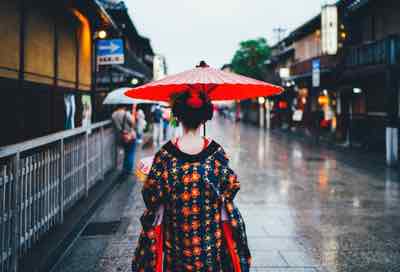
- Gion – The iconic geisha district. Now, you’ll likely see tourists dressed up in kimonos, but real-life geishas are very hard to spot. They mysteriously appear around dusk on the short path from their taxi to their performance venues. Overall they don’t like to be disturbed or photographed, respect that!
- Arashiyama Bamboo Forest – The pathway is shorter than I expected (only about 10-15 min), but this a delight to all the senses. Come as early as possible and bring a wide-angle lens camera, if possible.
- Kinkaju-in (Golden Pavillion) (¥400 entry fee) – Temple covered in freaking GOLD LEAF. It’s stunning from every angle or time of the year. In between the few moments the sun peeked through the clouds, the whole structure shined beautifully.
- Kiyomizu-dera – You’ll need a significant walk uphill to get there but the view overlooking Kyoto’s valley is stunning and the bright orange architecture is quite a statement.
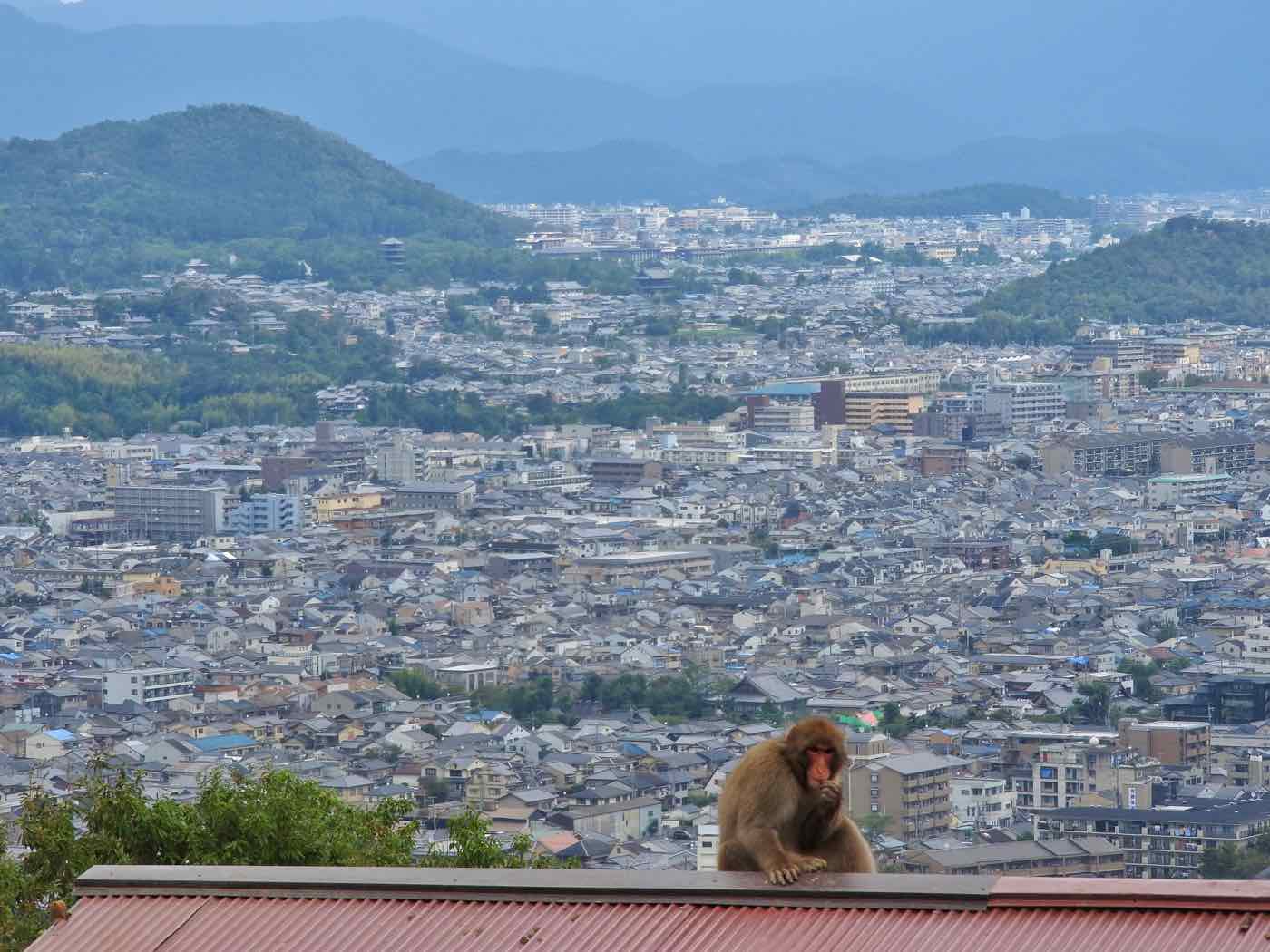
- Arashiyama Monkey Park (¥550 entry fee) – After a 20-min uphill walk you’ll be rewarded with a park with dozens of monkeys – yes, adorable babies included – and open views over Kyoto.
- Nishiki Market – In the heart of Kyoto’s downtown, this massive market is filled with food stalls with the wackiest delicacies. Try tako tamago – baby octopus with a stuffed quail egg head.
Also check this comprehensive list of the best things to do in Kyoto.
Where to stay in Kyoto
For convenience, the area around Nishiki Market puts you within walking distance of most of central Kyoto’s attractions, shopping, and restaurants.
For something more atmospheric, Gion or Arashiyama offer a completely different feel. Gion might mean passing a real geisha on your way to breakfast. Arashiyama is quieter, greener, and closer to the western sights.
Check out this pre-filtered list of the highest-rated places to stay in the Gion district, Kyoto.
Getting around in Kyoto
Not only Kyoto is a massive urban area, but the main sights are all in different areas of the city, far away from each other.
This is the one city in Japan where buses become your main tool, because the subway doesn’t connect the major sights conveniently. A bus ride between areas like Arashiyama and Fushimi Inari can easily take 40 minutes. Don’t overschedule your days here. Kyoto rewards people who move slowly.
Hiroshima
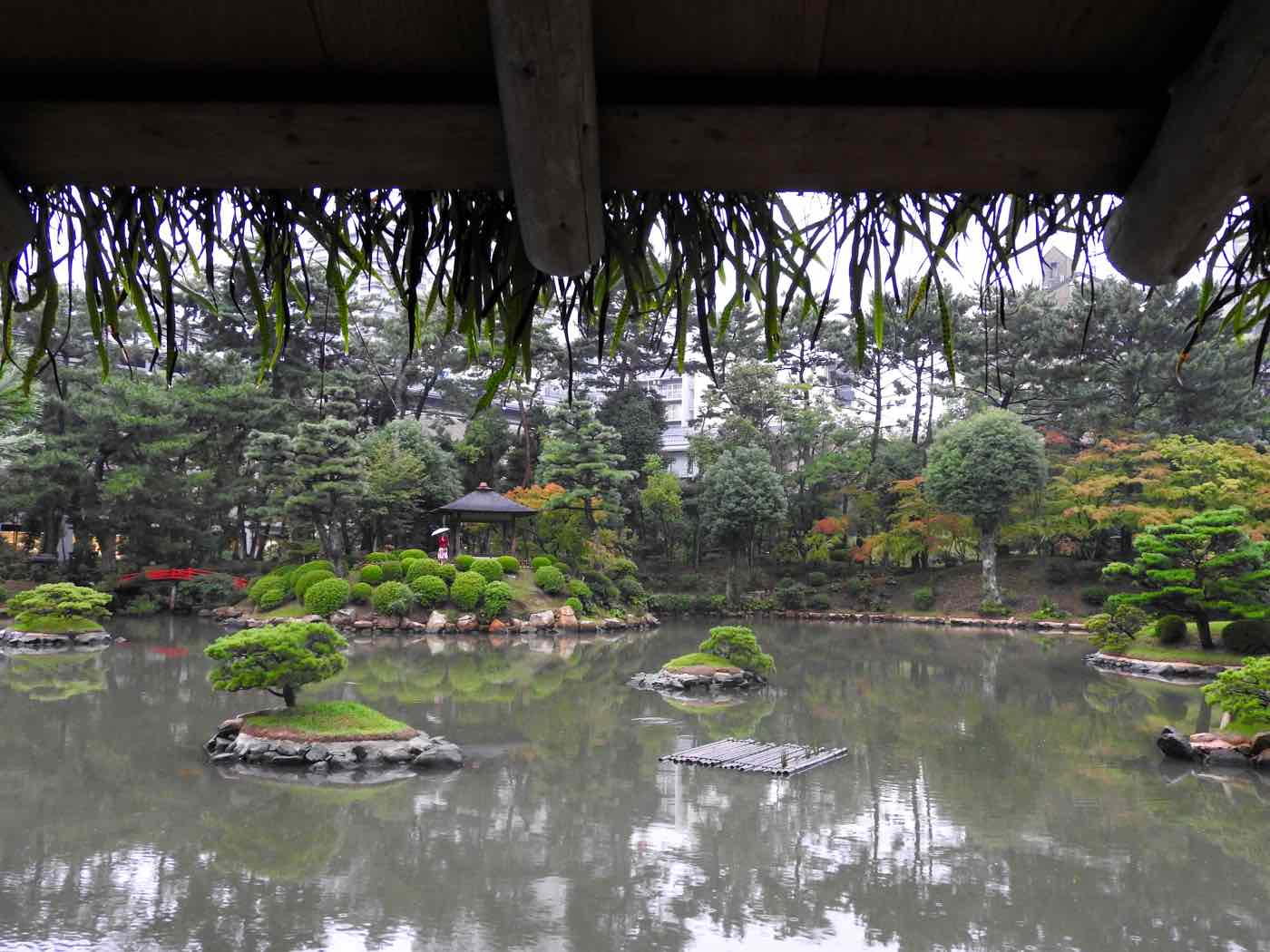
I knew Hiroshima would be a moving experience. Visiting the impact area of an atomic bomb that killed over 200,000 people is not a casual afternoon.
The Genbaku Dome, the only structure left standing after the blast, stopped me in a way that few things have while traveling. The Peace Memorial Park and Museum is thorough, and accessible. It covers the lead-up to the bombing, the immediate devastation, the long-term radiation effects, and the city’s extraordinary recovery.
That said, I’ll be real: Hiroshima was my least favorite stop on this itinerary. Partly the rainy day. Partly that the city itself, outside the memorial sites, didn’t hold me. You can stay in Miyajima instead (see below) and visit Hiroshima on a day trip or even replace this whole section of the trip for a relaxing stay at the spa region of Hakone.
Hiroshima, the place for okonomiyaki
Okonomiyaki is a type of Japanese savory pancake that can basically contain anything you like. I mean literally – the name means “cooked as you like it”. It usually contains shredded cabbage, eggs and a meat (pork or squid) and topped with several condiments and a special sauce.
If anything pulled weight in Hiroshima, it was the okonomiyaki. The Hiroshima version of this savory pancake is layered rather than mixed, with noodles (yakisoba or udon) inside. Okonomimura is an entire three-floor mall (!) devoted to the dish, and it delivers.
Osaka
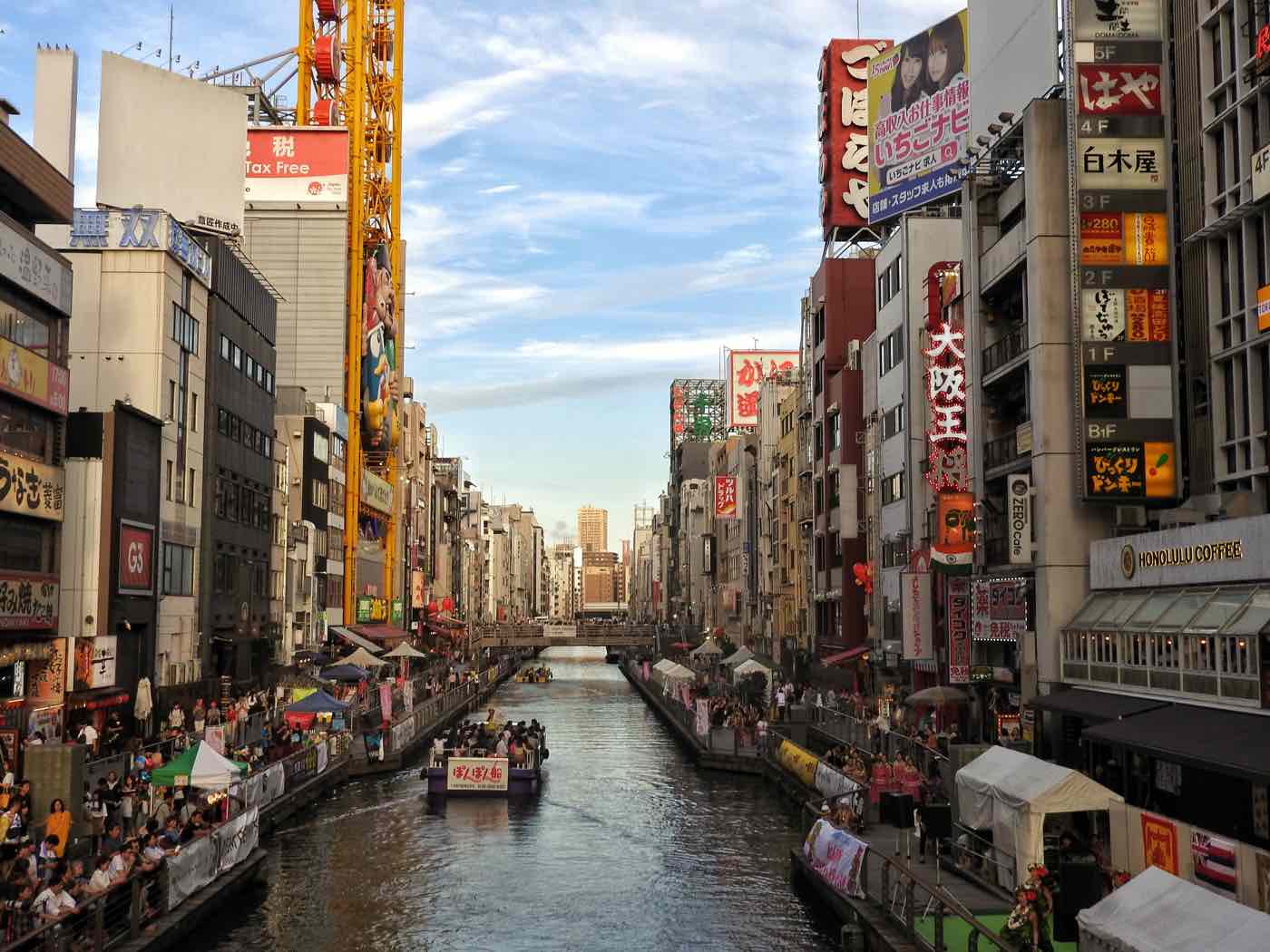
Osaka is the city most first-timers overlook. That’s a mistake. It’s got a food scene serious enough that some chefs argue it’s the best eating city in the world. It’s a great base for day trips to Nara, Kyoto, and even Himeji. And it’s culturally the opposite of everywhere else you’ll visit in Japan, louder, looser, more chaotic, and somehow more relaxed.
People talk on the train. They queue on the right instead of the left. After days of immaculate Japanese comportment, Osaka felt like a long exhale.
What not to miss in Osaka
For a first-time visit to Osaka, Dotonbori area is the pulse of the city: neon signs, arcades, riverside bars, street food around every corner. Stand on Ebisubashi Bridge at night and watch the lights blur into the canal. It’s one part Times Square, one part Blade Runner.
The food is the main event. Takoyaki (octopus dumplings with bonito flakes), okonomiyaki, skewers of everything — Osaka eats with an almost competitive enthusiasm.
Hit the Umeda Sky Building for views, or the Osaka Castle for a dose of Japanese castle architecture. If you have a spare half-day and a JR pass, a shinkansen to Himeji to see Japan’s finest intact castle is absolutely worth it.
shopping for souvenirs and gifts back home.
Places to visit in Osaka in a first-time visit 🇯🇵
- Dotonbori St – The more you go up the mountain, the less crowded it will be and the more special your experience.
- Glico Running Man – The icon of Osaka.
- Umeda Sky Building – Impressive views from the observatory on the top.
- Osaka Castle – A peek onto japanese castle architecture, although Himeji‘s is much more impressive. Book tickets here.
- Himeji Castle – If you have extra time to spare, make use of your JR pass and take the train to Himeji to see a giant white castle worthy of your best dreams.
Where to stay in Osaka
I stayed in both the 2 main “city centers” in Osaka – Umeda and Namba, which are also the two main transport hubs.
Namba is the better pick for nightlife, food, and atmosphere. It’s bright, dense, and loud in a way it doesn’t seem Japan-y. Stay in this area to absorb all this fun.
Umeda leans more business-y, but still has great eating options and is strategically useful for transit. A warning: the underground shopping mall complex is gigantic (I got lost twice). In Umeda, I stayed in KOKO Hotel which had a retro design and amazing city views from the 14th floor.
Read my guide on where to stay area-by-area in Osaka.
Check out this pre-filtered list of the highest-rated places to stay in the Namba and Umeda areas in Osaka.
The best day trips on this itinerary
Kamakura (from Tokyo)
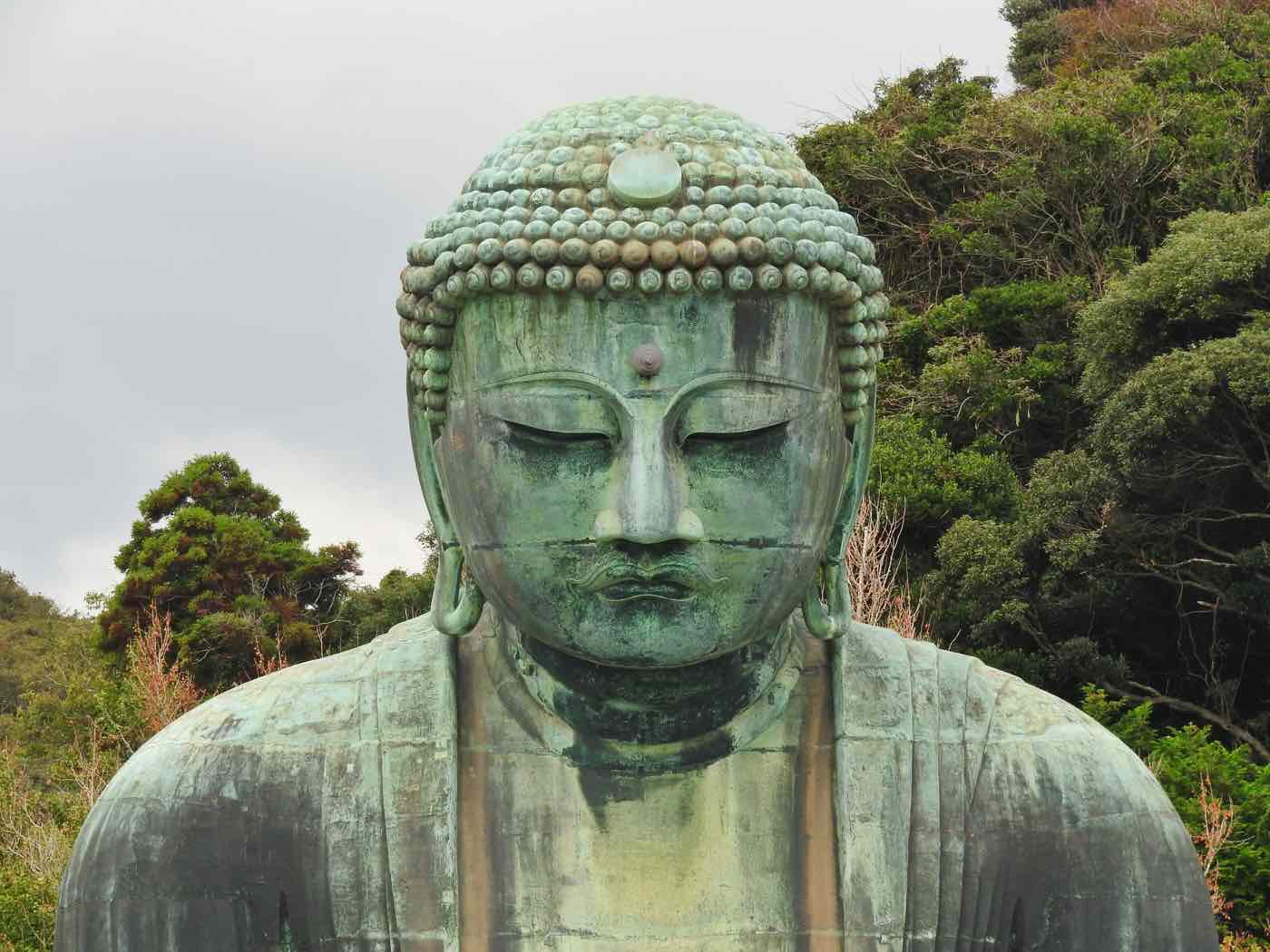
Kamakura is the easiest day trip from Tokyo: 35 minutes by train, and a genuinely different pace from the city.
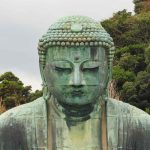
The highlight is Kōtoku-in, the monumental bronze Buddha statue about 20 minutes from the station on foot. You can actually go inside the statue for ¥20 — a line that will land better at parties than most icebreakers.
Hase-dera temple and garden complex is also worth your time: caves, statues, and the kind of architecture-meets-nature combination that Japan does better than anywhere else on Earth.
If you skip the temples (I skipped a few), walk toward the coast through the quiet streets and local train crossings. There are worse ways to spend a Tokyo afternoon.
Temples and shrines in Kamakura
- Hase-dera – no one mixes architecture with nature as well as Japanese and this is just another proof.
- Hokokuji – a bamboo garden with a café inside awaits.
- Engakuji – popular for autumn leaves viewing!
- Tsurugaoka Hachimangu Shrine – the most popular Shrine in Kamakura
Shirakawa-go (from Takayama or Kanazawa)
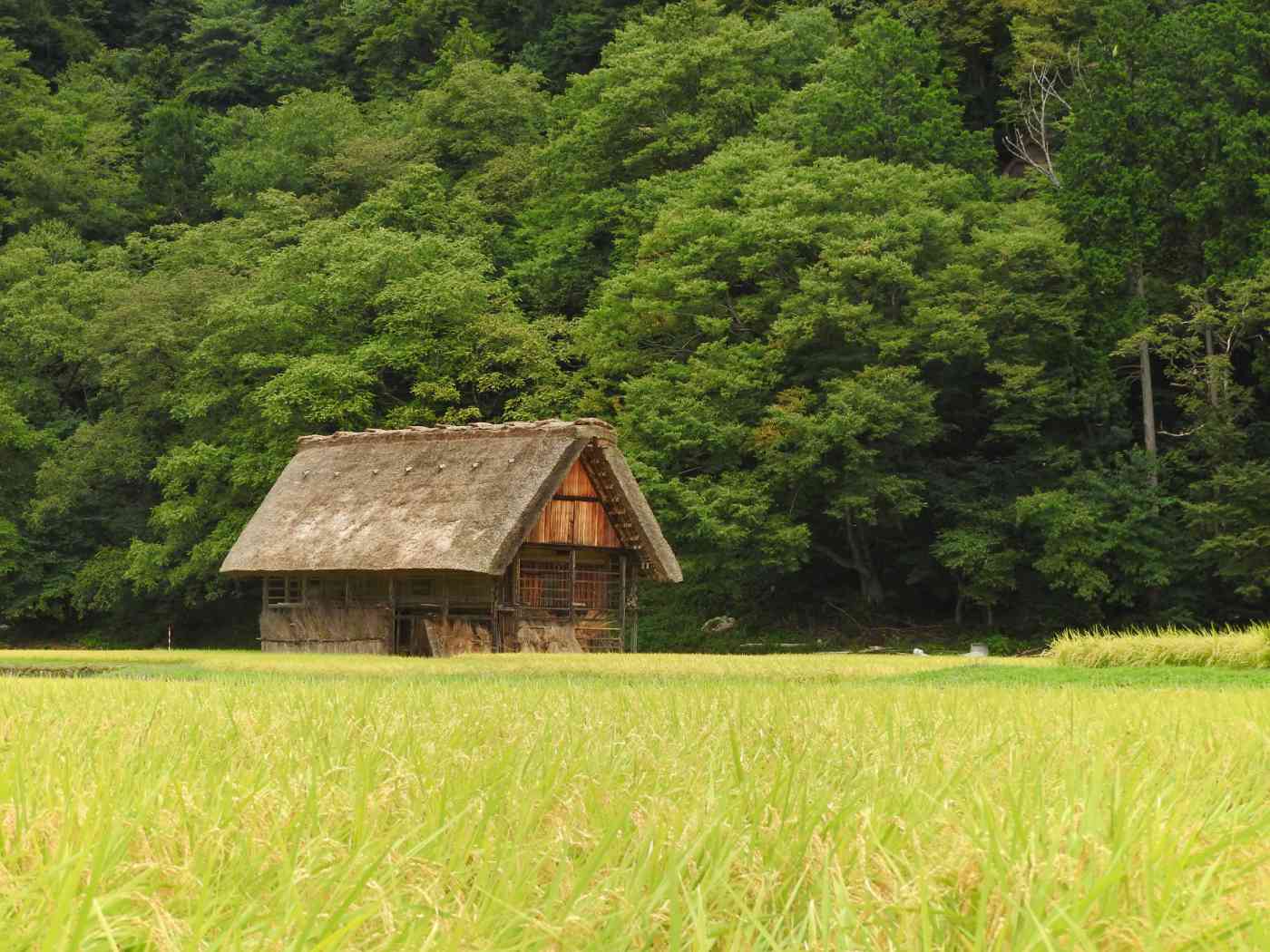
Shirakawa-go looks like a Christmas card you’d dismiss as too perfect to be real. It’s real.
This tiny village in the mountains is famous for its 100+ traditional farmhouses built in the gasshō-zukuri style (literally “hands in prayer”) — steep thatched roofs designed to handle massive snowfall. It’s been a UNESCO World Heritage Site since 1995. The rice fields, the Shogawa river bridge, and the viewpoint above the village are all worth the stop.
The easiest logistics: take the Nohi bus from either Kanazawa or Takayama. I came from Kanazawa, left luggage at the bus station, spent the morning in the village, then continued to Takayama in the afternoon on a second ticket. Clean, efficient, no wasted days.
How to make a stop at Shirakawa-go 🗾
The easiest way to get to Shirakawa-go is by bus from either Takayama or Kanazawa.
Take the Nohi bus to Shirakawa-go. I came from Kanazawa, left luggage at the bus station, spent the morning in the village, then continued to Takayama in the afternoon on a second ticket. Clean, efficient, no wasted days.
I recommend to buy your tickets in advance online – you’ll need two separate tickets for each leg of the journey. If you can’t be bothered about your luggage, you can send it directly to your following hotel via a luggage forwarding service.
Miyajima/Itsukushima (from Hiroshima)
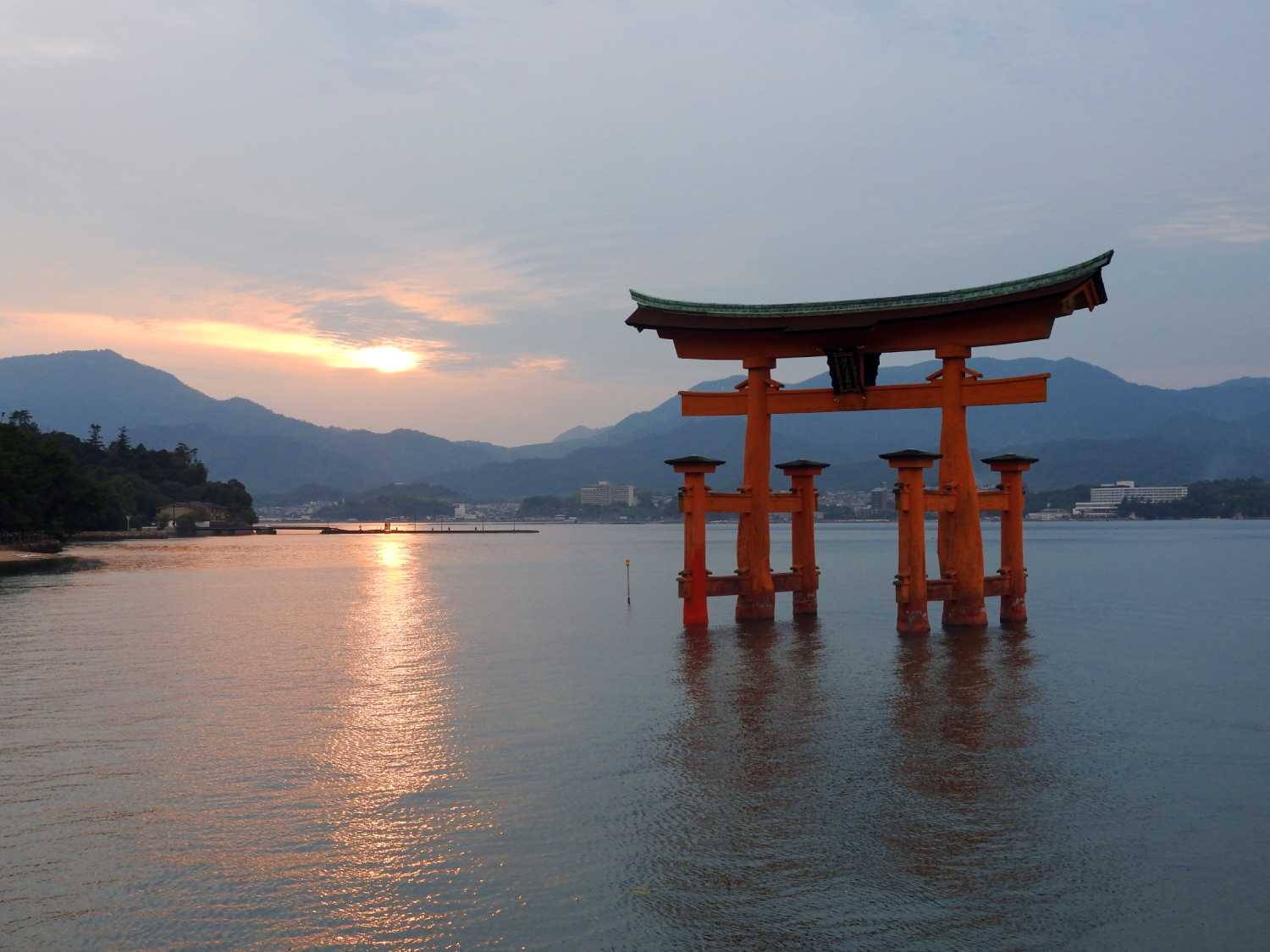
Together with Hakone, Miyajima is the place I most regret not staying overnight.
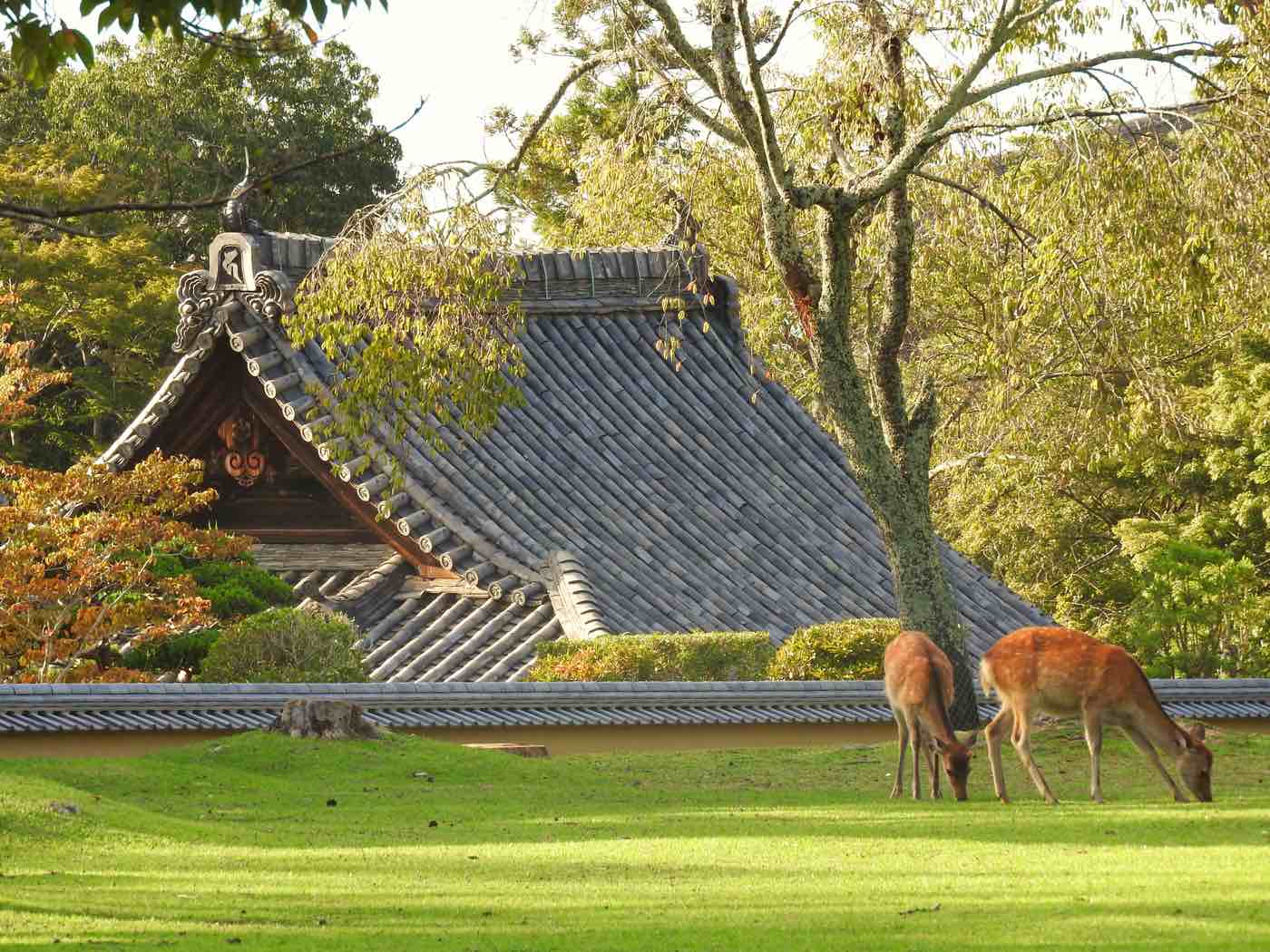
The island greets you from the ferry, a giant orange torii gate rising from the water, forest-covered hills behind it, deer wandering the dock. It hits immediately. Everything about it feels like it was designed to make you want to stay.
The floating Great Torii Gate is the landmark. Check the tide schedule: at high tide, the gate appears to float on the sea, and the photos almost explain themselves. Come for sunset if you can.
Miyajima also has great hiking terrain, dense forest trails up to Mount Misen via ropeway (¥1,800 return), and waterfront restaurants serving oysters the size of your fist. Budget accordingly.
What to do in Miyajima
You mean, apart from hanging out with deer? Well if you’re coming to Miyajima island, the floating Great Torii Gate is a mandatory stop. Check for tide schedule and come when the high tide submerges part of the structure and chill out at the nearby quay.
Miyajima is also a perfect place to greet nature in hiking trails, with dense forests and great views over Hiroshima Bay.
The restaurants on the island are not exactly cheap, but you can indulge in some unique food delicacies such as oysters and clams as big as your face. Seriously.
Places to visit in Miyajima in a first-time visit 🇯🇵
- Mount Misen – Hop on the Miyajima Ropeway (¥1800 round trip) to the top of this sacred mountain and take in the breathtaking views.
- Floating Torii Gate – One of the most beautiful sights in Japan. Check tides beforehand to get come here for sunset for the best photos.
- Itsukushima Shrine – Seaside 12th century shrine.
- Daishō-in – Another beautiful Japanese temple complex located in Mount Misen.
Nara (from Osaka or Kyoto)
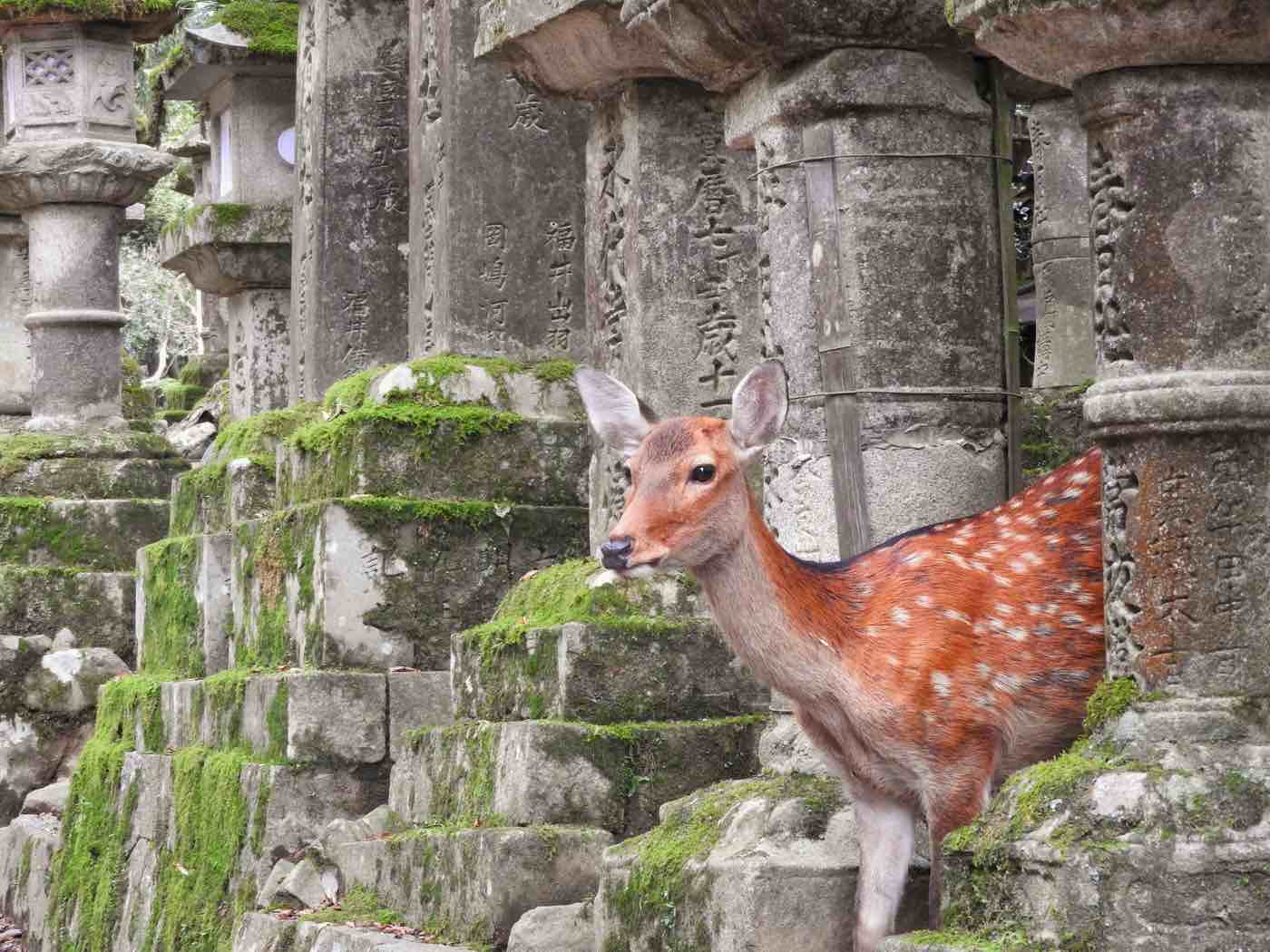
Nara is one of the most memorable travel experiences ever. The ancient capital of Japan is world famous for two things: temples and free-roaming deer. Yes, more deer! 🦌
On one hand, some of the largest Japanese temples and shrines can be found here. In between these amazing historical sites, thousands of deer roam freely, making it a magical and eerie site. You can buy cookies to feed the deer who will bow to receive a cookie. This is not a joke. They bow. It’s absurd and wonderful.
Best temples in Nara ⛩️
- Tōdai-ji– the headline. The tallest wooden structure in the world, with massive wooden guardian statues at the gate. Entry fee ¥600 as of 2026.
- Horyu-ji – A little more sober but with an equally fascinating wooden architecture to admire. Admission as of 2026 is 2,000¥.
- Kōfuku-ji – A Buddhist temple, also a UNESCO World Heritage Site and one of the Powerful Seven Temples. Admission: from 500¥.
Hakone (from Tokyo)
Hakone is the day trip people do from Tokyo when they want nature, an onsen, and a shot at seeing Mount Fuji — all in one go. It delivers on two of those three, depending on the weather.
Hakone sits in a volcanic mountain area on the edge of Fuji-Hakone-Izu National Park. The landscape is dramatic. Hot springs are everywhere. And on a clear day, the views of Fuji from Lake Ashi are the kind that end up framed on walls. The key word is clear. Cloud cover around Fuji is notoriously unpredictable, and plenty of people make this trip and see nothing but grey. Go in winter or early spring for your best odds. Don’t build your entire day around the view — let it be a bonus!
Instead of doing Hakone Ropeway over Owakudani – reminded me too much of Furnas in my home island – we decided to do a part of the Edo trail for the morning.
If you have the budget, consider staying overnight in a ryokan in Hakone. The area is one of the best places in Japan to experience a proper onsen — natural hot spring baths fed directly by the volcanic geology. After a day of walking, slipping into an outdoor bath with mountain views is a very good decision.
Explore the essential mobile apps when traveling Japan that set you up to a (even more) memorable time.
Japan Itinerary FAQ
Who is this itinerary for?
This itinerary is tailored for first-time travelers to Japan. I tried to achieve not only a good overview of the country but also a balance between urban vs countryside, between big city vs village. That said, obviously tweak the itinerary to favor more time in the places that resonate with you the most.
Will I see everything in Japan with this itinerary?
No. Ditch any FOMO. It’s impossible to see everything in Japan in such a short amount of time.
Is it jam-packed or more relaxed?
I wouldn’t say this a rally course, but it’s not entirely a breeze. There are some day trips and there are some stops where you’d only be staying 1 night. If you’re traveling with kids or want a more relaxed trip, consider tweaking it.
Where did you arrive and leave Japan?
I arrived in Tokyo (Narita airport) and got my flight back from Osaka.
How did you get around?
I traveled mostly by train, using a JR Pass. In the end, I did some math and figured it save me some – not much – money but mostly it saved me time. It’s very convenient not to have to buy individual tickets every time.
I’ve also used buses to get to Shirakawa-go, ferry to Miyajima and subway/local trains inside the cities.
How much does a trip like this cost?
Make sure you check my budget breakdown.
When is the best time to go to Japan?
Every season of the year brings out a new kind of beauty in Japanese landscapes and traditions. Note the weather varies a lot depending on the region you’re visiting.
Overall, spring and fall months, when temperatures are milder and there is less rainfall, are the best times of the year to visit Japan.
- Spring (March to May) – Magical time to visit. However prices skyrocket close to hanami (cherry blossom) season (see below).
- Summer (June to August) – Weather can get a little crazy with the peak of typhoon season and high temperatures. Hiking season in Mount Fuji.
- Fall (September to November) – Great chance of seeing the vibrant color spectrum of autumn leaves. Mild temperatures.
- Winter (December to February) – The coolest months bring less visitors to Japan, but prices are also considerably cheaper. Best time to visit the snow monkeys in Jigokudani and to hit the slopes in snow sports.
When is cherry blossom (hanami) season in Japan? 🌸
As a natural event, there are no fixed dates when does hanami takes place each year. Generally, the more south you are geographically in Japan, the earlier the blossoms open. In big cities like Osaka, Kyoto and Kyoto cherry blossom happen in early April. But it can go as early as January in the southern islands of Okinawa and as late as May in northern Hokkaido.
Japanese people are healthily obsessed with cherry blossom season – there are nationwide maps to follow the blossoming – and is deeply rooted in their culture and nationwide traditions. It represents the ephemerality, fragility of life: so beautiful but so short at the same time.
Problem is: everyone is traveling to and in Japan during this time of the year. Prices will be inflated so make sure you book your trip with extra time in advance.
The top-rated places to stay in Japan
Booking.comFinal thoughts on my two weeks in Japan
Japan rewards people who pay attention. The details are everywhere: the way convenience store staff wrap your items, the quiet of a mountain ryokan at dawn, the sound of 10,000 deer hooves on gravel in Nara.
This itinerary gives you the structure to see the best of it without sprinting through every city. Use it as a foundation. Move things around. Add a night in Miyajima. Skip Hiroshima city and spend that time in Arashiyama instead. The itinerary serves you, not the other way around.
If you’re still figuring out the logistics, the essential Japan travel apps guide covers everything from navigation to restaurant booking in the country. And the 34 things to know before visiting Japan I put together from both trips will save you from the classic first-timer mistakes.
Now go. Japan doesn’t disappoint.




Hi Bruno, we are planning a Japan trip next month (with 2 kids under 3). Your itinerary is super useful! I will certainly tweak parts of it as you suggest to do if travelling with kids. Thanks for your help!
Sounds like a great trip Rashmi. Hope you have a wonderful time in Japan!
Dear Bruno,
Thank you so much for all the valuable information you have provided in your blog.
We are planning our first trip in Japan next month and getting your tips was definitely helpful.
Cheers
You welcome Trinh. Japan is amazing, hope you have a wonderful time.
Another great itinerary (as usual)!
I am looking for hotels to book now and I had a question, would you opt for hotels with breakfast or not really? Just wondering if having a breakfast outside it is a good (and cheap) option or I should always choose hotels with breakfast.
Cheers,
Mariana
Thank you Mariana!
Great question! To be honest, I’ve booked a mix of both. Unless you go for a hotel chain with continental breakfast, it can be a bit of an underwhelming experience. In the capsule hostel I stayed, it was just coffee + piece of bread. I’d recommend breakfast in a ryokan though, definitely interesting and unique.
Most of the time, I found myself grabbing a sandwich + coffee from a 7-11. Gets tiring after a few days, but it’s cheap and on-the-go.