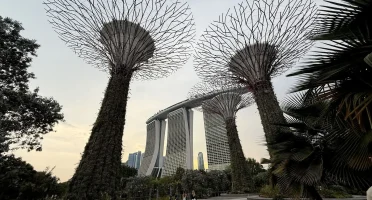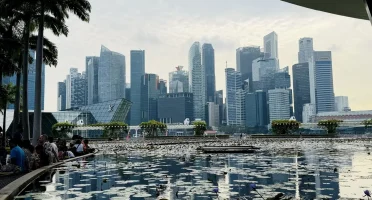
TL;DR: Singapore is easy to navigate, safe, and very well-organized, but a few things will still catch you off guard if you haven’t done your homework. The heat and humidity are relentless, the local customs have quirks worth knowing, and where you stay changes your whole experience. These tips will help you skip the rookie mistakes and get more out of every day.
Quick tips for Singapore 🇸🇬
- 🗓️ Figuring out how long to stay? My Singapore itineraries guide breaks it down from 1 to 5+ days.
- 🏨 Picking a neighborhood matters more than most people think. Read my guide to where to stay in Singapore before you book.
- 🚇 Get an EZ-Link card or tap with a contactless bank card. The MRT is excellent and will save you from the heat.
- 📱 Download Grab before you land. It’s the Uber of Southeast Asia and far cheaper than street taxis.
- 🛡️ Get travel insurance before you leave. I use and recommend Heymondo: solid coverage and a good app for claims on the road.
- 📋 Fill in the SG Arrival Card online up to 3 days before you land. It’s free, takes 5 minutes, and is mandatory.
Singapore travel tips: what to actually expect
Singapore has a reputation for being foolproof. Safe, efficient, English-speaking, signs everywhere, MRT that runs on time. The city does make it hard to mess up. And yet, first-timers like me still manage. Wrong neighborhood, wrong shoes, wrong assumptions about cash and tipping, and a spectacular failure to mentally prepare for the humidity.
These tips won’t tell you what to do in Singapore. They’ll tell you how to move through it without losing half your energy to avoidable mistakes.
In this guide
- 1. Fill in the SG Arrival Card before you fly
- 2. The heat is not what you think
- 3. Choose your neighborhood carefully
- 4. Get an EZ-Link card (or just tap your bank card)
- 5. Download Grab before landing
- 6. Eat at hawker centers, not food courts
- 7. Learn what “chope” means before you sit down
- 8. Don’t tip, but check the bill
- 9. Leave the chewing gum at home
- 10. Cash is less necessary than you’d expect
- 11. Drink the tap water
- 12. Pack light, breathable clothes (and one layer for indoors)
- 13. Cover up at temples and mosques
- 14. Don’t underestimate how much there is to do
1. Fill in the SG Arrival Card before you fly
Singapore requires all visitors to complete a digital arrival card (SGAC) with a health declaration before entering the country. You can do it online up to 3 days before you land. It’s free, takes about 5 minutes, and you need it to get through immigration. Download the MyICA app and do it there so you have it ready on your phone. Don’t leave it to the airport queue.
2. The heat is not what you think
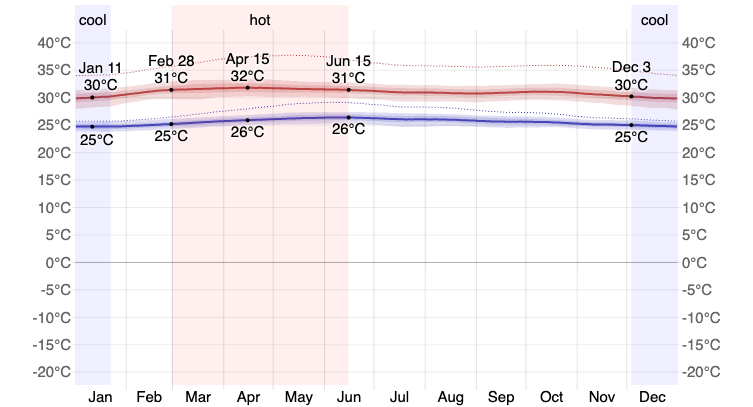
People from tropical countries show up thinking they know heat. They do not know Singapore heat. The city sits just 1.5 degrees north of the equator, which means temperatures stay between 26°C and 32°C year-round, but the humidity is what turns it into a full experience. NEA climate data puts the annual mean at around 84% relative humidity, which your skin will confirm within minutes of landing. Step outside Changi Airport at noon and the air hits you like a warm, damp towel. A thick one.
A few practical moves help:
- Plan outdoor sightseeing for the morning or late afternoon
- Use the MRT for even short distances (the air conditioning is excellent and you’ll arrive somewhere resembling a functional human)
- Build in at least one air-conditioned stop per afternoon. The city’s malls are world-class and everyone uses them as temperature regulation. There’s no shame in it. It’s just how Singapore works.
- Pack a rain jacket or small umbrella. Sudden heavy downpours are completely normal, usually short, and happen regardless of what the morning sky looked like.
3. Choose your neighborhood carefully
Singapore is small, the MRT is excellent, and in theory you can stay anywhere. In practice, where you base yourself shapes the trip more than most people expect, both in terms of what you’ll spontaneously explore and how much you’ll pay for food and drinks around your hotel.
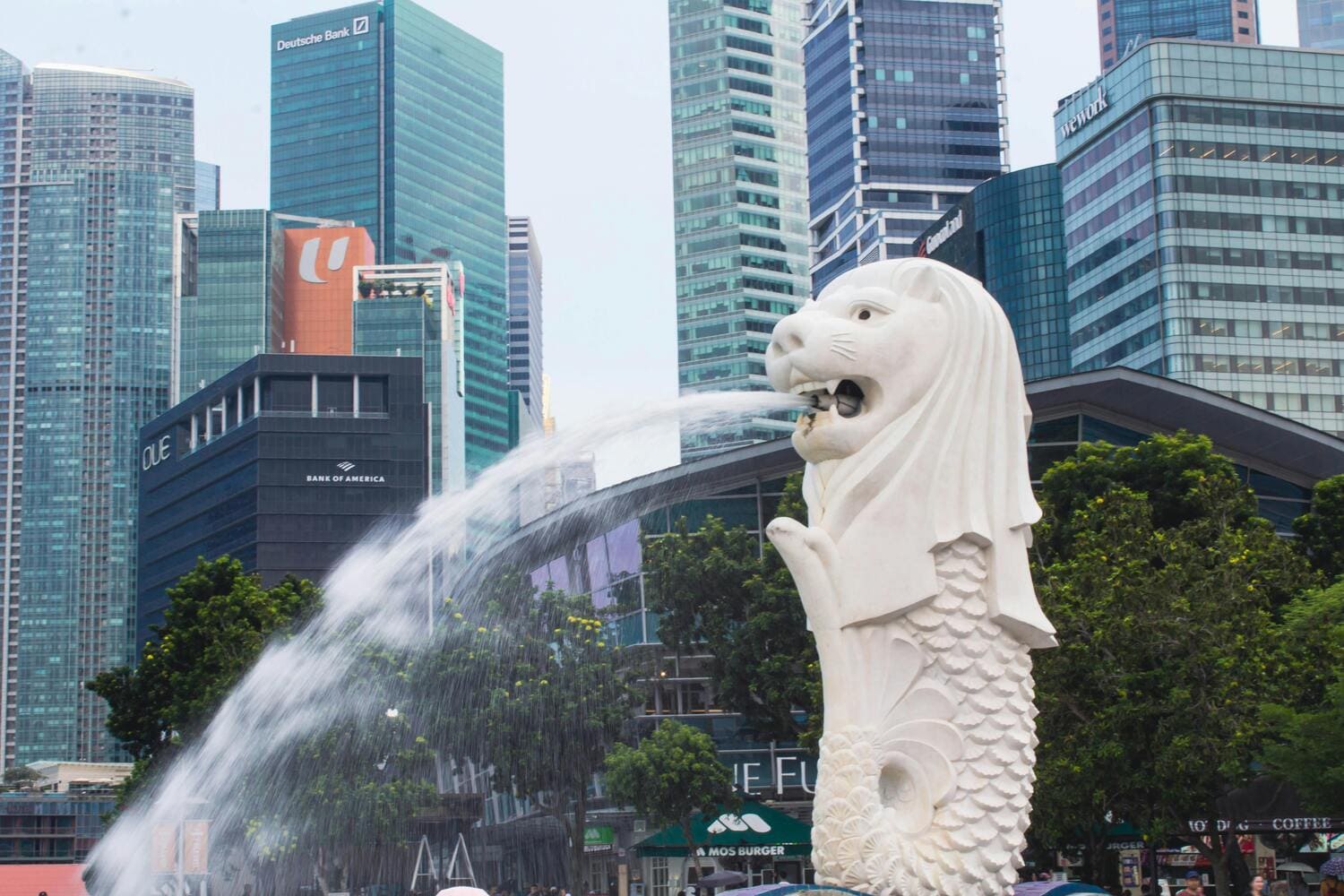
Marina Bay is iconic but expensive and very polished. The food options nearby are mostly restaurants with tourist pricing. Chinatown gives you central access, great hawker food within walking distance, and a neighborhood that actually has a pulse after dark. Bugis and Kampong Glam are good for people who want to explore Arab Street and Little India without constantly commuting. Orchard Road is for shopping-first travelers and nobody else.
I’ve broken all of this down in detail (including the areas I’d skip) in my full guide to where to stay in Singapore.
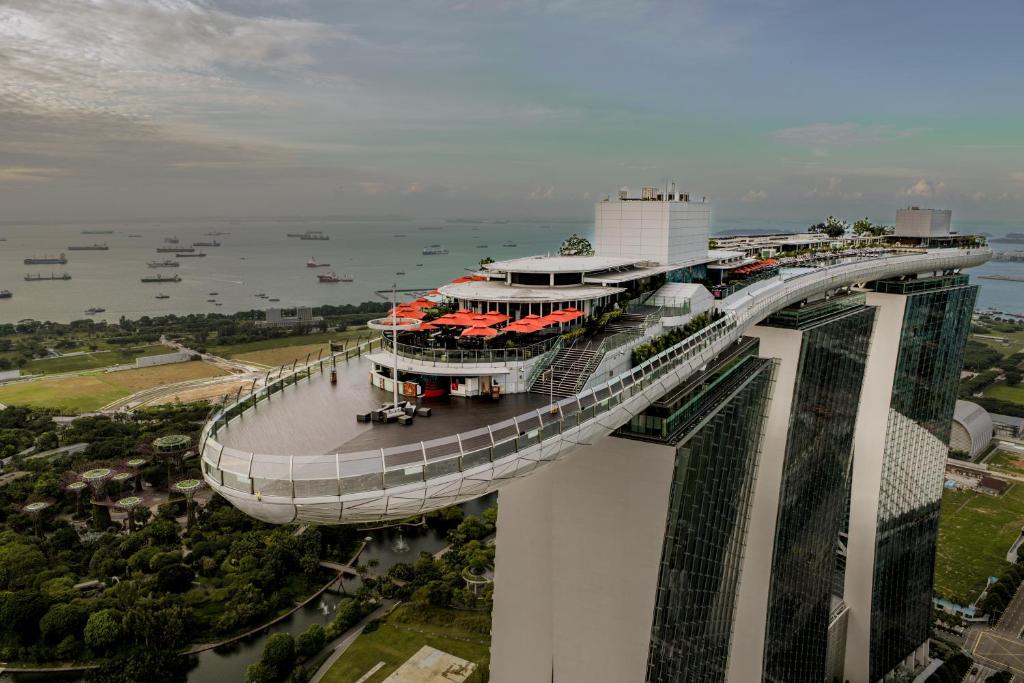
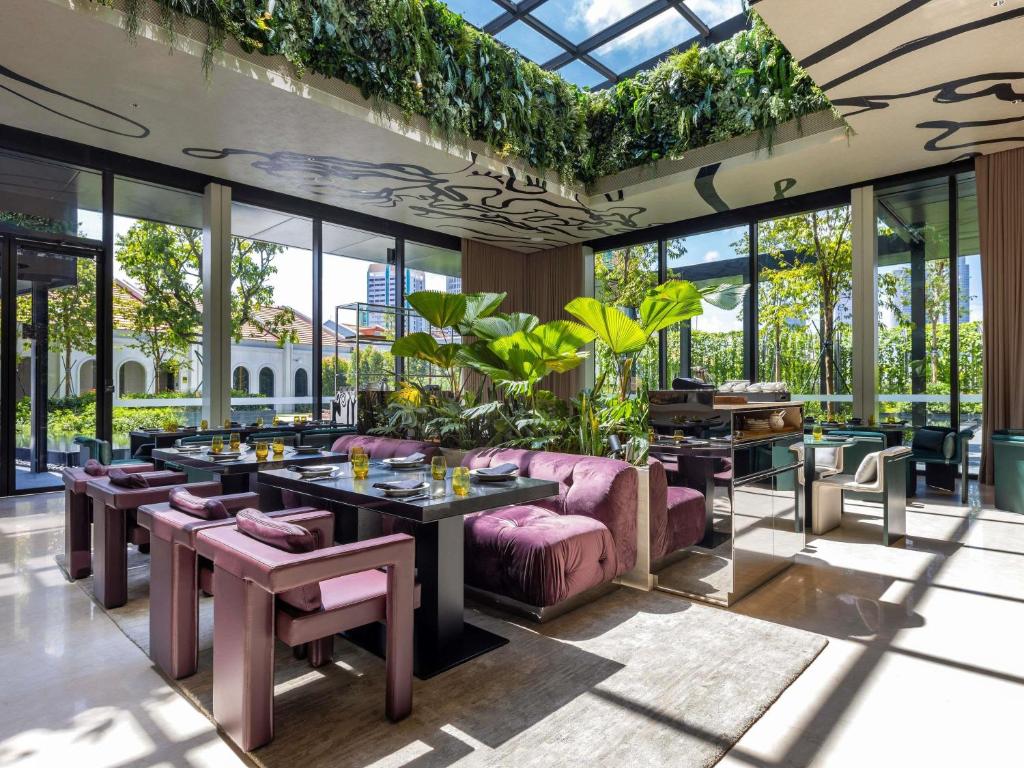
Upscaled art and elegance in the heart of Chinatown, surrounded by Michelin-starred restaurants on Duxton Hill.
4. Get an EZ-Link card (or just tap your bank card)
The MRT is Singapore’s backbone and you’ll use it constantly. You have two options for paying: an EZ-Link card, which you load with credit and tap on and off at every station, or a contactless bank card (Visa/Mastercard), which works directly on the same card readers. For short stays, your bank card works fine. For anything longer than a few days, the EZ-Link card is worth getting. Pick one up at any MRT station for a few Singapore dollars.
The system is clean, fast, well-signposted in English, and covers most places you’ll want to go. One real-world caveat from TripAdvisor veterans: the MRT doesn’t replace taxis for everything. If you’re crossing town in midday heat with bags, Grab will save you time and sanity.
5. Download Grab before landing
Grab is the dominant ride-hailing app across Southeast Asia and works exactly the same way: set a destination, see the price upfront, pay through the app. It’s significantly cheaper than hailing a street taxi and avoids the surcharges that taxi meters can rack up. Add your card before you arrive so it’s ready to go from the airport.
6. Eat at hawker centers, not food courts
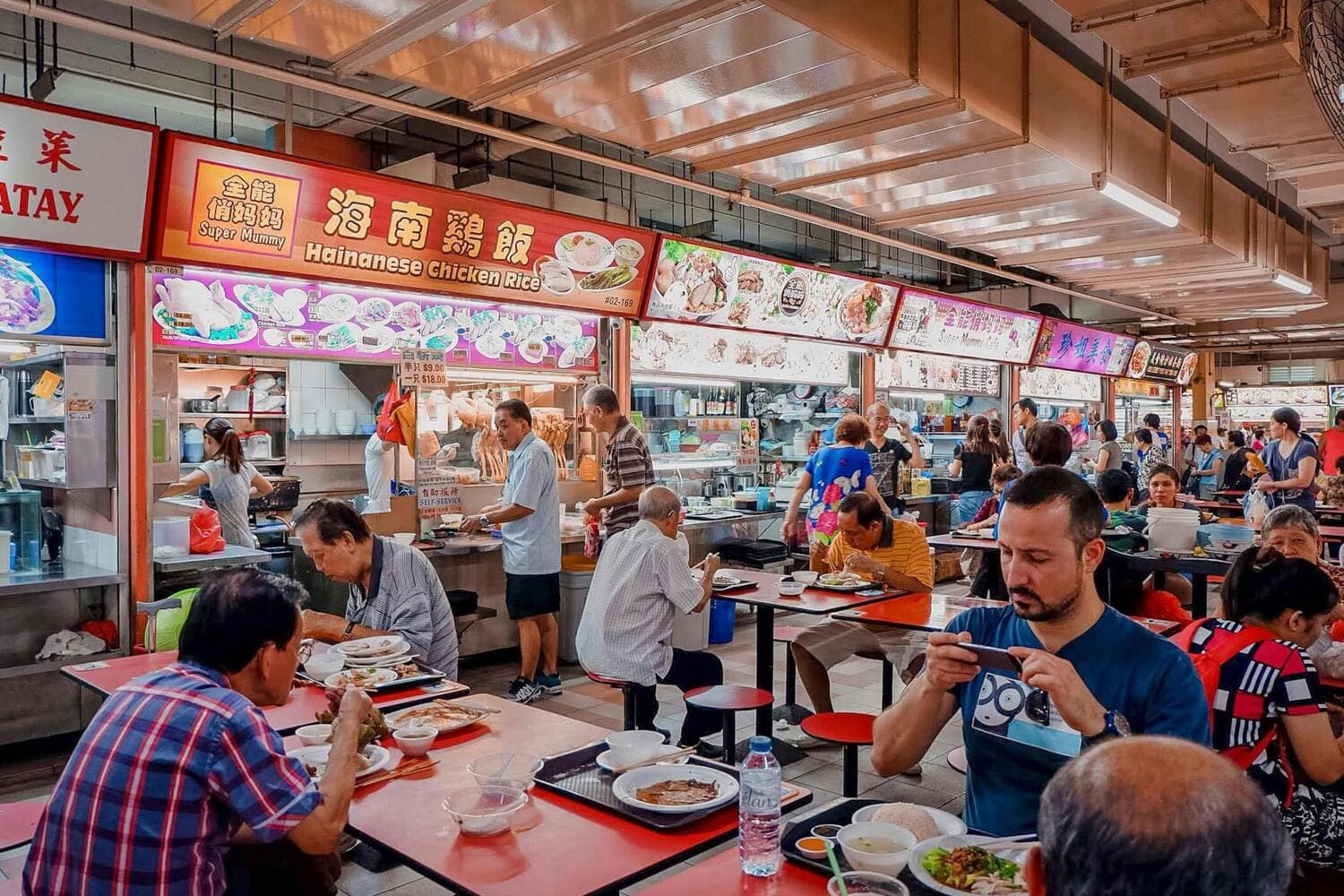
Hawker centers are open-air complexes with dozens of individual stalls, each run by a specialist. You’ll pay S$4 to S$8 for a full plate of something excellent. Food courts look similar but are usually inside air-conditioned malls, operated by corporate groups, and charge two to three times as much for noticeably worse food.
The locals eat at hawker centers and have done so for generations. Singapore has 114 NEA-managed hawker centers with over 13,000 licensed stalls between them. Maxwell Food Centre in Chinatown, Lau Pa Sat in the CBD, and Amoy Street Food Centre are three of the most visited. If you see a long queue at a specific stall, that queue is probably worth joining. Singapore’s hawker culture is UNESCO-listed.
7. Learn what “chope” means before you sit down
This one is very Singapore-specific and it confuses every first-timer. “Chope” is the local word for reserving a seat at a hawker center or coffee shop. The method: leave a packet of tissues, an umbrella, or any small personal item on the table while you queue for food. That table is taken. Do not sit there.
Tourists regularly miss this, sit at a choped table by mistake, and get some pointed looks. Now you know. Join the queue first, then chope a table with something from your bag, then go order. It sounds backwards but it’s standard practice and works surprisingly smoothly once you’re in on it.
8. Don’t tip, but check the bill
Tipping is not part of Singapore’s culture and not expected at all. At hawker centers and coffee shops, you pay the stated price and that’s it. At restaurants, check the bill: most will add a 10% service charge plus 9% GST, shown as “++” next to prices on menus. That’s already your tip, built in. Leaving extra on top is unusual and not required.
9. Leave the chewing gum at home
Perhaps the most famous Singapore rule and one people still somehow need reminding of: chewing gum is BANNED. Not just spitting it on the pavement: importing or selling it (without a medical reason) is illegal. There are exceptions for nicotine or dental gum, but the standard packet of Wrigley’s you grabbed at the departure gate is a problem.
The fines in Singapore are real and enforced. Under the Environmental Public Health Act, littering carries fines of up to S$2,000 for a first offence and up to S$10,000 for repeat offenders. Smoking in non-designated areas and jaywalking at certain crossings carry their own penalties too. The rules aren’t designed to trap tourists. They exist because they work, and Singapore is one of the cleanest, safest cities in the world partly because of them.
10. Cash is less necessary than you’d expect
Most hotels, restaurants, and shops take cards. Grab is app-based. The MRT accepts contactless bank cards. Even many hawker stalls now accept PayNow (Singapore’s QR payment system) or NETS. That said, some older coffee shops and small stalls are still cash-only. Bring S$100 to S$150 in Singapore dollars and you’ll be covered for the trip. ATMs are everywhere and the rates are reasonable.
Don’t change money at the airport unless you need a small amount to get into the city. Money changers in Chinatown and Little India offer significantly better rates.
11. Drink the tap water
Singapore’s tap water is treated, tested, and perfectly safe to drink. You don’t need to buy bottled water. Bring a reusable bottle and refill it at the water coolers available at most MRT stations and attractions. This saves money and is the obvious call in a city that prides itself on infrastructure.
12. Pack light, breathable clothes (and one layer for indoors)
Lightweight, breathable fabrics (linen, cotton, moisture-wicking) are the only sensible choice for Singapore’s climate. You will sweat regardless. Jeans are technically survivable but deeply uncomfortable by midday. Pack for warmth and ventilation outside, and then bring one light layer (a thin cardigan or shirt) for indoor use. Singapore’s air conditioning in malls, restaurants, and the MRT is set to a temperature that suggests the city is trying to preserve something.
13. Cover up at temples and mosques
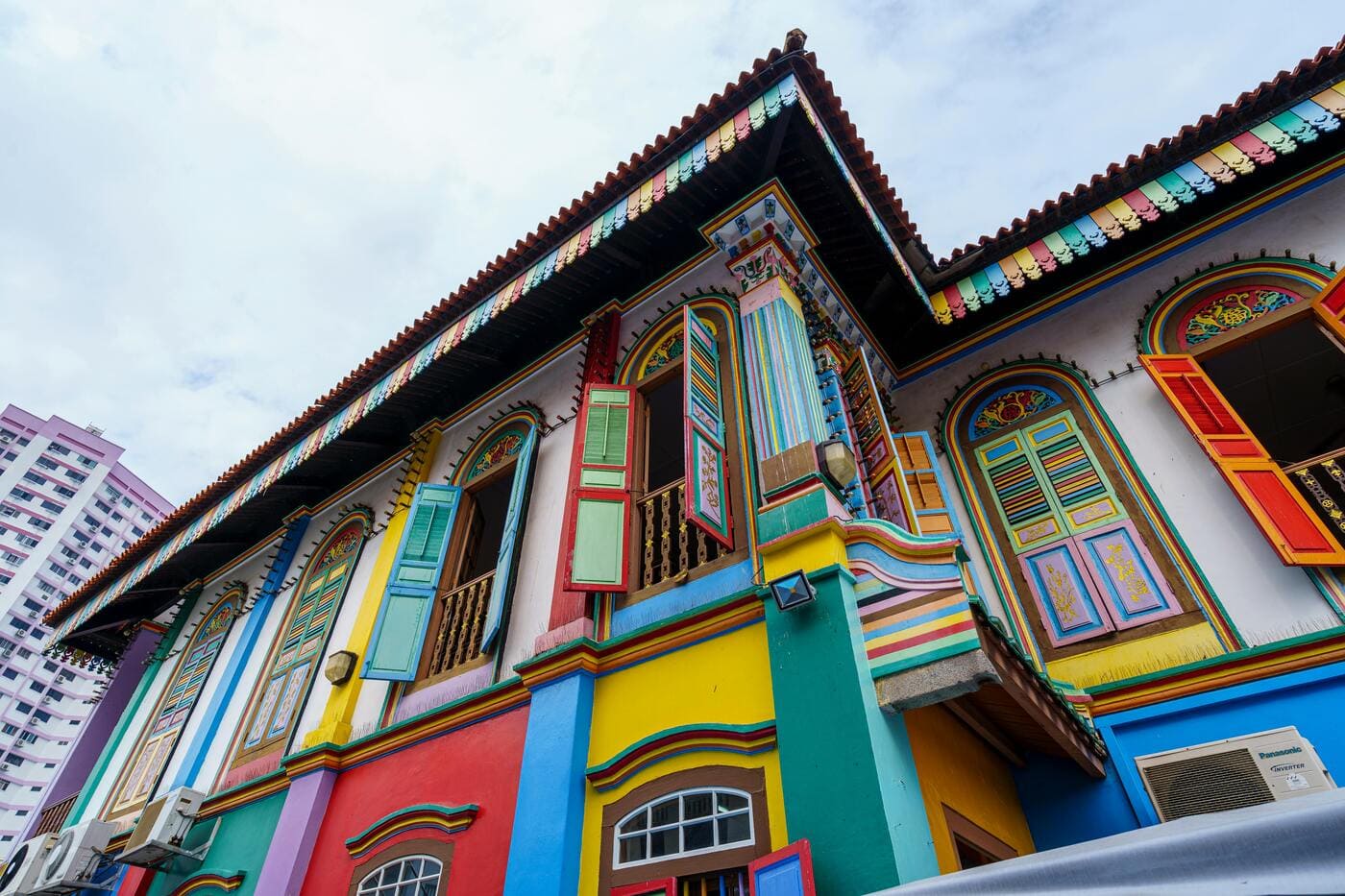
Singapore’s cultural neighborhoods are where the trip gets interesting, and that means visiting Hindu temples in Little India, mosques in Kampong Glam, and Buddhist temples in Chinatown. At all of them, remove your shoes at the entrance, cover your shoulders and knees, and don’t walk through during active prayers. Most sites have sarongs available to borrow if you’re underdressed. When in doubt, watch what locals are doing and follow their lead.
14. Don’t underestimate how much there is to do
Singapore has a reputation as a 2-day stopover. That reputation is wrong and costs people a very good trip. Three days gives you a real sense of the city: Marina Bay, the cultural neighborhoods, a proper hawker crawl. But Sentosa, the wildlife parks (Night Safari is worth it), and actual breathing room between sights need 4 to 5 days.
If you’re still mapping out the days, my Singapore itineraries guide runs from 1-day layovers all the way to 5+ days, with hotel recommendations matched to each trip length.
Where to stay in Singapore
Given that neighborhood choice shapes so much of the trip, this is worth treating as a tip on its own. The short version: Chinatown is the best all-around base for first-timers. Central, affordable food everywhere, great transport links, and enough character to feel like you’re actually in Singapore rather than an anonymous hotel district. Bugis and Kampong Glam are strong alternatives for those who want to be closer to Arab Street, and Clarke Quay works well for people who want evening riverside options.
Avoid basing yourself on Sentosa or in the Orchard Road hotel corridor unless you specifically know that’s what you’re after. The full breakdown with specific hotel picks by area and budget is in my guide to where to stay in Singapore.
Upscaled art and elegance in the heart of Chinatown, surrounded by Michelin-starred restaurants on Duxton Hill.
Do I need a visa to visit Singapore?
Most passport holders from Europe, North America, Australia, and many other countries can enter Singapore visa-free for up to 30 or 90 days depending on nationality. You do need to complete the free SG Arrival Card (SGAC) online up to 3 days before arrival. Check the Immigration and Checkpoints Authority website for your specific passport.
Is Singapore expensive for tourists?
It depends on how you travel. Hawker centers serve full meals for S$4 to S$8, the MRT is cheap, and many attractions are free. Hotels, alcohol, and restaurants outside hawker centers are expensive by Southeast Asian standards. A mid-range daily budget of S$100 to S$150 per person is realistic if you eat at hawkers and use public transport.
Is it safe to drink tap water in Singapore?
Yes. Singapore's tap water is treated and safe to drink. Bring a reusable bottle and use the water coolers at MRT stations and attractions.
Do you tip in Singapore?
No. Tipping is not expected or part of local culture. Most sit-down restaurants add a 10% service charge and 9% GST to bills automatically, shown as ++ on menus. At hawker centers and coffee shops, pay the listed price.
What is the best area to stay in Singapore for first-timers?
Chinatown is the most practical base for first-timers: central location, excellent transport links, good range of hotels across budgets, and hawker food within walking distance. Bugis and Kampong Glam are strong alternatives. Full details with specific hotel picks are in the guide to where to stay in Singapore.
What should I know about Singapore's laws before visiting?
Singapore enforces its laws consistently. Chewing gum (non-medical) is banned. Littering, smoking in non-designated areas, and jaywalking at certain crossings carry fines. Vapes and electronic cigarettes are prohibited. Drugs carry severe penalties. None of this is designed to trap tourists: just know the rules before you arrive.